Public Impact Advocate

Corruption is pecuniary interest masked as public interest

When the rotting house crisis hit NZ, the government of the day knew they had to do something. Unfortunately, there were no MPs with much experience in the building industry, and the likewise the Ministry of Business, Innovation and Employment lacked expertise in construction. They turned to the very industry that had caused the crisis in the first place. While the media and pundits blamed “cowboys”, meaning small, independent contractors with a ute, dog and cellphone, facts showed the failure came from the big players who advocated untreated radiata pine, no-eve buildings and designs that allowed water in, but did not dry out before the wood started to rot and the building began to mould.

Those industries were represented by lobbyists in the form of trade associations, and they took advantage of the ignorance of elected officials and public services in MBIE to write rules that served their pecuniary interest at the expense of home buyers. It hit at every level, and created the affordable housing crisis.

Need for a Public Impact Advocate at the Table

When standards are written, the Committee should include a public-impact specialist, deeply knowledgeable in the particular industry, armed with the power of veto – meaning their role at the committee table is to say No, on behalf of the people who have to pay in time or money because of how the rule is written.

Every committee, department, agency and other government or quasi government agency should have an ex-officio advocate. These the powers must extend not only to when the rule is written, but after the fact, when the public encounters the barrier created by government and makes a formal complaint. Bad rules, complicated rules, rules that require consultants to negotiate simple processes, unfair rules, rules that demand significant delays and rules that can be rewritten to achieve the same outcome without red tape should all be fair game for the public impact advocate.

Independent Authority

The Authority should be funded with tax dollars, and each political party in Parliament shall appoint one representative to the Authority Board to serve four-year terms. The board’s charter should make clear it serves the people, not the politicians or the power structure, and its staffing should seek out well-informed specialists who understand their particular industry but are neither beholden to it, or have an insider’s relationship with it.

The authority should be empowered to actively solicit public feedback where government is seen as the problem not the solution. This includes local government and special entities. It should be granted the power of investigation, where claimed barriers of commercial sensitivity, confidential information or privacy have no standing.

The authority shall have negative authority only – to say no, to cancel. It may identify changes that would not attract a veto, but not impose them. It may however, take matters directly to Parliament with recommendations for new law. The authority should have the right to take personnel matters to the personnel’s senior management. In some cases, bad rules are promulgated by problematic public servants. They may need education, or in a personnel review, found unsuited for the office they hold, or unsuited to work in government. There needs to be a mechanism to identify such people and remove them from positions where they do not serve the public interest.

This practice is an inherent conflict of interest:

 We invite organisations that represent the views of a large – usually national – group with a common interest in the area being addressed by the standards solution to nominate a representative for the committee. We review nominations and select committee members from them.       Standards NZ

Yet Standards NZ seems oblivious because it is so normal in NZ. 

The Fox Guarding the Hen House – (cc) by John Cole, NC Newsline

Case Study: How standards are written

The above quote in the cartoon comes directly from Standards NZ web page on New Zealand standards development. There seems to be no awareness either of the inherent conflict of interest, nor any examination of the outcomes that create barriers to competition and substantially increase costs to ordinary Kiwis.

The policy of Standards NZ is to establish a committee made up of representatives of the trade organisations that advocate for the pecuniary interest of their members. This is a bit like inviting the foxes to design and build the chook house.

The outcome is Fortress NZ, where artificial barriers to overseas competition are erected. NZ’s population and geography is the size of the US state of Colorado,  thus companies that make far superior and more affordable products, due to their economies of scale and higher standards (especially in the EU) take one look at NZ and give it a pass – just what the committee members want.

Small scale entrepreneurs try to import better products – such as German made joinery, but the barriers prove insurmountable. BRANZ testing must be conducted and paid for before the small-scale importer can earn their first dollar. The local competition will pull every string they can – and there are many – to thwart the competition. The upshot is the affordable housing crisis. The losers are the struggling class. In the end, many middle-level earners give up and move to Australia.

The same game rigging has stifled the financial markets, where FMA rules tilt the playing field to the big banks and the sophisticated investors. Ditto the food industry, and soon the natural products industry. Even the classic car industry in NZ, that was world-renowned, has been killed by the draconian repair certifier rules.

GOVERNING:

The affordable housing crisis

Solutions:

For the entry level, mobile homes.

For volume production: MarketTowns

For government reform: Reform User Pays

The affordable housing crisis did not come about by accident. It came about by a perfect storm unintentionally created by government. It is simple to state, hard to fix.

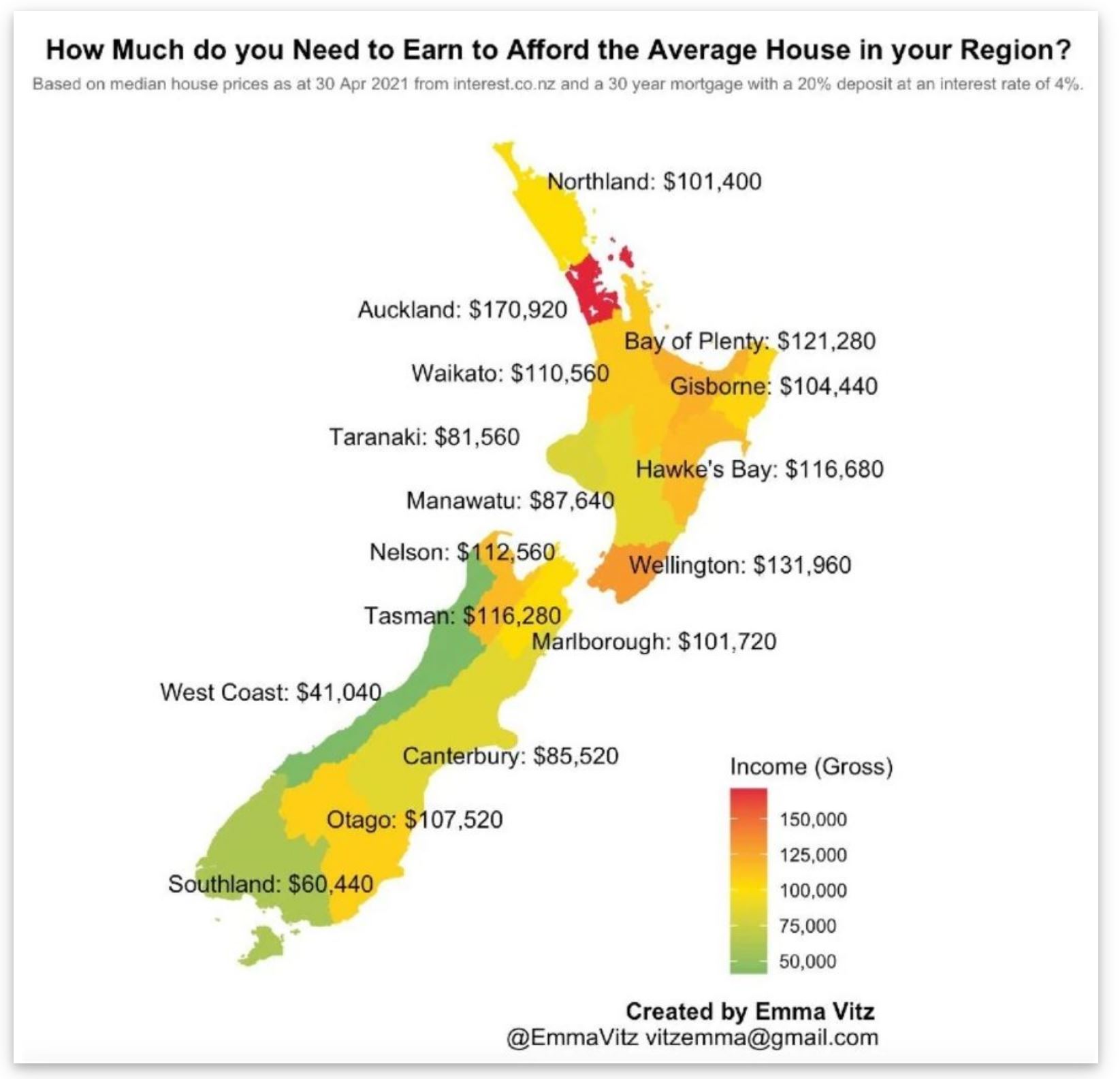
Price:Income Ratio: When the median household price exceeds a 3:1 ratio with median household income, housing becomes unaffordable first for the poor, then at it heads toward 10:1 for the lower middle class as well as young adults,  uni graduates with too much debt, elderly who failed to build home equity (by renting or by divorce), older women, Māori, Pasifika and other disadvantaged groups. Eventually society polarises into the haves and the have nots.

The answer is to get the ratio back to 3:1. This means increasing the supply of homes causing the market to drop and aggressively examining every contributing factor that raises the cost of zoning, financing and constructing new homes.

Land Supply: For every new family (net) there needs to be one additional single-family home. When planning was done by civil engineers this happened. When universities started training environmental planners, environmental protection improved, but land supply contracted. Result, higher prices for subdivided land.

Consenting costs and time: Developers say more than half the job of subdivision is securing permission. The RMA does not enable people and communities, it is a cash cow for councils and private planners. Extensive reports do not protect the environment, but they do increase costs.

Requirements: Consenting requirements add to cost without demonstrable benefit. The councils have no checks and balances, so they place demands that developers must do… and pass on to the end customer, meaning higher land prices.

Development Contributions: In theory if a developer makes money and it costs the taxpayer to subsidise the developer profits, the developer should pay a contribution. But in practice, it has become a cash cow for councils and further increases land prices.

Revenue Conflict of Interest: At one time, consent fees were low because the benefit of resource consent compliance was deemed a matter of public interest. Now councils fund their consenting departments through revenue they collect, and senior management pressures staff to generate billings. This has been tested, and it is an abdication of the role of the public service.

Building Consent Liability: Since the leaking home debacle, councils are terrified of liability, thus they set out extreme documentation requirements to ensure they are not exposed. The costs of third party consultants is added to the cost of housing, further raising above the 3:1 ratio.

Lobbying by Pecuniary Interest: Architects, engineers, the Master Builders Association, the many trade associations representing building materials, components and services have successfully lobbied government for monopolistic protection. In the name of health and safety, the rules are designed to supress competition.

Fortress NZ: In a country the size of the US state of Colorado, MBIE has written a building code that requires compliance to NZ standards written by advisory committees comprising of representatives of trade associations. No surprise that this creates insurmountable barriers to competition. What overseas supplier that meets higher international standards will spend the money to secure BRANZ compliance for a market of 5 million people?

This is an essay. Grab a cuppa, settle in for a long read on a laptop or larger. It shows why housing is 10X income, not 3X.

AFFORDABLE HOUSING: How we got into this mess in the first place

The two-decade creation of the perfect storm to make housing unaffordable

Why is housing unaffordable? Bad law, bad regulation, ignorance, legal-corruption, greed & cronyism… a perfect storm 20 years in the making.

Problem

Why housing is unaffordable (a perfect storm)

From Civil Engineers to Environmental Planning grads

About 2o years ago, something happened in district councils. Older civil engineers who administered the RMA began to be forced out by a new generation of university graduates with degrees in environmental planning. Where the old guard focused on infrastructure to ensure greenfield expansion matched population growth, the new breed of planners had been taught to value the environment over rezoning for new housing. The result was predictable. The cost of zoned land rose.

https://www.waikato.ac.nz/study/campaigns/environmental-planning

This needs to be fixed. Universities need to rethink the curriculum. Yes, protecting the natural and physical environment is important, but either government has to set a zero-population-growth policy (unlikely) or it has to remove the bias against rezoning greenfield for growth. This can be done (see the post on MarketTowns), but it requires an overhaul of both the curriculum, and the fundamental bias of the faculty.

Then at a policy level, councils need to adopt resolutions that require planning accommodate population growth with a target median house price to median household income of 3:1. If the councils find this too hard, then resolve to ask Kainga Ora to use its powers under the Urban Development Act 2020 to identify and implement new towns.

How Councils are funded

Rates are supposed to fund projects and services the public needs but the private sector will not supply. But there is a limit to what the voting ratepayer can support, a limit lower than what council senior management feels it needs to support its offices, salaries, perks and actual services and long-term investment. User pays is an attractive alternative because it only impacts those trying to do something, such as develop a greenfield into a new tract of homes and shops.

But those costs are passed on to the end buyer; the family buying the home, the business person leasing a shop, office or restaurant. As a result, not only does the cost of the facility increase, but overall prices go up. The reason a cup of coffee costs $5 is not because the cafe is creaming it, but because the landlord keeps putting up the rent to recover the costs in the building, including fees and rates.

There is no way to politely say it. Councils have become greed machines. Senior management resembles budget airlines looking for ways to charge for everything, like 1 kg over weight bags or a window seat. Why? Because the planning and building departments are self-funded. User pays creates an inherent conflict of interest. It’s spiralled out of control.

This needs to be fixed. The basic principle of user pays needs to be limited to demands solely where the benefit falls to the developer. The need for affordable housing is a public benefit where the associated costs should be funded by the taxpayer on a national basis and the ratepayer on a council-jurisdiction level. This requires a law change.

How Building Materials are approved

Decades ago the building industry consisted of skilled tradies who knew how to construct buildings suitable for the NZ climate using proven building materials and methods. Consents were simple and low cost because they relied on an industry knowing what it was doing.

But then corporatism infused itself into the industry. Corporatism is big business hiring efficiency experts to find ways to cut costs to increase profits. Flat roofs and plaster cladding suitable for Mediterranean (read dry, low humidity, no driving rain) climates cost less to build. The industry convinced the government to permit untreated Radiata pine, a sapwood that rots easily, to be used for framing. The upshot was the leaky homes crisis, and the 5th Labour government, whose Minister of Housing was an academic, brought in the Building Act 2004 that caused building consents to skyrocket in price.

The Act required all building materials to be approved. To write the NZBC (NZ Building Code), committees were set up where MBIE invited representatives of trade association to write the drafts. No surprise that the trade associations promoted the pecuniary interest of their members by establishing de facto barriers to competition, both making it too expensive and arduous for superior offshore materials to gain approval for a market the size of the US state of Colorado, and for home-grown entrepreneurs seeking to challenge the established order.

This needs to be fixed. Competitive pricing for building materials is in the public interest, and the cost of approval should be paid by the public, and it should be expedited so approval takes weeks, or months at worst, not years. Overseas approvals should not require replication in NZ, but should be accepted unless it can be shown they clearly do not fit the NZ climate. The building material cartel should be regulated where anti-competitive practices are a crime not only subjecting the business to fines, but holding the responsible personnel criminally responsible.

Further, in establishing advisory committees to write the draft rules, the principles of Wisdom of Crowds (see here) should apply. If trade associations are represented (which does bring industry expertise), they should be offset by consumer representatives skilled in ensuring the proposed rules are solely in the public interest and do not use rules to favour the interests of the trades.

How Building Practitioners are Licensed

In the aftermath of the leaky homes crisis, the large corporates and trades blamed “cowboy builders” when in fact it was the large corporates and the mass-production trades using defective, but BRANZ approved products and building methods.  The Master Builders association lobbied for licensing, ostensibly to get rid of the cowboys. The upshot was a tripling of the cost of skilled construction labour.

Some builders quit because they had been attracted to the industry due to a learning disability – they could not read. They were experts at hand work, but could not pass the written tests brought in by the new regime. Others quit because it was all just too hard. Easier to take an indoor job in a building supply store. Those who stayed on logoed Licensed Building Practitioner (LBP) on their new utes, as they found their newly-state-sanctioned careers paid more than many white-collar jobs.

This is now resulting in a new approach to house making. Instead of bespoke construction on site, factory manufacturing that does not require LBPs is rising in popularity. Buildings are now assembled, not constructed, on site using factory-made components, such as FrameCad light-gauge steel panels, with further interest in modular design in which the rooms are made in factories and stacked on site like Lego blocks.

The LBP program needs to be fixed, but the pecuniary interest is so great it is unlikely elected officials will take it on. Instead, the building industry needs to move from the 18th century to the 21st. The whole approach to how the housing market works needs to be reinvented. Mass manufacture of buildings using Computer Assisted Design so they do not look bland or cookie-cutter is the answer. Leave the LBP approach to the bespoke construction industry of homes for the comfortable class who have no problem paying millions.

Solution

How to make housing affordable

Use the Urban Development Act 2020

In the 5th National Government, 2009-17, Building and Construction Minister Nick Smith proposed the Urban Development Act. It proposed to create an Urban Development Authority (UDA) that would bring all aspects of major development projects (matters of national interest) under one authority.

Land acquisition, rezoning, financing, building of infrastructure, building consents and construction that is otherwise a gauntlet of multiple consenting and consulting agencies to the point where over half the cost and effort of real estate development is securing permission

Unfortunately, when the 6th Labour Government took over in 2017, it rebranded the Urban Development Authority as Kainga Ora and turned its focus to state housing for beneficiaries of the welfare system. With the 6th National Government prepared to take power, it is time to revisit the Urban Development Act and use its powers as originally intended.

Don’t tinker with the market, create an alternative

Manipulating the housing market to lower the price to income ratio from 10:1 to 3:1 would be devastating for home owners who would be tipped into negative equity. Increasing median income to 1/3 median house price will not happen in a global economy.

Instead, create new housing markets that target the 3:1 ratio. This is detailed in the post on Market Towns, although it does not have to be limited to that scale or type of development. The UDA powers are the key:

  1. Buy the land at pre-zone pricing (probably rural)
  2. Do not take a capital gain on subdivision
  3. Do not pay the council a development contribution
  4. Infrastructure costs paid by the taxpayer not the council
  5. Set up a pop-up factory to manufacture the buildings
  6. Target total cost to be 3X the projected income of buyers
  7. Where possible cut the cost of living, such as no need for cars.

Under UDA development is in the national interest. This means taxpayer paid, not user pays. Don’t burden the council, but make the development a profit centre for them, meaning it will pay more in basic rates than it will require in council services.

At the entry level, support mobile/modular homes

As discussed in other posts (see here) the 6th Labour Government declared an informal but devastating war on poor people who were leasing and buying mobile homes from the fledgling Kiwi industry.

Some were individuals making one tiny home on wheels at a time. Others were factories turning out dozens per month. Because they were mobile, they were not captured by the perfect storm that made buildings unaffordable. They were small, inexpensive and provided warm, dry, safe and durable adequate housing for people whose alternative was hidden homelessness (living in cars, tents, sheds, garages and overcrowded conditions). Until, reportedly in a cabinet meeting, the elected officials agreed they did not want American style trailer home parks in NZ, which trickled down to MBIE, MFE and MSD as a declaration of war on mobile homes (factory made) and tiny homes on wheels (DIY made).
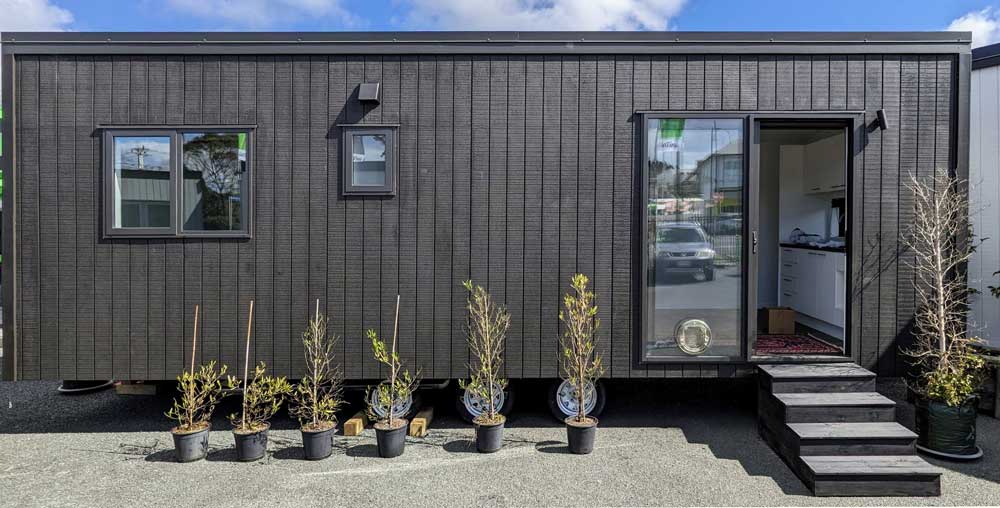
This needs to be fixed.

  • Youth: Mobile homes enable the young to get on the property ladder, especially if lease to purchase is an option where 5-7 years rent gains ownership – enough to sell for a downpayment on land and home.
  • Homeless: They provide a much better alternative than putting a family of four in a hotel room in Rotorua for months or years even.
  • Tangata whenua: For the whanau on ancestral whenua, they can be manufactured in two weeks and installed on site in two hours while avoiding the problems of bank financing on Māori title.
  • Urban Pasifika, etc: Especially in South Auckland, certain sectors have large families overcrowded in homes designed for the nuclear family of the 1950s’. Permit mobile homes to be parked next to the family home to take up the excess demand.
  • Elder/disabled: For the family with a vulnerable elder or disabled adult child, a mobile home can be parked next to the family property to provide a modicum of independence while enabling necessary supervision. When the elder dies, the home is removed
  • Flood, earthquake: In a civil defence emergency, immediate housing is essential. Having a reserve of mobile homes that can be deployed behind ordinary SUV towing to site in 24 hours provides responsive capacity. Rather than leave in a carpark unused, lease such units to major airports where they serve as first-arrival or last-departure accommodations so they are clean and ready when an emergency arises
  • Essential workers: In tourist destinations like Queenstown or Waiheke, essential workers are living in overcrowded conditions or in cars or tents. Using Kainga Ora, zone for essential worker camps using mobile homes. Most will be young and for them, this will be a party zone. Ensure it does not spawn cross-boundary conflict.
  • Cycle Trail accommodationLong distance cycle trails are becoming a major ecotourism option worldwide. NZ initiated its own version, but the tour operators must collect the riders at the end of the day and bus them to a nearby town. Instead authorise Kainga Ora to use its UDA authority to build mobile home campsites along the trails leased to cycle-tourism operators.

Housing and Communities

An integrated solution for many of the challenges facing NZ today

If we are serious about climate change, stop issuing resource consents for more transport-based development. Eliminate the need to drive.

Build MarketTowns


In every era but our own, cities, towns, villages and communities were based on some purpose of living that eludes the designers of our own time. People form communities not for justice, peace, defence or traffic, but for the sake of a good life… the pursuit of conviviality, citizenship and artistic, intellectual & spiritual growth.

The social pursuits of a good life shape how a community is laid out, how people encounter each other, how to balance public and private space, and to avoid design that disrupts. And how to make it affordable for all, ending economic polarisation.

The most important policy the 6th National Government can adopt: Of all the solutions listed on governing.nz, this is the one intended to have the greatest, most wide-ranging positive impact, addressing a host of challenges facing the nation, from environment to economic to social and cultural. It is a positive outcome, not a fix.

What is a Market Town?

A Market Town is an ancient development pattern where the social life is based on a self-supporting local economy. A thousand years ago, the basis was local agriculture. Today, technology has vanquished the tyranny of distance, enabling many to earn a living anywhere there is high-speed broadband. A local economy needs about 20% of its workforce to sell local to global (L2G) using the internet to import outside money that then turns locally 5-20 times before it leaves the local economy. With a critical mass of 10,000 people on 200 hectares total (85 hectare urban core surrounded by the greenbelt)  the economy supports over 200 local job types from accountants to zero-waste recyclers. None of these jobs require outbound commuting; it eliminates about 8,000 cars on the road. 

To get a feel for it, visit the preindustrial car-free towns of Old Europe. They are human-scaled, needing less land while providing a much more vibrant quality of life. The urban core is surrounded by a greenbelt to eliminate cross-boundary conflicts (the neighbours see only trees) and provide open space for local food, harvested rainwater storage, onsite wastewater processing, off-grid solar array, as well as sports and festival fields, a walk-to blue-collar industrial park and a motor-pool/freight depot to ensure the urban core remains car-free.

Until 2020, it was not realistically possible to build a Market Town in NZ. The number of approving agencies created insurmountable obstacles to new forms of development outside the transport-based development framework of almost every district plan in the nation. Seeking to put all under one roof, under the 5th National Government, then Building, Construction, Housing and Environment Minister Nick Smith sponsored the Urban Development Bill that became law in 2020. The 6th Labour government narrowed the focus of the Act to developing state housing, but the needed legislation is on the books. Now with the 6th National Government  taking control, no change in law is needed. All that is required is a change of focus by government to instruct the ministry to sponsor the first Market Town as a matter of national interest.

Imagine in Aotearoa
Mallorca
Verona
Cadaques, Spain

Characteristics of a Market Town

Details: The 21st century Market Town is a self contained local economy, thus it does not need extended three-waters pipes or widening roads. Its basic qualities include:

  • About 200 hectares of relatively flat, poor-quality greenfield land near a 2-lane road
  • Within 85 hectare urban core for about 4,000 3-floor attached townhouses – 10,000 people
    • Urban core divided into clusters (villages) of about 200 homes / 500 people each
    • Each village has a central plaza that becomes the community living room with development funded:
      • Daycare and primary school classrooms on the village plaza
      • Eldercare facilities for the infirm so they never have to leave their friends and family
      • Artist Guild Hall that supports about 25 members of the creative class to enrich the community
      • Village-owned cafe to provide affordable, nutritious, flavourful meals as a means of social bonding
      • Playground space by the cafe so parents can relax and converse while watching their children
      • Wharetapu to provide sacred space for celebration of rites of passage, sanctuary and contemplation
  • Surrounded by a 115 hectare greenbelt to prevent cross-boundary conflicts and site:
    • Motorpool for all motor vehicles, freight delivery and linkages – no cars in the urban core
    • Instead of 200 courier deliveries, three tractor trailer trucks deliver all goods once a day
    • Walk-to industrial park providing blue collar, clean-tech jobs and local manufacturing
    • Freshwater storage and processing – 100% rainwater harvesting from the urban core
    • Wastewater processing as a surplus resource with zero waste: biofuel, fertiliser and purified water output
    • Storm and filtered grey water storage for lower-quality water needs
    • Solar array and vanadium battery storage to provide 100% off grid energy supply
    • Sports and festival fields, garden allotments, protected native bush and productive growing
    • Surrounded by a native flora/fauna protection fence to keep out invasive species
    • Boundary between urban core and greenbelt includes a wall to keep pets out of the greenbelt
  • No less than 20% of the jobs/businesses sell local-to-global (L2G) to import money into the local economy
  • The majority of jobs/businesses are Local to Local (L2L) to facilitate a money turn of 5X to 20X
  • 20% of the housing is parallel market to ensure permanent affordable housing and block gentrification
  • 99% of buildings manufactured in an on-site, pop-up factory; keep price below $1,500/m2 including land
  • A complete, not elite community, intended to reflect national demographics, welcoming all but criminals
  • Using companies law, an elected body owned by the people that manages all local affairs
  • All internal costs self funded. Minimal burden on state services. , takes care of its own
    • The town builds its own public school classrooms, no capital burden on the Ministry of Education
    • Such towns inherent have a low tolerance for crime, less burden on Police, Courts or Prisons 
    • Eldercare is internally funded and operated, reducing the state burden of an ageing population
    • The local economy is structured to keep all able persons employed, with stand-by jobs when needed
    • The project requires seed funding, but this is repaid with interest. No burden on taxpayers
    • Ideal setting for attracting high-skill migrants as it offers a high quality of life with low cost of living
  • From the host council perspective, the town is a profit centre – generating more in rates than it costs
    • No need to widen the roads because the vehicle movement per day per household (VMD) is below one
    • No need to dig up roads or expand water or wastewater plants because all waters are managed within
    • The town funds & builds its own libraries, parks, halls, sports & festival fields, open to the general public
  • In order to prevent skyrocketing house values, once the prototype is proven, keep building new towns.

NATIONAL PLANNING STANDARDS DEFINITION 


The new definition of building in the National Planning Standards is flawed. It was specifically altered to target the lowest cost housing solution for the poor, especially tangata whenua on Māori-title land, and Pasifika peoples in South Auckland, as well as young people unable to get on the property ladder except through a DIY tiny home.

WHEN HOLLYWOOD BIAS BECOMES GOVERNMENT POLICY

Under the 6th Labour Government, a high level political authority reported that in an informal discussion by Cabinet, it was resolved that mobile homes/tiny homes would not to be a part of the Labour government’s response to homelessness. The politicians around the table felt “trailer parks” were seen to constitute a hot-potato that the Labour government did not want to be associated with.

Trailer-house trash is a Hollywood cliché: a run-down trailer home park full of low-life losers, petty criminals, drunks and addicts. In a cabinet meeting, it is an abdication of responsibility to address the growing number of hidden homeless – people living in cars, tents, garages and overcrowded conditions by dismissing a viable solution because it might be seen as a political hot potato.

This informal resolution then was quietly passed on to the respective ministries, including MBIE, MFE and MSD, among others, who then began an undeclared war on tiny homes and mobile homes. In addition to adverse determinations by MBIE asserting chattel housing were actually buildings (undermining the fundamental basis of a thousand years of property law), MFE created a new weapon to block the poor from affordable proper housing by conflating real property (realty) and personal property (chattel) in the new National Planning Standard Definition of the word building. Four words slipped into a 56 page document have the power of law without any scrutiny, any review by Parliament’s Legislative Design and Advisory Committee or the Regulatory Review Committee.

Adding four words to a documents called NPS-Definitions is sure to put everyone to sleep except policy wonks… until the local council enforcement officer knocks on the mobile home door of poor person to advise them they either have to spend $20,000 to get a resource consent, or remove the mobile home from the property (and return to hidden homelessness). By then, it’s too late.

Mobile homes cost under $100,000, are warm, dry, durable and comfortable, providing bedrooms, bathrooms, kitchens and lounge in a compact and efficient design, and they are a private-sector initiative responding to a dire need as the price of buildings became unaffordable due to onerous regulation and a limited supply of new residential zoning.

The losers will be the poor, the defenceless, the ones quite invisible to the nameless, faceless MFE bureaucrats who inserted the four words into NPS-Definitions. Why? Because defining mobile homes as buildings catches them in a regulatory swamp that will kill the industry and return the poor to cars, tents and overcrowded conditions.

HOW TO FIX IT

Use the same definition found in the Heritage New Zealand Pouhere Taonga Act 2014:

building means a structure that is temporary or permanent, whether movable or not, and which is fixed to land and intended for occupation by any person, animal, machinery, or chattel.

And if deemed necessary add new definitions for

  • mobile home: manufactured chattel housing
  • tiny home on wheels: DIY chattel housing
  • chattel shelter: shelter not fixed to land, including homes, workplaces, storage or other use; temporary and long-term.
  • repurposed shipping container
  • skid shelter: manufactured chattel modules

Begin by clearly restating the fundamental principle of property law to distinguish between chattel (personal property or movables) not fixed to land, retaining its own independent identity,  and realty: land or that which is fixed to land  with the intention of permanent annexation, that has lost its independent identity and become part of the land and title to it.

HOW IT HAPPENED AND HOW TO PREVENT IT  


MFE Minister asleep at the wheel

The Government introduced National Planning Standards (NPS), which are lesser instruments of government called for in RMA section 58B. As secondary legislation, they do not require a vote in the House or to be approved by the Governor General by Order of Council (a vote of the Executive Council). According to Legislation Act 2019 s67(d) such secondary legislation does not automatically trigger drafting by the Parliamentary Council Office (PCO), and it appears the contentious language was not vetted by the PCO but written by the Ministry for the Environment (MFE) staff and presented to the ministers in Cabinet, in this case Hon David Parker (Labour) and Hon Eugenie Sage (Greens) for signature. 

Among the 22,000 words in the NPS standard terms are four words that should never have been handed to the Minister for signature, and on private enquiry, it was learned the Minister had no idea they were embedded in what should have been a standard, non-controversial document. To summarise, the following was embedded and is now law.

building means a temporary or permanent movable or immovable physical construction that is:
(a) partially or fully roofed; and
(b) fixed or located on or in land;
but excludes any motorised vehicle or other mode of transport that could be moved under its own power.  [emphasis added]


BACKGROUND BRIEF

Why did MFE do this?:

The earlier 234 page NPS background report  explains: 

…structures  that are located on land but not fixed to land on the basis that it is becoming more common for relocatable structures to be used that are not fixed to land. Shipping containers have been difficult  to manage under the RMA as it is their own weight that holds them down (they are not fixed to land)  and small mobile/relocatable buildings have become more common over recent times. 

This makes it clear the target is the increased use of both repurposed shipping containers and intentionally manufactured (or DIY) mobile homes and other relocatable chattel. Note the author calls them mobile buildings, which shows the writer lacks an understanding of the fundamentals of property law. There is no such thing as a mobile building.

All buildings are structures. All structures are realty. All realty is either land or that which is fixed to land and annexed to the title to the land.

If something is mobile, it is not fixed to land, and therefore by definition cannot be a building. It’s like calling a tree an animal.

Based on this concern MFE in its first draft proposed to redefine the words building and structure:

3.14.1 Proposed definition
 
Building means any structure, whether temporary or permanent, moveable or fixed, that is enclosed, with 2 or more walls and a roof, or any structure that is similarly enclosed
   
Structure means any building, equipment, device or other facility made by people and which is fixed to or located on land; and includes any raft, but excludes motorised vehicles that can be moved under their own power [underline added]

The problem with this is it is a breach of Legislation Act 2019, which says:

20. Words used in secondary legislation or other instruments have same meaning as in empowering legislation.

Structure is already a part of the RMA:

Structure means any building, equipment, device, or other facility made by people and which is fixed to land; and includes any raft”.

Given this reminder they were proposing to breach the Legislation Act, in their second try, the NPS authors moved the “or located on” language from structure to their new meaning for the word building, which is not defined in the RMA.

Because they could not use their original definition (Building means any structure…), MFE explains that they invented a new legal term, physical construction, explaining that it would embrace not only structures but what property law calls chattel – things made by people that is not fixed to land.

Two problems

  1. The word construction refers to realty (real property) not chattel, so MFE failed to hit the target. 
  2. To redefine such a fundamental word at law as building is not something done by inserting a few prepositions into a massive document and failing to inform the Minister that MFE just upended a thousand years of common law and property law.

In support of the first point, the clearest statement of meaning is found in US law, where US Federal Government Statutes says:

Construction means construction, alteration, or repair (including dredging, excavating, and painting) of buildings, structures, or other real property. For purposes of this definition, the terms “buildings, structures, or other real property” include, but are not limited to, improvements of all types, such as bridges, dams, plants, highways, parkways, streets, subways, tunnels, sewers, mains, power lines, cemeteries, pumping stations, railways, airport facilities, terminals, docks, piers, wharves, ways, lighthouses, buoys, jetties, breakwaters, levees, canals, and channels. Construction does not include the manufacture, production, furnishing, construction, alteration, repair, processing, or assembling of vessels, aircraft, or other kinds of personal property 

It is likely that if the NPS meaning of physical construction was tested in High Court, it would be limited to real property and not include personal property (chattel) that is not fixed to land. Although it is more likely the court would toss the definition out entirely and instruct MFE to try again or to use the standard meaning, as best found in Heritage New Zealand Pouhere Taonga Act 2014:

building means a structure that is temporary or permanent, whether movable or not, and which is fixed to land and intended for occupation by any person, animal, machinery, or chattel.
 
structure— (a) means a thing made by people, whether movable or not, and fixed to the land; and (b) includes equipment or machinery

WHAT WAS MFE THINKING?

MFE clearly set out its thinking in the consultation documents prepared by MFE.

In this publication: April 2019 Ministry for the Environment publication (ME 1404) 2I Definitions Standard – Recommendations on Submissions Report for the first set of National Planning Standards, MFE wrote:

RMA plans seek to manage effects from buildings in the main where those effects are more long term than from, for example, a car parked on a section and used every day. However, where those vehicles no longer move (likely no longer used for transportation but for activities such as business, storage or accommodation) we consider they would have similar effects as buildings and should be captured by the definition. We therefore recommend excluding motorised vehicles or any other mode of transport that could be moved under its own power.

This is clear evidence the authors have no understanding of the fundamental difference between chattel and realty. A motorised vehicle does not become realty because it is used for such activities as business, storage or accommodation rather than transport. While they may have similar effects as buildings (although a building must meet a 50-year performance standard and tends to permanently alter the landscape), they should not be captured by the definition. Excluding modes of transport that can be moved under its own power is the wrong distinction, and has become a labyrinth of bureaucratic torture because the author appears oblivious to the foundation of property law.

MFE then continues…

We considered the alternative to exclude vehicles where they are used for business, storage or residential activity – but given the fact that the definition applies to facilities that are located on land – the definition would then have encompassed any business vehicles or even trucks when located or parked on land. We consider it is more certain to only exclude those vehicles that can be moved under their own power. 

The introduction of the test “are located on land”, as opposed to fixed to land, annexed to title and having lost their independent identity is the point MFE lost the plot.

EVEN SO, IT FAILS

The supporting narrative published by MFE shows the lack of proper legal training as they struggle to force chattel into the realty box. They would have preferred to use the word “structure” except the law clearly sets out that this limits the reach of the definition to that which is fixed to land. They write:

As referred to above, the removal of the word “structure” from the definition of building, decouples a building from the requirement to be fixed to land which is specified in the RMA definition of “structure”. 

So MFE invents a new term: “physical construction”:

We considered other terms which could be applied instead of ‘physical construction’. We tested the word ‘facility’ with our pilot councils and they queried the meaning and certainty of that word. They sought clarity about whether some items such as shipping containers, caravans, motorhomes or house trucks would come within the meaning of the term. We consider that part of the uncertainty about that word relates to the fact that ‘facility’ may bear the meaning of a larger building or complex often used for a public or community purpose (eg, educational facility or community
facility). We consider that the term ‘physical construction’ carries the meaning of a structure that is manmade and tangible, but it does not need to be fixed to land. While this is a new term, we consider that it is broad enough to cover all types of buildings without setting any parameters other than that there must have been some form of manmade construction. It will not be taken to exclude some items because they don’t qualify; as the word ‘facility’ may have been.

The word “construction” refers to the making of improvements (buildings and structures) on realty (real estate or real property). One does not construct a car, one manufactures it. One does not construct a mobile home or caravan, one manufactures it, if in a factory, or one makes it, if DIY. Therefore, it can be argued in High Court that “physical construction” is limited to realty, thus does not extend MFE’s invented new meaning of building to encompass its target.

Middle Level public servants working in a government ministry do not have the authority to decouple such fundamental words in law as building and structure. But they seem to be sufficiently ignorant of this limit on their authority that they made radical changes to property law and secured sign off from the respective ministers who were not alerted to the change.

The Problem with Writing Standards

New legislation has the benefit of vetting by the Legislative Design and Advisory Committee (LDAC) or the Parliamentary Council Office (PCO) that examines drafts to ensure they are consistent and understood by ordinary people.  Referencing Legislation Guidelines the 2021 edition, CHAPTER 14 Delegating law-making powers, Part 1: Is the matter appropriate for secondary legislation?, makes it clear when regulations become ultra vires. In particular:

The following matters should generally (or in some cases always) be addressed in primary legislation:… 
– variations to the common law. 

Redefining the meaning of building to include chattel (personal property) is a fundamental variation to the common law and one most unlikely to pass vetting by LDAC or PCO.

BREACH OF THE HUMAN RIGHTS ACT 1993

The Human Rights Act 1993 part 21(1) requires any legislation or regulation be tested against it to ensure it does not contain prohibited grounds for discrimination. It can be easily shown that mobile homes are primarily an affordable option for classes of people overly represented in s21(1) including

  • Solo mums §s21(1)(b)(v) and §s21(1)(l)(i)
  • Māori and Pasifika, §s21(1)(f)
  • Disabled persons §s21(1)(h)
  • Elderly §s21(1)(i)
  • Unemployed §s21(1)(k)

The vast majority of persons living in chattel housing come from these disadvantaged classes. Redefining chattel housing as buildings means they must come under the compliance regulations of the Building Act 2004 as well as the RMA. The extra costs and delays required to meet the standards for buildings (which in many cases means suboptimal design compromises solely to meet standards inappropriate for mobile homes) prices those homes out of reach of the poor. 

Conclusion

The conflating of chattel and realty fundamentally alters the common law, and is likely to be found to be ultra vires – that a Minister signing off a standard that changes the common law to an opposite meaning exceeds his powers as delegated in Section 58B of the RMA.

A standard definition of building should be used – as best found in Heritage New Zealand Pouhere Taonga Act 2014.

If there needs to be new definitions for chattel used as shelter, as abodes and other purposes, they should have new, but familiar terms. And for clarity, fixed to land should include clear tests that respect case law and common law.

APPENDIX: National Planning Standards Definition

https://environment.govt.nz/publications/2i-definitions-standard-recommendations-on-submissions-report-for-the-first-set-of-national-planning-standards/

See Page 50

3.14.3 Analysis and recommendations

Relationship between the definitions of structure and building

The original definition of structure in the draft planning standards was included to capture structures that are located on land but not fixed to land on the basis that it is becoming more common for relocatable structures to be used that are not fixed to land. Shipping containers have been difficult to manage under the RMA as it is their own weight that holds them down (they are not fixed to land) and small mobile/relocatable buildings have become more common over recent times.

The majority of submitters were opposed the definition of structure and requested that the RMA version from section 2 of the Act should apply. We accept that there could be unintended consequences and difficulties with the draft version of the structure definition. We therefore recommend that the RMA version be included instead. For ease of reference the RMA definition of structure is as follows:

structure means any building, equipment, device, or other facility made by people and which is fixed to land; and includes any raft”.

As a result of the adoption of the RMA definition of structure in the Standards it is considered necessary to remove the link to structure in the definition of building, to enable moveable or relocatable ‘buildings’ that do not need to be fixed to land to be captured by the definition. Instead, we recommend the definition include a requirement to be “fixed to or located on or in land”. This will enable both shipping containers and relocateable homes to be included – but still retains a land based requirement. By land, we confirm this has the meaning in the RMA (and in the Standards) which includes land covered by water. Therefore where the definition of building refers to being fixed to or located on land, this also applies to any buildings fixed to land covered by water.

Contrary to those submissions that requested only one combined definition of structure and building, we consider it is useful to have separate definitions. This gives councils the ability to address either or both as required. In addition, regional councils are more likely to need to address structures separately from buildings and so the separate definitions allow for this. Feedback from a regional council pilot council requested that the definition of structure remain so that structures in the coastal marine area could be addressed.

In addition, as a result of removal of the reference to structure in the building definition many of the exclusions that are often included in council plan definitions of buildings (such as retaining walls less than 1.5m high) do not need to be excluded in the recommended building definition; they are not captured by the term.

Submitters identified that the two terms are circular in that each refers to the other as ‘building’ was part of the structure definition and ‘structure’ was part of the building definition. We agree that this is poor drafting and the removal of the interdependency has resolved this issue.

We recommend replacing the word ‘structure’ in the ‘building’ definition with the words ‘physical construction’. The two definitions work together now so that that any building that is fixed to land would be captured by the term structure but not all buildings may be structures through the recommended use of the term ‘physical construction’ rather than ‘structure’ in the definition of ‘building’. We considered other terms which could be applied instead of ‘physical construction’. We tested the word ‘facility’ with our pilot councils and they queried the meaning and certainty of that word. They sought clarity about whether some items such as shipping containers, caravans, motorhomes or house trucks would come within the meaning of the term. We consider that part of the uncertainty about that word relates to the fact that ‘facility’ may bear the meaning of a larger building or complex often used for a public or community purpose (eg, educational facility or community facility). We consider that the term ‘physical construction’ carries the meaning of a structure that is manmade and tangible, but it does not need to be fixed to land. While this is a new term, we consider that it is broad enough to cover all types of buildings without setting any parameters other than that there must have been some form of manmade construction. It will not be taken to exclude some items because they don’t qualify; as the word ‘facility’ may have been.

As referred to above, the removal of the word “structure” from the definition of building, decouples a building from the requirement to be fixed to land which is specified in the RMA definition of “structure”. This would result in vehicles being captured by the definition if no additional changes were recommended. The submission from Christchurch City Council raised this as an issue. We do not consider that in the common use of the term “building”, vehicles would be considered to be included. We consider that vehicles (or other transport modes like railway carriages or boats) that come and go and are used for transportation should not be covered by this definition. We note that the Building Act 2004 includes in its definition only those vehicles that are “immovable” and “occupied by people on a permanent or long‐term basis”.

RMA plans seek to manage effects from buildings in the main where those effects are more long term than from, for example, a car parked on a section and used every day. However, where those vehicles no longer move (likely no longer used for transportation but for activities such as business, storage or accommodation) we consider they would have similar effects as buildings and should be captured by the definition. We therefore recommend excluding motorised vehicles or any other mode of transport that could be moved under its own power. We considered the alternative to exclude vehicles where they are used for business, storage or residential activity – but given the fact that the definition applies to facilities that are located on land – the definition would then have encompassed any business vehicles or even trucks when located or parked on land. We consider it is more certain to only exclude those vehicles that can be moved under their own power.

We acknowledge that there are other items that are moveable and have a roof and so could meet the recommended definition of a building. In particular, tents, caravans, and marquees would be included. We acknowledge that the definition of building is broadly crafted and councils will need to use subcategories or narrower application definitions and rules to manage or permit these items where required.

Certainty – and what constitutes a wall or a roof or similarly enclosed?

Submitters identified that in some buildings (for example aircraft hangers and Nissen huts) walls are not clearly identifiable and their identification can be debated. Circular buildings may only have one ‘wall’ and with a dome roof this may not even be clear such as in the example below:


Source: http://www.cosyhomes.net.nz/product/dome‐house/

To avoid the problem of having to clearly identify the walls in the type of dome house example above the phase “or similarly enclosed” was included in the draft standard. This phase was opposed by submitters on the basis that it does not provide enough certainty. As a result the recommended definition has included the phase “is partially or fully roofed”. Consideration was given to excluding any permeable roof on the basis that this then would exclude crop protection structures from the definition. However, it was considered that any exclusion for a permeable roof could result in a loophole in the definition. Is a roof that leaks a permeable roof? How impermeable would it need to be to qualify? This could make it difficult for compliance and enforcement purposes. We consider that it would be better for the plan provisions (rather than the building definition) to clearly enable crop protection structures or other similar structures if this is the desired outcome.

Relationship with the Building Act 2004 definition of building

Some submissions suggested using the definition of building from the Building Act 2004. This was considered in the draft standard but discounted on the basis that the definition in the Building Act serves a different purpose to any RMA definition of building. We agree with this. We did consider including the phrase from the Building Act definition of building “intended for occupation by people, animals, machinery, or chattels’. However, we discounted this because from an RMA effects point of view what a building is used for or whether it is empty or occupied is not relevant. Therefore we do not recommend the inclusion of such a reference.

Relationship with definitions in other acts

Environment Southland queried the relationship with the definition of building in the Heritage New Zealand Pouhere Taonga Act 2014. That definition applies to heritage buildings within that Act and the definition in the planning standards applies to RMA plans. Where RMA plans address heritage buildings they may use a subcategory definition where required.

Broadness of the definition and inclusions and exclusions or size exemptions required

A number of submitters sought the exclusions of buildings up to a certain size (and not always the same size). This can be addressed though rules that permit small buildings (eg, any building that does not exceed 10m2 in area or 2m in height can be permitted). We consider that this approach will make plans easier to understand and use. Any related bulk and location rules could also be drafted to exempt small buildings from having to comply with things like setback requirements or building coverage calculations.

Other submissions sought clarification about what is included within the definition and many items were referred to. We consider that these can be addressed in rules where required. We acknowledge that will require many rules but we consider that the broadness of the definition is inherent in the meaning of building and where councils need to address specific types of buildings or even parts of buildings such as decks, it is clearer for users if this is located in rules rather than hidden in a definition. On the issue of decks, if free standing and without a roof, they may be addressed within the definition of “structure”.

Implications for plans of changes

In relation to amendments to rules that may be required, we acknowledge the extent of these and in consideration of that issue we have provided extended timeframes for implementation to allow councils to implement changes within plan reviews, if desired.

Additional points

In relation to the issue of whether a building is above or below ground, we recommend adding the phrase “fixed to or located on or in land” and this ensures that the definition does not differentiate between the two. Some buildings may be below ground and if councils wish to address these they may do so within their rules.

In summary, we recommend the definition of structure is replaced with the definition of structure from section 2 of the RMA. We also recommend the definition of building is replaced with the following definition:

Building means any a temporary or permanent movable or immovable physical construction that is‐

(a) partially or fully roofed, and

(b) is fixed to or located on or in land, but

(c) excludes any motorised vehicle or other mode of transport that could be moved under its own power.

Mobile Homes – Chattel Housing not Real Estate

Ending government’s war on poor people and their mobile homes


Timeless development models for our time


The hidden homeless are all around us


A home is a life-changing event for them


Home for elders with kids & grandkids next door


Mobile homes come in various designs

Made all over New Zealand

Summary: A mobile home is the most efficient and cost-effective housing for people who cannot afford market rents or home prices. They can be parked on land owned by whanau, family or friend, and when the need for them passes, they can be towed away leaving nothing more than bare soil. They are not buildings (fixed to land) but chattel (personal property). For decades, local governments left them alone, because as chattel, they did not fit the rules for real property. For the most part, they were purchased or leased by poor people. However, more recently, trend-setting, tech-savvy young people rebranded mobile homes as tiny homes of wheels, and began parking them in “nice” neighbourhoods where grumpy neighbours complained to their local council. Lacking clarity, some councils began to issue abatement notices and notices to fix, and when these were appealed to MBIE Determinations, there was a radical shift in interpretation. Government effectively declared was on mobile homes and their constituency, poor people. This war needs to be examined and stopped by elected officials.

Problem:  ;The number of hidden homeless – people living in cars, tents, garages and overcrowded conditions has grown over the past decade. The waiting list for state housing has exploded since 2017, increasing by over 400 families every month.

In 2018, Central Government proposed KiwiBuild, 100,000 new homes. As of May 2022, it’s built under 1,400. They cost too much, they take to long to build, and in the meantime the hidden homeless ranks grow.

Solution: Over the past two decades, a domestic mobile home industry has arisen – a one or two bedroom home with kitchen and bath manufactured in factories on a chassis trailer and towed to site. Made in two weeks, installed on site in two hours and cost under $80,000 or lease for $400 a week, with a lease–to-purchase option in 6-years. Especially in North Island, where the subtropical climate is amenable to small-home living, mobile homes should be the sort of home-grown solution the government would support. But the opposite is happening.

Governments war on poor people

Imagine you buy a car, and to get it on the road you had to pay $25,000 in registration fees that would take months to process. And during that process, any government official could demand changes to the design. That’s what happens when one seeks resource and building consents for a new building. Indeed $25,000 is sometimes modest, it could cost $50,000 and in some cases, after spending considerable money, be denied.

Mobile homes are not buildings, but the local government consenting departments apply the “duck test” saying if it looks like a building and is used like a building, it must be a building and therefore must have resource and building consents to be used. There is a certain irony that the duck test saying actually was about a mechanical duck, that looked, quacked and even poo’d like a duck but was not a duck.

Councils issue abatement notices and notices to fix. In most cases, the targets of their notices are poor and overwhelmed by the officers. They pay or cave.  A few, like Alan Dall, crowdsource to fight, appealed it to MBIE who backed the council and then to District Court, where the judge issued a scathing condemnation of MBIE and the council, finding for Dall. One would have expected councils and MBIE to back off after this, but they persist in their insistence that mobile homes are structures.

Government out of touch with reality

The regulatory ethos that has overtaken both central and local government takes the view that everything must be regulated, and under user pays, that their departmental funding for regulatory enforcement must be added to the cost of that which is regulated. Thus a mobile home that costs $80,000 can attract an additional $40,000 in both government fees, and consultant fees to write the application in a form the council will accept.

Planners no longer enable people and communities to provide for their social, economic and cultural wellbeing,  to quote the purpose of the RMA, they disable the people and communities. Councils no longer “play a broad role in promoting the social, economic, environmental, and cultural well-being of their communities, taking a sustainable development approach” as required by the Local Government Act 2002.

The fundamental problem comes from the policy of User Pays. While governments write noble values statements, the message from senior management to line staff is to place the pecuniary interest of the government – raising money through fees, charges, contributions and fines – over the public interest for which government exists.

Action required

Include mobile homes in the portfolio of affordable housing solutions. Do not classify them as buildings, structures or realty as long as they remain mobile. Work with the industry to ensure acceptable standards of health, safety and durability – noting that the industry already adheres to such standards because it is bad business to not… and because existing consumer and liability laws demand responsible design and manufacture.

Need to reform Local Government 

The Funding Mechanism for Local Government creates a conflict of interest

When pecuniary interest eclipses public interest in the culture of local government the institution fails in the purpose for which it was created

A recent headline in Business Desk read Builders say consents system is ‘broken’ . It is. It’s not just the Building Control Authorities (BCA), the council department that provides building consents. What is called council planning, the group that issues resource consents has become a self-funded bureaucracy that operates as an unaccountable monopoly.

And, in large councils, most notably Auckland, fines have become a revenue source: one 160 meter bus lane in Newmarket generates $12,000 fines a day.  Of course council officials replied: “…although AT had been clear bus lanes weren’t aimed at revenue gathering…” but then goes on to say “revenue from fines helped fund public transport, parking, road safety campaigns, walking and cycling initiatives and road maintenance… With Auckland Transport utilising the enforcement revenues collected in this way council is also able to allocate funding Auckland Transport would have otherwise needed, to other council services like libraries, parks, community centres, the Art Gallery, the Zoo, and other recreational facilities.” That sure sounds like revenue gathering, despite the prior disclaimer. And staying with Auckland Transport for a moment, during the COVID crisis, $863,170 of taxpayer and ratepayer money was spent altering lower Queen Street that was ripped out a year later. If that has been a private sector stunt, heads would have rolled.

The problem? Local government is no longer local. It is government by unelected officers, team leaders and senior managers who use standing orders, privacy and commercial sensitivity to erect barriers between their decision-making and the public they ostensibly serve. They are not held accountable for their spending, for their policies, for their revenue collection or their failures. Checks and balances including the role of the elected councillors and that of public consultation have been neutered. The bigger the local government, the worse the problems.

The problems are systemic. It’s not that bad people are running local government, it is the natural outcome of a closed system. Systemic changes are needed:


Remove pecuniary interest


Problem: The funding mechanisms for local government finds senior management passes the message down to operational staff that revenue generation by fees, fines, contributions and hourly billings are a council priority. Indeed some departments such as building control authority and resource consent departments are told they are self-funded – you want your budget funded? Go get the money.  This distorts the purpose of local government and contributes to adverse outcomes, such as the affordable housing crisis.

Solution: All fees, fines, contributions and other charges levied by the territorial authority are paid into a central trust fund. Each territorial authority then applies for a share of that trust fund as revenue sharing. The trustees of the Trust Fund will provide a base rate based on population adjusted by local cost of living, with a remainder paid as an incentive bonus based on success criteria. For example, coming in under budget and under schedule on a road project would earn a bonus. Fixing a road so it lasts longer would earn a bonus. The fastest turnarounds in building and resource consents would earn a bonus.

In some cases, the bonuses should not be awarded to the authority, but to the personnel who delivered success… this means the managers and staff directly responsible for the accomplishment.


Remove joint and several liability


Problem: The joint and several liability principle applied to the leaky building crisis completely changed local government culture from public service to risk control.

Solution:  Local government is established by Central Government. The buck stops at the top. All fiscal liability should be held by the State. But personal liability should remain with the individual not the legal fiction of a limited liability company. In other words, staying with the leaking building crisis, the State should have immediately stepped in – similar to how it does with ACC – and paid to stop the leaks before there is further damage, and with no money wasted on endless court battles. Then it should investigate who is responsible with no protection of limited liability where the culprit simply puts their company into liquation, in a take the money and run scenario.

The power of the State to deprive persons of liberty or property should not be broken by limited liability companies. If a company is liable, the money cannot escape to the investors, owners, directors, family trusts, etc. The natural persons can be held liable if they do not repay their takings with the only out being personal bankruptcy. In other words, instead of holding the tax and ratepayers joint and severally liable, pierce the corporate veil and hold the culpable individuals liable. And if that liability extends to council personnel, they too should be held personally liable, but only if it is clear they failed to do their job.


Require councils to obey the law


Problem: Example: RMA Section 36AAA sets out the basis on which councils can charge applicants fees.  The benefit must fall to the applicant as opposed to benefiting the community as a whole. This is ignored by council. For example, charitable trusts apply for consent to build pensioner housing. The benefit is to the community that otherwise finds its pensioners become hidden homeless. But the council charges are not only assessed, but in some cases become so onerous, both in donations the trust has to raise, and the years it can take its volunteers to prevail, that the trusts abandon the projects and sell the land to developers for comfortable-class housing. 

Solution: Require councils to obey the law. In particular, have a tick-box on the online application that takes the applicant to a Section 36AAA payment section where they can signal the application is a community-benefit application and not subject to fees. These flagged applications are then reviewed by a council official to confirm the claim and then processed without fees charged.


Restore checks and balances


Problem: Elected officials stand for office promising change, but when they are sworn in, they discover their powers are limited. They are provided reams of briefing papers by the Chief Executive’s staff who shape the debate in a form pre-decided by the administrative staff. The elected representatives are dependent on the executive for information and those who buck the system find they are cut off.

Solution: Assign an independent staff to each elected mayor whose job is constituent services. Complaints, concerns and queries by the citizens of each ward are directed to these constituency services advocates (CSA) who have full right of enquiry and direct access to every council staff member and consultant – not filtered through the chief executive or PR staff. Findings are reported to the mayor, but also to the ward councillor, as the CSA reports to both. Where possible, the outcomes are documented on a public web site controlled by the mayor and ward councillors, not the chief executive and their staff.


Dial back Health & Safety


Problem: Health and safety have become excuses for disproportionate regulation that punish the law abiding and safe in an ineffective attempt to change the behaviour of law breakers and the irresponsible. For example, lowering the speed limit to 30 km/h on a road engineered for safe driving at 50 km/h is unlikely to cause a hoon driving at 80 to slow down, but it will frustrate the safe drivers who find the new limit below the intuitive safe speed. It will however, become a new source of council revenue for speeding tickets, and foster increased resentment of local government. 

Solution: Provide a disputes tribunal chaired by ward councillors and the mayor’s CSA staff (see above) that may hear any complaint of a regulation based on health and/or safety that the complainant views as unreasonable or lacking effectiveness. Empower the tribunal to order the respective administrative staff to change or revoke the regulation (following due process of law that may require a further council resolution) to fix it.


Dial back on Commercial Sensitivity


Problem: Commercial sensitivity is used as a cover to avoid accountability, especially involving waste of ratepayers money. It’s public money being spent, any ratepayer or citizen should be able to see where it is going, and if it is value for money. Vendors doing business with council will complain, but they will get used to it, and the public will benefit as open information means more competitive services.

Solution: Place the entire accounting system, including all contracts on line, made available by password to any person on the voting role. This includes job titles, but not person’s names. It includes company names. For the few cases that truly do require redaction due to commercial sensitivity (or personal security), the applicant must demonstrate to a committee of the council (elected officials) why redaction should be provided.

Kāinga: While academics, activists and those with a vested interest argue for co-governance and a partnership between Crown and Māori leaders (a fight this proposal has no interest in joining), the unarguable fact is that Māori, especially rural Māori on ancestral land, represent the worst in almost every negative statistic, in health, education, deprivation and lack of opportunity. Living conditions for some are third world. Gangs and criminality rival honest work and careers, especially as rural industries closed down and their jobs exported overseas.

However, unlike many fractured societies around the world, rural Māori have not lost the supportive framework so clearly identified in Te Tiriti. It fell into ruin but it’s still there. Most hapū not only know where their 19th century kāinga lay, they still own the land. The elders can point to where the whare were. The young, especially those with successful careers in urban NZ, say they would like to return to their ancestral land, but they would need a home for their family and a way to earn an income from the day they arrive.

Since there is finally an appetite on behalf of the public, and the elected leaders in Parliament to do right, to fix the wrongs of the 19th and 20th centuries, in this proposal, a very different solution is put forth. Stop making up words attributed to Te Tiriti that do not exist in it, and take seriously what it actually says. Because the words clearly written in Te Tiriti offer the best roadmap to a better future both for Māori and for all the people of New Zealand.

Rebuild Kāinga: Begin by inviting hapū to petition the Crown to identify the boundaries of their whenua that they, the hapū and their rangatira wish to obtain extraterritorial status. Make it a free-trade zone to enable such jurisdictions to become regional economic engines in which taonga katoa includes common wealth that raises everyone out of poverty.

Note that Te Tiriti does not restrict such protections to people with Māori ancestry. In addition to rangatira and hapū, Te Tiriti promises tino rangatiratanga over whenua, kāinga and taonga katoa to nga tangata katoa o Nu Tirani (all the people of New Zealand), meaning a free-trade zone factory would extend its benefits to anyone within the hapū jurisdiction.

Then identify where on the whenua to build the kāinga, the place where the people will live and work. In many cases it will be on the old site which may either be vacant or still have what today is called the marae. In compensation for Crown predations in the past, the government would provide a package of grants, loans and contracts intended to enable the hapū to rebuild and stand on their own feet.

WHY? Poverty is a state of mind. While the social-welfare system is compassionate as a safety net, when it becomes a way of life tūrangawaewae becomes its first victim. To end poverty, people need a supportive community and a self-supporting local economy that has a positive balance of trade. They need to earn more than they need to spend, and in doing so they need to stand tall, not be dependent on the social-welfare department. Rebuilding kāinga is about rebuilding strong and healthy communities that become part of the solution, not part of the problem.


If this is of interest, read on:

Te Tiriti o Waitangi is an extraterritorial treaty.


Extraterritoriality: the state of being exempted from the jurisdiction of national law, usually as the result of negotiations between equal parties.

Partnership: A formal agreement where two or more parties agree to share decision-making, collectively own property and carry unlimited collective liability for the acts of the partners.

As a treaty, the rangatira and hapū agreed to a colonial form of national governance called kāwanatanga, provided on a local level the Crown protected rangatira and hapū local governance and did not interfere with the hapū’s lands, villages and treasure.

In other words, in the face of a global centralist enterprise – the British Empire – the rangatira negotiated protection of localism – the right to be left alone by the Crown when it came to managing their own hapū affairs.

This was best stated by a Māori academic, Angeline Greensill, Lecturer in Geography, University of Waikato, who posted this online:

Whanau, hapu and iwi relationships therefore continue to be undermined as a result of government manipulation and imposed statutory frameworks which redefine and subjugate traditional Maori tikanga. Presently processes promoted by “Iwi Authorities” actively encourages whanau members to redefine their identities and tikanga to qualify as beneficiaries of settlements which are promoted as delivering benefit some time in the future.  By so doing those whanau and hapu members, perhaps unknowingly contribute to cultural engineering which speeds up the severing of their knowledge of ancestral links – whakapapa.

Because of “Iwi Authorities” manipulation (in collusion with the Crown), hapu interests have not only become “unbalanced”, but have become invisible, subordinate and subjugated and consigned to cargo cult status.  Iwi Authorities owe their existence to the legislation which empowers them to make decisions normally made by hapu. 

Such a practice contravenes Article II of the Treaty of Waitangi which confirms and guarantees absolute power to hapu. The Crown and its imposed western structures fails to recognize tino rangatiratanga and by doing so undermines the political autonomy of hapu to such an extent that under the present treaty settlement processes, the Minister of Treaty Settlements arbitrarily decided that he would negotiate directly with statutary iwi-based organizations, who in turn claim benefits on behalf of hapu with or without their consent .

(note: this quote was found using Google. Copyright is presumed to be held by Lecturer Greensill.)

The Proposed Bill

The Kāinga Restoration Bill proposes to enable rangatira and hapū to rebuild both physical kāinga on their ancestral land, and a robust, self-supporting local economy. It proposes a package of financing, grants, exclusions from centralist regulations and special economic status in the form of free-trade zones consistent with the extraterritorial treaty known as Te Tiriti o Waitangi. Its intent is to reverse Urbanisation by enabling hapū members to move back to their ancestral lands and thrive without undue interference by the centralists.

The Bill:

  • Hapū are invited to lodge their interest to restore their kāinga; to identify its location
  • Hapū shall be provided a package of loans and grants to rebuild and to grow its local industry
  • Kāinga shall be Free Trade Zones, not subject to duties, taxes, rates or fees
  • Kāinga shall be akin to local statehood, appointing envoys in treating with kāwanatanga.
  • Common Law’s publici juris : water, air and light is free for all who can access it and includes such post-1840 assets such as radio frequencies.

Nga Kāinga Restoration Bill

Proposed Bill

Explanatory Note

Colonialism changed the pre-colonial Māori economy through the introduction of farming to intensify food growing – thus hapū no longer needed the same amount of land that a hunting/gathering society required.

Colonialism changed the Māori economy with the introduction of money as a medium of exchange, thus hapū could sell now-surplus land for money with which they could buy imported livestock and seed, farm implements, metal tools and firearms, English building materials, clothing and luxury goods, all of which greatly increased the hapū’s capacity to create wealth.

These colonial benefits changed the economic basis of the kāinga and were embraced by hapū. This was especially the case with sale of surplus whenua, which enabled hapū and whanau to make money to buy colonial goods. However, some Māori were selling to Pākehā land the sellers did not exclusively own.

Further, while the dominant colonial presence was British, in the absence of a formal claim of sovereignty, other colonial powers, notably France, could make competing claims.

These effects of colonialism produced tensions, especially as firearms made hapū versus hapū warfare more lethal. Accordingly, to address all these effects of colonialism, the Crown representatives proposed Te Tiriti o Waitangi to establish English Common Law, colonial sovereignty and a formal means to convert whenua to real estate when sold to Pākehā.

However, the rangatira and hapū system of governance was based on mana, of which mana whenua was in direct conflict with sovereignty. Under sovereignty, since 1066AD, ultimate absolute ownership of land lies with the Crown who then issues a bundle of rights called real estate. This would not be acceptable to the rangatira at Waitangi in 1840. Accordingly, sovereignty was limited by the lesser concept of kāwanatanga – central governance in which local governance over whenua, kāinga and taonga katoa was excluded from centralist control.

Accordingly, Te Tiriti o Waitangi is an extraterritorial treaty in which the Crown agreed to exempt hapū whenua, kāinga and taonga katoa from interference by central governance.

However, by design or by values, the central government soon sought to expurgate local control.  

In the 19th century, the central government used the military to confiscate whenua and destroy kāinga as settlers pressed for more land.

In the 20th century after the Second World War, the central government developed a policy of Urbanisation to strip the kāinga of their young, to the point where kāinga became at best an ancestral marae to which the hapū returned for rites of passage. Many kāinga were abandoned, left to rot, where all that now exists is bare whenua and kāinga memory.

In the 21st century, the Sixth Labour Government proposes to recast Te Tiriti as co-governance, in which the role of Iwi is elevated to benefit a small elite while failing to address the clear terms contained in Te Tiriti o Waitangi. This became a controversial topic and may have contributed to Labour’s loss in the 2023 election. 

This Bill proposes to correct Tiriti misinterpretation and to enable rangatira and hapū to restore kāinga and taonga katoa on their ancestral whenua.

  1. Purpose: The purpose of this Act is to enable restoration of kāinga and taonga katoa on hapū whenua, so rangatira and hapū may exercise tino rangatiratanga as pledged by the Crown in Te Tiriti o Waitangi.
  2. Context: In Part Two of Te Tiriti o Waitangi, the Crown guarantees to nga rangatira, nga hapū and nga tangata  katoa o Nu Tirani protection of tino rangatiratanga over whenua, kāinga and taonga katoa. For clarity, nga tangata katoa o Nu Tirani is interpreted to mean any person resident in New Zealand, regardless of ancestry or race, who is resident on such hapū whenua has equal protection under Te Tiriti.
  3. Definitions
    1. Kāinga (village): Urban land upon which whare (buildings) are constructed within a clearly delineated boundary between the kāinga’s urban and its surrounding rural land; including:
  • Cultural: such as the wharenui (also called wharetapu – the main meeting house), wharekai (dining) and wharekura (school), and
  • Commercialwhare-whaihanga (workshops and revenue-generating businesses) and
  • Residential: wharepuni (small family homes), which may include chattel housing

    1. Taonga Katoa (wealth and property): This Act does not presume to set out the full meaning of Taonga Katoa. Instead it is limited to tangible and intangible property within the hapū’s domain and the wealth-creating capacity of a self-supporting local economy.
    2. Wharepuni: Small family homes on the kāinga. Unlike Pākehā housing, which tends to have a higher level of self-containment with the nuclear family, the wharepuni is part of a broader balance of shared space with the whare puni as private family space surrounded by public space shared by the extended whanau or hapū. In some cases, this design includes a separate wharepaku for bathing and toilet, not physically in the wharepuni.
    3. Whare-whaihanga: Work places. The traditional whare whaihanga were places to support the weaving and carving activities of the hapū or whanau. In the 21st century, the whare whaihanga are buildings used to create hapū wealth including offices and workshops.
  • Clarification: For clarity, while this Act describes the more communal nature of the kāinga, it does so solely to set out the different improvements that may attract different forms of funding. The Crown does not presume to dictate to the hapū how it may choose to design its kāinga or the nature or purpose of the buildings and improvements therein. The basic principle is that cultural whare will be funded with grants, whereas commercial and residential whare will be funded by loans. 
    1. Hapū: Hapū was the highest form of governance at the time Te Tiriti o Waitangi was signed, consisting of its own collective identity made up of subsidiary whanau. For the purposes of this Act a subsidiary whanau may apply and qualify for kāinga restoration in its own right, under the identity of the hapū. In this Act, the rights accorded to the hapū are also accorded to their subsidiary whanau and where applicable, the use of hapū also refers to whanau. The intent of this distinction is to avoid an internal conflict where the whanau wishes to establish tino rangatiratanga over their lands where the hapū may have a conflicting intent. If a whanau owns land in its own right and seeks to restore a kāinga on that land, it may make application without approval of its hapū organisation.
    2. Iwi: For clarity, traditionally “Iwi” is an identity consisting of hapū descendant from one of the seven waka in the Great Migration or the eighth identity that is unknown such as Moriori. In Te Tiriti, the only reference to iwi is in the last sentence of the first paragraph (ke nga tangata o tona Iwi) that refers to Queen Victoria’s British subjects, not Māori. For the purposes of this Bill, Iwi is not a superior governance unit, although subsidiary hapū may collectively unite (self-funded by nga hapū members, not the Crown) to create a collective hapū voice, should they so choose. For the purposes of this Act the hapū remains paramount.
  1. Restoration: The restoration of the Crown obligations under Te Tiriti include: 
    1. Application: A registered hapū that owns land upon which a kāinga is or was may apply to restore and rebuild their kāinga and to qualify for the support and status of a Tiriti-protected kāinga. Simple applications shall be for hapū (or whanau) that currently own the whenua in Māori title and where the location of the kāinga is known and available for restoration.  Complex applications shall be where land ownership has been lost or the kāinga site is deemed inappropriate due to risk of flood, inundation, or other natural hazard. A preliminary application identifies the proposed restoration. A subsequent detailed application addresses the level of support requested.
    2. Residential and Commercial Construction Loans and Mortgages: For the first seven years (72 months) after an approved project begins, the Crown shall provide zero-interest fixed-rate 25-year mortgages (zero interest for 25 years) to build homes (including chattel homes) and commercial buildings and infrastructure to enable the hapū or their subsidiary whanau to rebuild their taonga katoa to enable it to become financially independent, not dependent on the state welfare system. At the end of seven years, the hapū shall be responsible for funding and managing its own mortgage bank, and shall take over the portfolio of Crown-funded mortgages within the hapū’s jurisdiction, repaying the Crown for the debt over time.
    3. Land acquisition: On a case-by-case basis, the Crown may use its powers of eminent domain to acquire on behalf of the hapū, either land surrounding an established marae to be zoned for whare-whaihanga or wharepuni. In the event there is no marae, the Crown may consider applications to acquire greenfield land within the traditional hapū dominion to site the kāinga. Such land will revert to Māori title, be owned by the hapū and be governed under the extraterritorial terms of Te Tiriti.
    4. Business Loans: To fund through financing the establishment of hapū businesses, including zero-interest business loans for the first seven years to enable the hapū the option to establish its own cooperative bank that it may operate individually or collectively with other hapū. After the seventh year of re-establishment of the kāinga financing will be provided by the Crown at commercial rates available to all banks, or the hapū may elect to manage its own portfolio through a hapū bank.
    5. 7-Generation Planning: To provide grants for a period of seven years for hapū to retain expert, qualified business advisors to ensure the hapū businesses are established on a sound economic basis to provide for the foreseeable needs of seven generations.
    6. Culture Grants: For the first seven years after kāinga establishment to provide one-off grants for the rebuilding of wharenui, wharekai and wharekura on the marae, with an extra bonus grant for whare nui that are carved in the traditional fashion.
    7. Free Trade Zone: A kāinga may apply to the Crown to become a free trade zone, meaning within no taxes, licenses, fees, nor fines for internal hapū matters, shall be assessed or collected by the Crown, nor rates, fees or fines by the territorial authority.  Further, goods imported into the kāinga from overseas shall not be subject to border duties, but shall be subject to border controls in regard to controlled or prohibited goods or substances. However, goods made and services provided beyond the borders of the hapū but within the domain of New Zealand shall be subject to the normal taxes paid by the purchaser, and income earned by outside investors where profits pass over the hapū border and are paid to non-hapū entities shall be subject to the laws and taxes of New Zealand.
    8. Resource Management Regulations: Hapū-owned whenua and kāinga are excluded from regulations of the regional and/or local government district/unitary plan, provided an adequate buffer zone is established by hapū to mitigate adverse impact on adjacent neighbours, and further provided the hapū activities do not add significant new adverse impact on the environment, including climate change, or noxious noise, lights, odours, or pollution beyond the hapū’s whenua boundaries. The hapū will be required to develop, and the Crown to accept, the hapū’s own sustainable management plan and that the hapū follow it to ensure the Crown meets its international obligations in regard to climate change and other environmental protections. The Crown shall retain the right of intervention to protect the physical and natural environment and the wellbeing, health and safety of people adjacent to and beyond the hapū land boundaries. Dams, power plants that supply energy, and mines that sell minerals, that are on hapū whenua but are exported beyond the boundaries of the hapū whenua shall be regulated by the Crown.
    9. Building Code Regulations: The Building Act shall not apply to construction within the kāinga, however, the hapū is required to develop and enforce its own standards that ensure buildings are warm, dry, safe, durable and have a low carbon footprint.
    10. Food Regulations: Hapū shall regulate their own food/farming for internal consumption, but comply with Crown law in regard to food sold to persons outside the hapū jurisdiction, and comply with associated external food-growing emissions, runoff and other pollution regulation.
    11. Liability Insurance: The hapū shall maintain liability insurance for any and all members living in the kāinga sufficient to compensate in the event of an incident between a hapū member and an outsider. This includes sufficient 3rd party-liability insurance on motor vehicles driven outside the hapū boundaries which must comply with all Crown regulations.
    12. Medical Services: Kāinga residents shall be eligible for New Zealand medical services the same as all the people of New Zealand unless the kāinga formally chooses to provide its own medical services funded and operated by its hapū.
    13. Transitional Provisions: All persons drawing a NZ pension at the time they move to their kāinga may elect to retain their NZ Superannuation, subject to the laws of the Crown. Likewise welfare beneficiaries including those on disability may elect to retain their dependency on the Crown, but if they do so, they remain subject to all Crown regulations. However, no new applications for Superannuation or welfare benefits may come from kāinga residents. The choice to move to tino rangatiratanga means the hapū takes care of its own.
    14. Criminal and Civil Law: Within the kāinga, hapū maintains tino rangatiratanga over its legal system. However, for breaches of Crown law, which in most occasions would occur outside the hapū domain, Crown law enforcement remains in place. This includes the right of the Crown to enter the hapū’s kāinga and/or whenua to present a warrant to the rangatira or other hapū representative to enforce Crown Law including the powers to arrest, where the rangatira agrees to fully cooperate, subject to an efficient and rapid appeal process in the event the rangatira disagree with the facts in the case. The role of the Māori Land Court shall be expanded to hear such appeals, to ensure sensitivities to Māori tikanga are inherently respected.
    15. Existing Māori Enterprises: Any Māori enterprise that was established under the auspices of Te Tiriti shall become collectively owned by the hapū that have restored their kāinga under this Act. For simplicity, initially, the division of ownership shall be equally by kāinga-based hapū (one share per kāinga) but after seven years, shared ownership shall be based on the census of adults living within the kāinga with each kāinga issued one share for each adult member living in their territory. All Māori trusts and enterprises established under Te Tiriti would lose their special status and government funding derived from Te Tiriti, to be replaced by whenua- and kāinga-based hapū ownership that would be subject to Crown Law unless the Māori trust operated solely within nga hapū territory.
    16. Māori seats in Parliament: Māori seats in Parliament shall be abolished and respective enabling laws repealed. Māori representation in territorial authorities shall be replaced with ex-officio hapū seats that acknowledge the clear separation of tino rangatiratanga in Te Tiriti. All Māori Voting Rolls shall be abolished. In their place, respective hapū shall establish its own internal voting rolls according to their tikanga in accordance with their respective kawa.
    17. Envoy: Insofar as Te Tiriti is a formal agreement between governing bodies (hapū and the Crown), each respective hapū shall appoint envoys to represent its interests both in central government and in the territorial authority(s) within which the kāinga and the hapū’s surrounding whenua is situated.
    18. Central Government Envoy: Because pre-colonially there was no central Māori government, and there are too many hapū to provide a manageable representation to central government, eight envoys shall be appointed by waka, in which each hapū that identifies with one of the seven wakas in the Great Migration, and the eighth (unknown) for hapū, such as Moriori. Election protocol shall be determined by the respective hapū, but if they are unable to agree, election shall be by vote, one person/one vote of all members of the collective hapū.
    19. Envoy Role: Envoy shall have ex-officio seats in Parliament, with the right to speak and to question, but not to vote. The envoy shall have the right of enquiry into all government matters provided they can show how the matter impacts their hapū constituency and excluding matters of national security unless it can be demonstrated to the Governor General that access to such information merits confidential disclosure. Envoy may bring legal action in the Māori court to challenge Crown law that they allege adversely impinges on tino rangatiratanga with respect to their whenua, kāinga and taonga katoa.
    20. Local Government Envoy: At the local level, each hapū within the respective local government territory shall appoint and present credentials for its envoy to represent its interests with the territorial authority(s), subject to a limit of seven hapū enjoy representatives in territorial authorities who have more than seven hapū in their jurisdiction – in such cases the collective hapū shall elect seven envoy representatives and appoint one leader to speak for the representatives.
  • Meetings and Committees: The collective hapū shall have one ex-officio seat at council meetings and committees where the envoy is granted questioning and speaking rights, but not voting rights.
  • Judicial Review: The envoy may bring legal action in the Māori court to challenge local government acts or omissions that the envoy alleges adversely impinges on their hapū’s tino rangatiratanga with respect to their whenua, kāinga and taonga katoa. 
  • Non-Disclosure: The envoy shall be required to sign a non-disclosure agreement with the territorial authority, and the territorial authority shall not be permitted to withhold information on privacy or commercial sensitivity grounds; but if the envoy breaches the confidentiality or is deemed disruptive by the territorial authority, the territorial authority may revoke the credentials, and require the hapū appoint a new envoy deemed acceptable to the authority. For clarity, the envoy does not have to be a member of the hapū, the envoy may be a lawyer or other relevant professional.
    1. Publici Juris: The Common Law principle of Publici Juris is affirmed in full. Fresh water, air and light is free for all who can access it, and this extends to radio frequencies, airspace above 500 feet and the foreshore, which is regulated by the Crown. Access to fresh water wholly surrounded by a hapū’s whenua shall be controlled by that hapū.
    2. Urban Māori – Te Tiriti accords protections of whenua, kāinga and taonga katoa to nga rangatira, nga hapū and nga tangata katoa o Nu Tirani (all the people of New Zealand). It does not accord special privileges by virtue of race, ancestry, or ethnic identity. Accordingly all privileges or protections that discriminate, including positive discrimination by race, ancestry or ethnic identity, shall no longer be deemed to have a basis in Te Tiriti o Waitangi.
GOVERNING. NZ..... To rule is easy, to govern difficult