TE TIRITI O WAITANGI: An extraterritorial treaty

This brief promises to be controversial – please approach it with an open mind
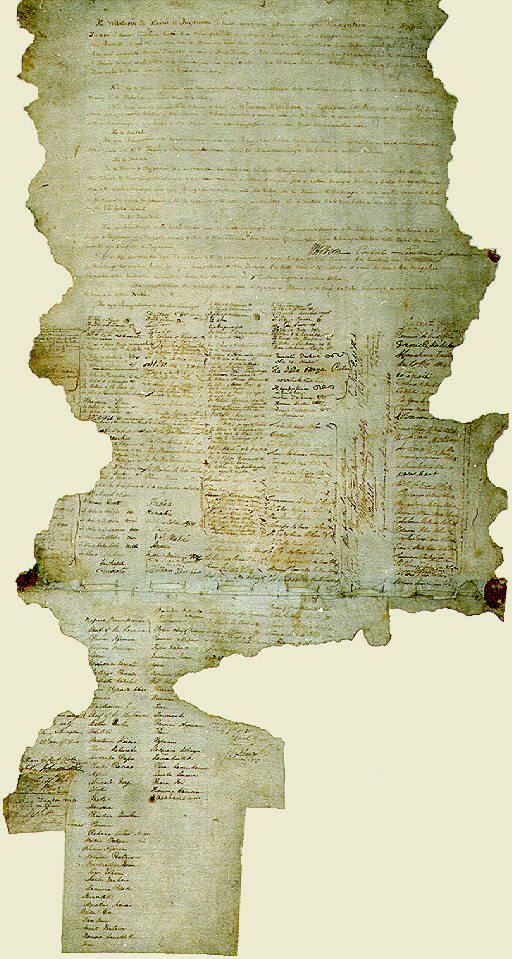
This brief focuses solely on the Te Reo version of the treaty – the one the rangatira understood and signed.

Few have read Te Tiriti o Waitangi with an open mind and no preformed opinions. This is because it is written in Te Reo Māori thus immediately filters its readers to those who either learned Te Reo as a child, or chose to learn it as a student or adult.

Te Tiriti is surrounded by an extensive body of interpretation which is rather remarkable given that it consists of 480 words. 

Extraterritorial Treaty: It is claimed  Te Tiriti is a partnership, but there is no language in the 480 words that says this. But, for anyone trained in Western constitutional history and international law, Te Tiriti is a clear and unequivocal statement of extraterritoriality. In the clearest of language, the principles of extraterritoriality can be read word-for-word in Te Tiriti.

Extraterritoriality, usually as the result of negotiations between equal partners, identifies land within the sovereign’s realm that is exempt from the jurisdiction of national law. Examples of this include the Vatican surrounded by Italy, the United Nations in New York, and with different terms, the Native American tribes who signed treaties with the US government. The principle of extraterritoriality was well established within Law of States under which Europeans divided up the world when Te Tiriti was signed. While Te Tiriti is written in Te Reo, the principles are solidly based in European Law of States.

Te Tiriti clearly says the tribes and their leaders will accept national law (kāwanatanga) provided their local jurisdictions are exempt; that on a local level they govern by rangatiratanga, which as far as the Crown was concerned means the Crown does not extend its jurisdiction to the lands, villages and treasures of hapū and their rangatira. 

This is not recited as a historic curiosity. Instead it suggests a very different way in which Te Tiriti can be exceptionally relevant to the 21st century challenges facing both New Zealand and Aotearoa. In short, this solution proposes the Crown honour the words clearly written in Te Reo and in doing so restore nga kāinga, enable hapū to rebuild both mana and taonga katoa, and enable hapū to create a good life on their terms.

SOVERIGNTY: At the COP28 conference in Dubai, King Charles said The Earth does not belong to us, we belong to the Earth’.  In that statement, he clearly set out the difference between sovereignty and the Māori view of property. What makes this significant is, in law, under sovereignty King Charles, in the person of the Crown, owns 1/6th of the planet. As King of the realm, including the realm of New Zealand, the Crown holds absolute ownership of every square metre of land and then issues “title”, a bundle of rights that people believe grants ownership – including Māori title.


KAWANATANGA: In Te Ao Māori, people do not own land, the land is a living being, the mother of the people. This is akin to what King Charles was saying at COP28 “we belong to the Earth”.

In Te Tiriti, it simply means that while the hapū will manage their own affairs, they agree to national law.

UNDERSTANDING SOVERIGNTY: In 1066 William the Conqueror defeated the Anglo-Saxons, claiming all lands and attachments as his own. He held absolute ownership of all England, granting a bundle of rights called realty that established Crown sovereignty. As the British Empire expanded, sovereignty was claimed by war, purchase, treaty or occupation, but the basic principle of absolute ownership underlying ownership of real property (land) has not changed in Western Law. Thus, to establish sovereignty over “Nu Tirani”, the Crown signed a treaty with the native leaders. But to secure that sovereignty, the Crown had to agree to extraterritoriality on hapū whenua..

Sovereignty is Centralism

UNDERSTANDING EXTRATERRITORIALITY: In the “Law of States” under which Europeans divided up the world, at the time Te Tiriti was signed, the principle of extraterritoriality was well established. It identifies territory within the sovereign’s realm that is exempt from the jurisdiction of national law, usually as the result of negotiations between equal partners. For anyone who can read Te Tiriti o Waitangi in Te Reo, it is the clearest statement of an extraterritorial treaty one could imagine. The Rangatira agree to kāwanatanga on a national basis, but not on their lands. On their whenua, rangatira and hapū reserved tino rangatiratanga.

Extraterritoriality is Localism.


WHAT THIS MEANS:

As NZ seeks to make reparations for the abuses of previous generations, an understanding of Te Tiriti as extraterritorial offers an opportunity to enable Māori to restore the mana, the taonga and the tūrangawaewae lost in the 19th, 20th and 21st centuries.

  • In the 19th century, the Crown used war and confiscation to destroy the kāinga
  • In the 20th century, the Crown used Urbanisation to entice the young to leave the kāinga
  • In the 21st century, the Crown bribes a Māori elite as a new twist on neo-colonialism

Imagine instead that the Crown came clean, and declared it would honour the extraterritorial status of hapū whenua, kainga and taonga katoa. This would require major rebuilding in the provinces where most of the neglected or abandoned whenua lies fallow. In this web site, see the post REBUILD KAINGA for how it can be done.

 THE HISTORIC CONTEXT SUPPORTING THIS UNDERSTANDING

Tangata Māori were organised into tribal authorities and as such did not have a single nation in the 19th century meaning. Each tribe was akin to an Anglo-Saxon kingdom, with clearly defined boundaries to their land, within which they had a system of government that worked. Most notably, their system of land ownership was not the same as the Crown’s sovereignty, the legal basis of land law which continues in NZ to this day… that of absolute ownership. 

Sovereign ownership of all land: The fact that only the Crown can be the absolute owner of land is the basis of sovereignty. It is the foundational concept of English and New Zealand law. Known as the doctrine of tenure, the Crown is the ultimate owner of all land. All land is held by the citizen as tenant under a grant from the Crown. What is popularly thought of as owning land is legally being seized of a freehold estate in fee simple in the land, which must be derived from a grant by the Crown.

This concept would have been a drop-dead if presented to the rangatira present at Waitangi. Thus Te Tiriti included an extraterritorial clause in the Te Reo version. It is clearly written in simple and unambiguous words. The chiefs will accept kāwanatanga to introduce national law, provided their own local jurisdictions are exempt. They agreed to this because their need for land changed with the arrival of the colonists.

Colonialism brought benefits, enabling them to shift from a hunting & gathering economy which needed large tracts of land, to a farm-based economy needing less land, but needing money to buy the advances the English offered.  Colonialism brought technology that changed the needs of the tribes. Tools, seed and livestock meant they needed less land to feed themselves, and they were prepared to sell surplus land for barter or money to buy such technology. But the rangatira wanted a formal system of exchange to prevent opportunistic Māori from selling land over which they did not hold mana. Te Tiriti contained a protocol for formal sale of surplus land.

In addition, colonialism brought firearms, making utu more lethal. The tribes needed intertribal keepers of the peace – the British Army and civil police – and were prepared to accept kāwanatanga to enforce peace among the tribes as well outlaw conflict with the migrants. 


WHAT THIS DOES NOT MEAN: 

Mana whenua as extending property rights over fee simple (freehold) title is a fiction insofar as it is said to arise from Te Tiriti. In other words, the idea that in selling land under the protocol established by Te Tiriti, somehow certain rights over it remained, is an artificial construct that in a Machiavellian way continues what might be called neo-colonialism.

In neo-colonialism, the Crown elevates iwi over hapū, whereas in 1840, iwi was an identity (which waka your ancestors sailed on), not a collective governance body. But when one seeks to co-opt, the fewer cats on seeks to herd the better. Thus, by elevating iwi, and defining the Māori as partners (meaning their legitimacy is confirmed by the Crown, rather than in their own right), and by offering the baubles of office, the Crown is able to avoid its duty to extraterritorial exemption of hapū over their lands, villages and treasures. As has become part of the 21st century debate, the Crown has created a Māori elite in classic divide and conquer.

Having said that, under sovereignty the Crown can do whatever it wants. Because it holds absolute ownership of all land in NZ, if it choses to give rights to any class of persons, it has the power to do so. But to claim it derives that authority from Te Tiriti is a fiction, and it also results in continued poverty and deprivation among the rural Māori who still live on their ancestral lands. 
 

How Did This Come About? Regulatory Creep…


Regulatory creep is where government officials within a bubble that includes academics and persons with a vested interest enter into a conversation that begins with a kernel of fact, but then is embellished. New embellishments grow on top of the first, and over time a narrative evolves that has no foundation in reality or fact.

The term mana whenua is a tool of regulatory creep. In 2010, Victoria University Senior Lecturer in Law, Catherine Iorns Magallanes wrote The use of tangata whenua and mana whenua in New Zealand legislation  in which she set out how the term mana whenua emerged out of colonisation. It is worth reading to appreciate how regulatory creep happens.

Clive Barlow, in Tikanga Whakaaro, 1991 wrote: Mana Whenua: This is the power associated with the possession of lands. Possession is a clear concept, no different in Tikanga Māori than in English law. If a hapū no longer wishes to retain mana over whenua, it has protocols to withdraw. For example, in 1897, Neho Keepa, a rangatira of Ngati Paoa testified before the Native Land Court “All the earlier tupapaku (dead bodies) were removed to Wharekawa [the Miranda Coast]… on account of the uncertainty as to whether this land [Matiatia] would be sold or not. Tarakawa removed them, all the people know that there are no bones left in the old urupa.” 

During the gestation stage, the fiction of mana whenua is contained within its bubble. It is only when that bubble starts implementing change based on its fabricated story that pushback begins. This happened when the legislation for the Auckland Supercity was amended in 2010. It included regulatory creep in regard to mana whenua, granting involvement of mana whenua, and “mataawaka” (Māori living in the Auckland region who are not in a Mana Whenua group) in decisions over land outside of the extraterritorial jurisdictions of hapū.

The Act did not directly define the term, but established the concept of mana whenua groups:

Local Government (Auckland Council) Act 2009 

Part 7 (81) This Part establishes a board whose purpose is to assist the Auckland Council to make decisions, perform functions, and exercise powers by—
(a) promoting cultural, economic, environmental, and social issues of significance
for— (i) mana whenua groups; and (ii) mataawaka of Tamaki Makaurau; and
(b) ensuring that the Council acts in accordance with statutory provisions referring to the Treaty of Waitangi. 

Part 4 Interpretation (1) mana whenua group means an iwi or hapu that— (a) exercises historical and continuing mana whenua in an area wholly or partly located in Auckland; is 1 or more of the following in Auckland:
(i) a mandated iwi organisation under the Maori Fisheries Act 2004:
(ii) a body that has been the subject of a settlement of Treaty of Waitangi claims:
(iii) a body that has been confirmed by the Crown as holding a mandate for the purposes of negotiating Treaty of Waitangi claims and that is currently negotiating with the Crown over the claims

This is regulatory creep and neo-colonialism. Where mana whenua meant clear physical boundaries over which rangatira held tino rangatiratanga, the Local Government (Auckland Council) Act extends this to cover freehold title land sold by their respective hapū under the terms of Te Tiriti (or lost due to breaches of Te Tiriti, which is another subject and is the purpose of the Waitangi Tribunal.

The Crown holds sovereign authority to make any law, and in the absence of a written Constitution limiting its powers, it can do what it wants, including granting mana whenua as some sort of right over freehold title. But to say this comes from the words in Te Tiriti o Waitangi is a fiction.

Kāinga: While academics, activists and those with a vested interest argue for co-governance and a partnership between Crown and Māori leaders (a fight this proposal has no interest in joining), the unarguable fact is that Māori, especially rural Māori on ancestral land, represent the worst in almost every negative statistic, in health, education, deprivation and lack of opportunity. Living conditions for some are third world. Gangs and criminality rival honest work and careers, especially as rural industries closed down and their jobs exported overseas.

However, unlike many fractured societies around the world, rural Māori have not lost the supportive framework so clearly identified in Te Tiriti. It fell into ruin but it’s still there. Most hapū not only know where their 19th century kāinga lay, they still own the land. The elders can point to where the whare were. The young, especially those with successful careers in urban NZ, say they would like to return to their ancestral land, but they would need a home for their family and a way to earn an income from the day they arrive.

Since there is finally an appetite on behalf of the public, and the elected leaders in Parliament to do right, to fix the wrongs of the 19th and 20th centuries, in this proposal, a very different solution is put forth. Stop making up words attributed to Te Tiriti that do not exist in it, and take seriously what it actually says. Because the words clearly written in Te Tiriti offer the best roadmap to a better future both for Māori and for all the people of New Zealand.

Rebuild Kāinga: Begin by inviting hapū to petition the Crown to identify the boundaries of their whenua that they, the hapū and their rangatira wish to obtain extraterritorial status. Make it a free-trade zone to enable such jurisdictions to become regional economic engines in which taonga katoa includes common wealth that raises everyone out of poverty.

Note that Te Tiriti does not restrict such protections to people with Māori ancestry. In addition to rangatira and hapū, Te Tiriti promises tino rangatiratanga over whenua, kāinga and taonga katoa to nga tangata katoa o Nu Tirani (all the people of New Zealand), meaning a free-trade zone factory would extend its benefits to anyone within the hapū jurisdiction.

Then identify where on the whenua to build the kāinga, the place where the people will live and work. In many cases it will be on the old site which may either be vacant or still have what today is called the marae. In compensation for Crown predations in the past, the government would provide a package of grants, loans and contracts intended to enable the hapū to rebuild and stand on their own feet.

WHY? Poverty is a state of mind. While the social-welfare system is compassionate as a safety net, when it becomes a way of life tūrangawaewae becomes its first victim. To end poverty, people need a supportive community and a self-supporting local economy that has a positive balance of trade. They need to earn more than they need to spend, and in doing so they need to stand tall, not be dependent on the social-welfare department. Rebuilding kāinga is about rebuilding strong and healthy communities that become part of the solution, not part of the problem.


If this is of interest, read on:

Te Tiriti o Waitangi is an extraterritorial treaty.


Extraterritoriality: the state of being exempted from the jurisdiction of national law, usually as the result of negotiations between equal parties.

Partnership: A formal agreement where two or more parties agree to share decision-making, collectively own property and carry unlimited collective liability for the acts of the partners.

As a treaty, the rangatira and hapū agreed to a colonial form of national governance called kāwanatanga, provided on a local level the Crown protected rangatira and hapū local governance and did not interfere with the hapū’s lands, villages and treasure.

In other words, in the face of a global centralist enterprise – the British Empire – the rangatira negotiated protection of localism – the right to be left alone by the Crown when it came to managing their own hapū affairs.

This was best stated by a Māori academic, Angeline Greensill, Lecturer in Geography, University of Waikato, who posted this online:

Whanau, hapu and iwi relationships therefore continue to be undermined as a result of government manipulation and imposed statutory frameworks which redefine and subjugate traditional Maori tikanga. Presently processes promoted by “Iwi Authorities” actively encourages whanau members to redefine their identities and tikanga to qualify as beneficiaries of settlements which are promoted as delivering benefit some time in the future.  By so doing those whanau and hapu members, perhaps unknowingly contribute to cultural engineering which speeds up the severing of their knowledge of ancestral links – whakapapa.

Because of “Iwi Authorities” manipulation (in collusion with the Crown), hapu interests have not only become “unbalanced”, but have become invisible, subordinate and subjugated and consigned to cargo cult status.  Iwi Authorities owe their existence to the legislation which empowers them to make decisions normally made by hapu. 

Such a practice contravenes Article II of the Treaty of Waitangi which confirms and guarantees absolute power to hapu. The Crown and its imposed western structures fails to recognize tino rangatiratanga and by doing so undermines the political autonomy of hapu to such an extent that under the present treaty settlement processes, the Minister of Treaty Settlements arbitrarily decided that he would negotiate directly with statutary iwi-based organizations, who in turn claim benefits on behalf of hapu with or without their consent .

(note: this quote was found using Google. Copyright is presumed to be held by Lecturer Greensill.)

The Proposed Bill

The Kāinga Restoration Bill proposes to enable rangatira and hapū to rebuild both physical kāinga on their ancestral land, and a robust, self-supporting local economy. It proposes a package of financing, grants, exclusions from centralist regulations and special economic status in the form of free-trade zones consistent with the extraterritorial treaty known as Te Tiriti o Waitangi. Its intent is to reverse Urbanisation by enabling hapū members to move back to their ancestral lands and thrive without undue interference by the centralists.

The Bill:

  • Hapū are invited to lodge their interest to restore their kāinga; to identify its location
  • Hapū shall be provided a package of loans and grants to rebuild and to grow its local industry
  • Kāinga shall be Free Trade Zones, not subject to duties, taxes, rates or fees
  • Kāinga shall be akin to local statehood, appointing envoys in treating with kāwanatanga.
  • Common Law’s publici juris : water, air and light is free for all who can access it and includes such post-1840 assets such as radio frequencies.

Nga Kāinga Restoration Bill

Proposed Bill

Explanatory Note

Colonialism changed the pre-colonial Māori economy through the introduction of farming to intensify food growing – thus hapū no longer needed the same amount of land that a hunting/gathering society required.

Colonialism changed the Māori economy with the introduction of money as a medium of exchange, thus hapū could sell now-surplus land for money with which they could buy imported livestock and seed, farm implements, metal tools and firearms, English building materials, clothing and luxury goods, all of which greatly increased the hapū’s capacity to create wealth.

These colonial benefits changed the economic basis of the kāinga and were embraced by hapū. This was especially the case with sale of surplus whenua, which enabled hapū and whanau to make money to buy colonial goods. However, some Māori were selling to Pākehā land the sellers did not exclusively own.

Further, while the dominant colonial presence was British, in the absence of a formal claim of sovereignty, other colonial powers, notably France, could make competing claims.

These effects of colonialism produced tensions, especially as firearms made hapū versus hapū warfare more lethal. Accordingly, to address all these effects of colonialism, the Crown representatives proposed Te Tiriti o Waitangi to establish English Common Law, colonial sovereignty and a formal means to convert whenua to real estate when sold to Pākehā.

However, the rangatira and hapū system of governance was based on mana, of which mana whenua was in direct conflict with sovereignty. Under sovereignty, since 1066AD, ultimate absolute ownership of land lies with the Crown who then issues a bundle of rights called real estate. This would not be acceptable to the rangatira at Waitangi in 1840. Accordingly, sovereignty was limited by the lesser concept of kāwanatanga – central governance in which local governance over whenua, kāinga and taonga katoa was excluded from centralist control.

Accordingly, Te Tiriti o Waitangi is an extraterritorial treaty in which the Crown agreed to exempt hapū whenua, kāinga and taonga katoa from interference by central governance.

However, by design or by values, the central government soon sought to expurgate local control.  

In the 19th century, the central government used the military to confiscate whenua and destroy kāinga as settlers pressed for more land.

In the 20th century after the Second World War, the central government developed a policy of Urbanisation to strip the kāinga of their young, to the point where kāinga became at best an ancestral marae to which the hapū returned for rites of passage. Many kāinga were abandoned, left to rot, where all that now exists is bare whenua and kāinga memory.

In the 21st century, the Sixth Labour Government proposes to recast Te Tiriti as co-governance, in which the role of Iwi is elevated to benefit a small elite while failing to address the clear terms contained in Te Tiriti o Waitangi. This became a controversial topic and may have contributed to Labour’s loss in the 2023 election. 

This Bill proposes to correct Tiriti misinterpretation and to enable rangatira and hapū to restore kāinga and taonga katoa on their ancestral whenua.

  1. Purpose: The purpose of this Act is to enable restoration of kāinga and taonga katoa on hapū whenua, so rangatira and hapū may exercise tino rangatiratanga as pledged by the Crown in Te Tiriti o Waitangi.
  2. Context: In Part Two of Te Tiriti o Waitangi, the Crown guarantees to nga rangatira, nga hapū and nga tangata  katoa o Nu Tirani protection of tino rangatiratanga over whenua, kāinga and taonga katoa. For clarity, nga tangata katoa o Nu Tirani is interpreted to mean any person resident in New Zealand, regardless of ancestry or race, who is resident on such hapū whenua has equal protection under Te Tiriti.
  3. Definitions
    1. Kāinga (village): Urban land upon which whare (buildings) are constructed within a clearly delineated boundary between the kāinga’s urban and its surrounding rural land; including:
  • Cultural: such as the wharenui (also called wharetapu – the main meeting house), wharekai (dining) and wharekura (school), and
  • Commercialwhare-whaihanga (workshops and revenue-generating businesses) and
  • Residential: wharepuni (small family homes), which may include chattel housing

    1. Taonga Katoa (wealth and property): This Act does not presume to set out the full meaning of Taonga Katoa. Instead it is limited to tangible and intangible property within the hapū’s domain and the wealth-creating capacity of a self-supporting local economy.
    2. Wharepuni: Small family homes on the kāinga. Unlike Pākehā housing, which tends to have a higher level of self-containment with the nuclear family, the wharepuni is part of a broader balance of shared space with the whare puni as private family space surrounded by public space shared by the extended whanau or hapū. In some cases, this design includes a separate wharepaku for bathing and toilet, not physically in the wharepuni.
    3. Whare-whaihanga: Work places. The traditional whare whaihanga were places to support the weaving and carving activities of the hapū or whanau. In the 21st century, the whare whaihanga are buildings used to create hapū wealth including offices and workshops.
  • Clarification: For clarity, while this Act describes the more communal nature of the kāinga, it does so solely to set out the different improvements that may attract different forms of funding. The Crown does not presume to dictate to the hapū how it may choose to design its kāinga or the nature or purpose of the buildings and improvements therein. The basic principle is that cultural whare will be funded with grants, whereas commercial and residential whare will be funded by loans. 
    1. Hapū: Hapū was the highest form of governance at the time Te Tiriti o Waitangi was signed, consisting of its own collective identity made up of subsidiary whanau. For the purposes of this Act a subsidiary whanau may apply and qualify for kāinga restoration in its own right, under the identity of the hapū. In this Act, the rights accorded to the hapū are also accorded to their subsidiary whanau and where applicable, the use of hapū also refers to whanau. The intent of this distinction is to avoid an internal conflict where the whanau wishes to establish tino rangatiratanga over their lands where the hapū may have a conflicting intent. If a whanau owns land in its own right and seeks to restore a kāinga on that land, it may make application without approval of its hapū organisation.
    2. Iwi: For clarity, traditionally “Iwi” is an identity consisting of hapū descendant from one of the seven waka in the Great Migration or the eighth identity that is unknown such as Moriori. In Te Tiriti, the only reference to iwi is in the last sentence of the first paragraph (ke nga tangata o tona Iwi) that refers to Queen Victoria’s British subjects, not Māori. For the purposes of this Bill, Iwi is not a superior governance unit, although subsidiary hapū may collectively unite (self-funded by nga hapū members, not the Crown) to create a collective hapū voice, should they so choose. For the purposes of this Act the hapū remains paramount.
  1. Restoration: The restoration of the Crown obligations under Te Tiriti include: 
    1. Application: A registered hapū that owns land upon which a kāinga is or was may apply to restore and rebuild their kāinga and to qualify for the support and status of a Tiriti-protected kāinga. Simple applications shall be for hapū (or whanau) that currently own the whenua in Māori title and where the location of the kāinga is known and available for restoration.  Complex applications shall be where land ownership has been lost or the kāinga site is deemed inappropriate due to risk of flood, inundation, or other natural hazard. A preliminary application identifies the proposed restoration. A subsequent detailed application addresses the level of support requested.
    2. Residential and Commercial Construction Loans and Mortgages: For the first seven years (72 months) after an approved project begins, the Crown shall provide zero-interest fixed-rate 25-year mortgages (zero interest for 25 years) to build homes (including chattel homes) and commercial buildings and infrastructure to enable the hapū or their subsidiary whanau to rebuild their taonga katoa to enable it to become financially independent, not dependent on the state welfare system. At the end of seven years, the hapū shall be responsible for funding and managing its own mortgage bank, and shall take over the portfolio of Crown-funded mortgages within the hapū’s jurisdiction, repaying the Crown for the debt over time.
    3. Land acquisition: On a case-by-case basis, the Crown may use its powers of eminent domain to acquire on behalf of the hapū, either land surrounding an established marae to be zoned for whare-whaihanga or wharepuni. In the event there is no marae, the Crown may consider applications to acquire greenfield land within the traditional hapū dominion to site the kāinga. Such land will revert to Māori title, be owned by the hapū and be governed under the extraterritorial terms of Te Tiriti.
    4. Business Loans: To fund through financing the establishment of hapū businesses, including zero-interest business loans for the first seven years to enable the hapū the option to establish its own cooperative bank that it may operate individually or collectively with other hapū. After the seventh year of re-establishment of the kāinga financing will be provided by the Crown at commercial rates available to all banks, or the hapū may elect to manage its own portfolio through a hapū bank.
    5. 7-Generation Planning: To provide grants for a period of seven years for hapū to retain expert, qualified business advisors to ensure the hapū businesses are established on a sound economic basis to provide for the foreseeable needs of seven generations.
    6. Culture Grants: For the first seven years after kāinga establishment to provide one-off grants for the rebuilding of wharenui, wharekai and wharekura on the marae, with an extra bonus grant for whare nui that are carved in the traditional fashion.
    7. Free Trade Zone: A kāinga may apply to the Crown to become a free trade zone, meaning within no taxes, licenses, fees, nor fines for internal hapū matters, shall be assessed or collected by the Crown, nor rates, fees or fines by the territorial authority.  Further, goods imported into the kāinga from overseas shall not be subject to border duties, but shall be subject to border controls in regard to controlled or prohibited goods or substances. However, goods made and services provided beyond the borders of the hapū but within the domain of New Zealand shall be subject to the normal taxes paid by the purchaser, and income earned by outside investors where profits pass over the hapū border and are paid to non-hapū entities shall be subject to the laws and taxes of New Zealand.
    8. Resource Management Regulations: Hapū-owned whenua and kāinga are excluded from regulations of the regional and/or local government district/unitary plan, provided an adequate buffer zone is established by hapū to mitigate adverse impact on adjacent neighbours, and further provided the hapū activities do not add significant new adverse impact on the environment, including climate change, or noxious noise, lights, odours, or pollution beyond the hapū’s whenua boundaries. The hapū will be required to develop, and the Crown to accept, the hapū’s own sustainable management plan and that the hapū follow it to ensure the Crown meets its international obligations in regard to climate change and other environmental protections. The Crown shall retain the right of intervention to protect the physical and natural environment and the wellbeing, health and safety of people adjacent to and beyond the hapū land boundaries. Dams, power plants that supply energy, and mines that sell minerals, that are on hapū whenua but are exported beyond the boundaries of the hapū whenua shall be regulated by the Crown.
    9. Building Code Regulations: The Building Act shall not apply to construction within the kāinga, however, the hapū is required to develop and enforce its own standards that ensure buildings are warm, dry, safe, durable and have a low carbon footprint.
    10. Food Regulations: Hapū shall regulate their own food/farming for internal consumption, but comply with Crown law in regard to food sold to persons outside the hapū jurisdiction, and comply with associated external food-growing emissions, runoff and other pollution regulation.
    11. Liability Insurance: The hapū shall maintain liability insurance for any and all members living in the kāinga sufficient to compensate in the event of an incident between a hapū member and an outsider. This includes sufficient 3rd party-liability insurance on motor vehicles driven outside the hapū boundaries which must comply with all Crown regulations.
    12. Medical Services: Kāinga residents shall be eligible for New Zealand medical services the same as all the people of New Zealand unless the kāinga formally chooses to provide its own medical services funded and operated by its hapū.
    13. Transitional Provisions: All persons drawing a NZ pension at the time they move to their kāinga may elect to retain their NZ Superannuation, subject to the laws of the Crown. Likewise welfare beneficiaries including those on disability may elect to retain their dependency on the Crown, but if they do so, they remain subject to all Crown regulations. However, no new applications for Superannuation or welfare benefits may come from kāinga residents. The choice to move to tino rangatiratanga means the hapū takes care of its own.
    14. Criminal and Civil Law: Within the kāinga, hapū maintains tino rangatiratanga over its legal system. However, for breaches of Crown law, which in most occasions would occur outside the hapū domain, Crown law enforcement remains in place. This includes the right of the Crown to enter the hapū’s kāinga and/or whenua to present a warrant to the rangatira or other hapū representative to enforce Crown Law including the powers to arrest, where the rangatira agrees to fully cooperate, subject to an efficient and rapid appeal process in the event the rangatira disagree with the facts in the case. The role of the Māori Land Court shall be expanded to hear such appeals, to ensure sensitivities to Māori tikanga are inherently respected.
    15. Existing Māori Enterprises: Any Māori enterprise that was established under the auspices of Te Tiriti shall become collectively owned by the hapū that have restored their kāinga under this Act. For simplicity, initially, the division of ownership shall be equally by kāinga-based hapū (one share per kāinga) but after seven years, shared ownership shall be based on the census of adults living within the kāinga with each kāinga issued one share for each adult member living in their territory. All Māori trusts and enterprises established under Te Tiriti would lose their special status and government funding derived from Te Tiriti, to be replaced by whenua- and kāinga-based hapū ownership that would be subject to Crown Law unless the Māori trust operated solely within nga hapū territory.
    16. Māori seats in Parliament: Māori seats in Parliament shall be abolished and respective enabling laws repealed. Māori representation in territorial authorities shall be replaced with ex-officio hapū seats that acknowledge the clear separation of tino rangatiratanga in Te Tiriti. All Māori Voting Rolls shall be abolished. In their place, respective hapū shall establish its own internal voting rolls according to their tikanga in accordance with their respective kawa.
    17. Envoy: Insofar as Te Tiriti is a formal agreement between governing bodies (hapū and the Crown), each respective hapū shall appoint envoys to represent its interests both in central government and in the territorial authority(s) within which the kāinga and the hapū’s surrounding whenua is situated.
    18. Central Government Envoy: Because pre-colonially there was no central Māori government, and there are too many hapū to provide a manageable representation to central government, eight envoys shall be appointed by waka, in which each hapū that identifies with one of the seven wakas in the Great Migration, and the eighth (unknown) for hapū, such as Moriori. Election protocol shall be determined by the respective hapū, but if they are unable to agree, election shall be by vote, one person/one vote of all members of the collective hapū.
    19. Envoy Role: Envoy shall have ex-officio seats in Parliament, with the right to speak and to question, but not to vote. The envoy shall have the right of enquiry into all government matters provided they can show how the matter impacts their hapū constituency and excluding matters of national security unless it can be demonstrated to the Governor General that access to such information merits confidential disclosure. Envoy may bring legal action in the Māori court to challenge Crown law that they allege adversely impinges on tino rangatiratanga with respect to their whenua, kāinga and taonga katoa.
    20. Local Government Envoy: At the local level, each hapū within the respective local government territory shall appoint and present credentials for its envoy to represent its interests with the territorial authority(s), subject to a limit of seven hapū enjoy representatives in territorial authorities who have more than seven hapū in their jurisdiction – in such cases the collective hapū shall elect seven envoy representatives and appoint one leader to speak for the representatives.
  • Meetings and Committees: The collective hapū shall have one ex-officio seat at council meetings and committees where the envoy is granted questioning and speaking rights, but not voting rights.
  • Judicial Review: The envoy may bring legal action in the Māori court to challenge local government acts or omissions that the envoy alleges adversely impinges on their hapū’s tino rangatiratanga with respect to their whenua, kāinga and taonga katoa. 
  • Non-Disclosure: The envoy shall be required to sign a non-disclosure agreement with the territorial authority, and the territorial authority shall not be permitted to withhold information on privacy or commercial sensitivity grounds; but if the envoy breaches the confidentiality or is deemed disruptive by the territorial authority, the territorial authority may revoke the credentials, and require the hapū appoint a new envoy deemed acceptable to the authority. For clarity, the envoy does not have to be a member of the hapū, the envoy may be a lawyer or other relevant professional.
    1. Publici Juris: The Common Law principle of Publici Juris is affirmed in full. Fresh water, air and light is free for all who can access it, and this extends to radio frequencies, airspace above 500 feet and the foreshore, which is regulated by the Crown. Access to fresh water wholly surrounded by a hapū’s whenua shall be controlled by that hapū.
    2. Urban Māori – Te Tiriti accords protections of whenua, kāinga and taonga katoa to nga rangatira, nga hapū and nga tangata katoa o Nu Tirani (all the people of New Zealand). It does not accord special privileges by virtue of race, ancestry, or ethnic identity. Accordingly all privileges or protections that discriminate, including positive discrimination by race, ancestry or ethnic identity, shall no longer be deemed to have a basis in Te Tiriti o Waitangi.


Land Law 101: English Land – Māori Whenua


In order to effectively govern as an MP, and to be part of the solution not part of the problem, understanding the purpose of law, and then understanding the purpose and basis of land law is essential. Land law is the law of immovables. That which can be touched but is not intended to move from one place to another. Territories are claimed. Boundaries are marked. Ownership is established and defended.

  • The English, starting in 1066 AD developed a concept of land ownership called sovereignty that continues to this day in New Zealand
  • Māori have a very different relationship to land called mana whenua, where the collective people who live on the land are called tangata whenua.

Unfortunately for New Zealand, too many students of government and even law students seem to have slept through Property 101. This is further complicated by Te Tiriti o Waitangi where two very different concepts of land and property law were married.

As a result, one finds regulatory creep where (if you pardon the pun) the boundary of law has been moved by advocates and bureaucrats over time.

The point of law is that it does not move except by due process, meaning changed by majority vote in a democratic system of governance. Over the past 20 years this regulatory creep has happened with land and property law, to the point where a restatement is deemed necessary.  For example, the idea of Māori sovereignty sounds appealing to advocates, but if properly using the word sovereignty, it makes no sense whatsoever. It’s not how Māori worked when it came to whenua.

What is Law? 

Law is a social contract in which humans who live in proximity develop agreements to get along with each other. There are two fundamental origins of law: 

  1. Agreement: The adults agree to get along. Typically this emerges out of a family where parents lay down the law and the young agree or suffer consequences.
  2. Conquest: A warring party fights and dominates another people, and then lays down the law to which the losers agree in order to survive after conquest.

In either case, law begins informally and over generations – especially if the culture uses written language – become more codified. Eventually, law becomes so complicated a class of experts called lawyers and judges emerge to interpret the written law as agreed to by a formal governance body. In NZ it’s called The Crown.

What is Property Law?

Tangible: Property consists of tangible property (things that can be touched) and intangible things (things that cannot be touched).

Realty vs Chattel: In this page, focus is on tangible property, and more specifically immovable property (called realty: land and anything fixed to land, such as a stone wall or a castle) and property that can be moved (called chattel  such as a dumped pile of stones that may become a wall or castle, but at present is not). The grey area comes when it is unclear if the property is fixed to land or not, and in such cases the courts make decisions, often based on intent, that can be precedent setting, meaning once decided for that case, it is not overturned except by new and explicit law.

Sovereignty: The above distinction is based on English Law, also called Common Law. In short, since 1066 AD, all land within the realm (all of NZ) is owned by the Sovereign, also referred to as The Crown presently in the titular name of King Charles III. What we call realty or real property/real estate is a bundle of rights granted by the Crown, not ownership. A Kiwi can own cattle (a word related to chattel), but only owns fee simple rights to the paddock upon which the cattle graze. Those rights seem so strong that ordinary folk regard them as absolute, but in law this is an illusion. It’s not real.

Colonial Law: This sovereign concept of land ownership became more complicated when the British Empire started colonising the planet. In colonisation, the Western Powers agreed to the International Law of Colonialism where one nation claims ownership of foreign land, after which another nation can only take ownership by conquest (Norman), treaty (Waitangi), purchase (Alaska) or revolution (American).

Eurocentric: The native peoples who were colonised had no say in the establishment of International Law of Colonialism and in many cases the land the colonial power “discovered” were already occupied by native peoples who held absolute ownership of land in accordance with their own social contracts. International law had procedures for dealing with colonising lands already occupied, but they were agreements made among Western powers, not the natives already there.

Since New Zealand (Nu Tirani in Te Tiriti o Waitangi) was colonised under the International Law of Colonialism, it’s important MP’s understand its basis in law:

Sovereignty

THE KING HOLDS ABSOLUTE OWNERSHIP OVER ALL THE LAND

To understand Western governance, one must begin with Christianity, most notably Genesis 1:29

And God blesses them, and God says to them, “Be fruitful, and multiply, and fill the earth, and subdue it, and rule over fish of the sea, and over  bird of the heavens, and over every living thing that is creeping on the earth.

Sovereignty means absolute ownership of land and supreme authority over people to establish a state of lawfulness. New Zealand sovereignty was born by conquest in 1066, in which supreme authority was vested in the Crown by divine right. But over time sovereignty increasingly became subject to a system of checks and balances requiring consent of the people by their elected representatives. In other words, it has moved from conquest to agreement, but NZ still has vestiges of conquest at its fundamental basis. When it comes to checks and balances, the collective government still holds absolute sovereign power because there is no written Constitution to which the people can appeal and to which the officials swear allegiance.

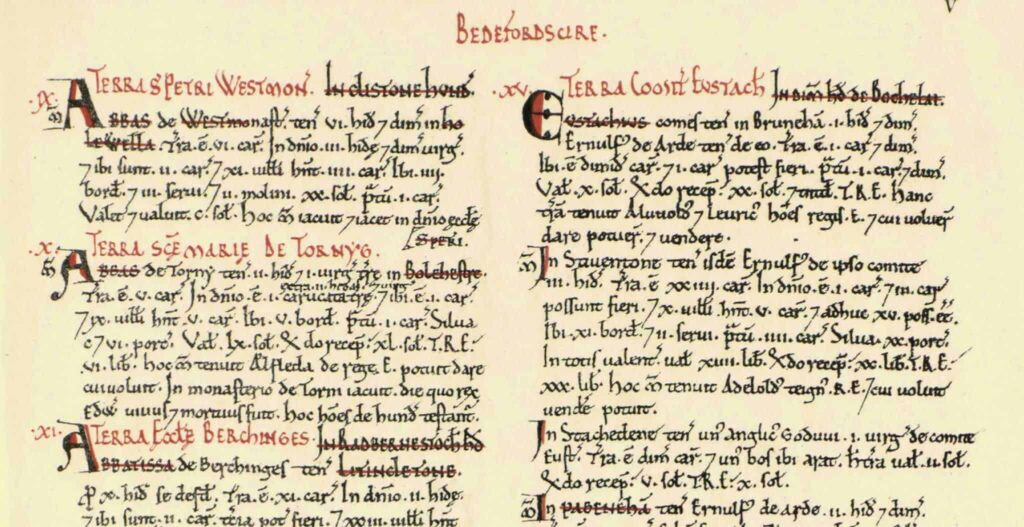
1066 AD: In 1065, England was controlled by several Earls, not one supreme king. The Earl of Wessex was Harold Godwinson. In 1066, Duke William of Normandy became William the Conqueror by defeating Harold at the Battle of Hastings. As King William I, he claimed absolute ownership over all land and everything fixed to land such as castles, as his own. He then issued a bundle of rights called realty (real estate / real property) where a landlord was issued a title. To cement this, in 1085 William recorded his ownership in the Domesday Book.

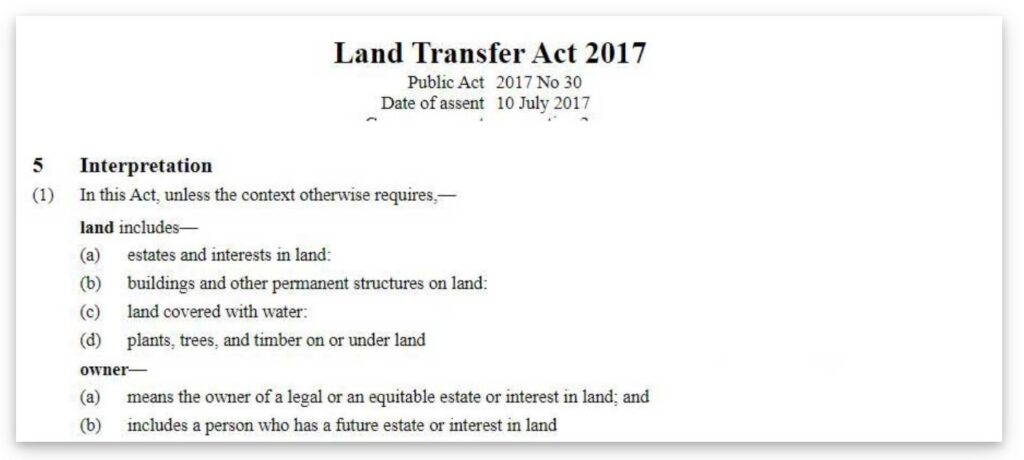
This is not a historic curiosity. It remains the basis of land law in New Zealand today. The Crown holds underlying absolute ownership of all land, be it in Māori title or Freehold. Over the centuries, the limits on Crown authority were both increased and codified, but there is no question that at law, all land and all fixtures attached to land are owned by the Sovereign. Any careful reading of the laws related to land makes this clear…

Estates & interest: When one buys fee-simple freehold land, one buys rights (estates and interest), not absolute ownership. These rights may appear to be absolute until the Crown takes land by eminent domain, or passes laws such as the Resource Management Act that gives the state (as delegated to the councils) authority to determine what improvements may be done on fee simple land. To make a change, one must apply for a consent.

While it is said Māori did not understand the legal concept of sovereignty in 1840, it would be reasonable to say in 2023 very few, including MPs understand the legal concept of sovereignty, especially in regard to land ownership, because it is rooted in archaic history of conquest that is alien to most in the 21st century.

No one (other than fringe groups like the Sovereign Person movement) question the supreme authority of the sovereign. As stated by Department of the Prime Minister and Cabinet: The King reigns, but the government rules so long as it has the support of the House of Representatives.

Because NZ forms political parties, and elected Members are compelled by their party to vote as a block, power is centralised to a small group of like-minded people, especially if under MMP, a single party wins over 50% of the vote. The cabinet holds extensive power where, with the exception of the power to demonstrate, protest or occupy land, the people have little say except at election time.

Mana

EARTH DOES NOT BELONG TO HUMANS, HUMANS BELONG TO EARTH

To understand Māori view of whenua, it is explained in whakatauki that set out a different relationship between humans and the Earth:

Whatungarongaro te tangata, toitū te whenua 
(People disappear, the land remains) and
Ko au te whenua, ko te whenua, ko au
(I am the land and the land is me)

Mana whenua: In order to understand the precolonial Māori social contract, it is essential to understand the concept of mana, of which mana whenua (land) was a central principle. Mana whenua comes from land held by a hapū, a tribe that descended from a common ancestor. Multiple hapū would recite their ancestry to a common iwi (which waka their ancestors sailed on), but iwi did not control land or serve as a collective level of governing.

Mana tangata: Hapū ruled supreme over their whenua, kāinga and taonga katoa, and the rangatira was their chief who ruled by a form of collective decision-making in the hui. If a rangatira lost the confidence of the hui, the chief’s mana tangata was lost. No impeachment or recall vote, loss of mana would be immediate, obvious and devastating. This served as a brake on the people who may not like the decision made by their rangatira, but accept it in respect to the chief’s mana.

Mana whenua was claimed and defended, but was not rigidly fixed.

Prior to arrival of European technology, agricultural, weaponry, money and law, Māori were predominantly a hunting/gathering culture where one tribal territory abutted the next because all of it was needed for food. When Europeans arrived, they altered the Māori economy by bringing livestock, seed, farm implements and farming knowledge which Māori adopted.

This meant a need for less land, but fed a need for money to buy these European advances. One way to raise money was for hapū to sell surplus land. In doing so fully understood they were abjuring mana. For example, in 1897 at the Native Land Court, rangatira Neho Keepa testified “All the earlier tupapaku (ancestral bodily remains) were removed  [from Matiatia] to Wharekawa (the Miranda Coast)… on account of the uncertainty as to whether this land would be sold or not...” By removing the tupapaku, the tribe was relinquishing its mana over that land.

It is alleged Māori lacked the legal capacity to understand the concept of sovereignty, thus did not do so in Te Tiriti o Waitangi. However, while the rangatira at Waitangi did not have legal training in principles of Common Law or the International Law of Colonialism, it is clear they understood they were giving up absolute ownership over whenua they regarded as surplus to their requirements. In Māori terms, they were giving up claims to the whenua in question. Otherwise, they would have demanded utu.

To be clear, this does not apply to land that was confiscated by subsequent wars or other reasons for which the Waitangi Tribunal is making reparations.

Subdue or Kaitiakitanga – which is more aligned with the present?

Sovereignty is a historic vestige from a time when kings ruled and claimed their right as divine, meaning it came from God and they were accountable to God, not to the people over whom they reigned. Christianity was ever-present in the people’s lives, and indeed to this day, crowning of the King/Queen is a Christian ritual. Unfortunately for the planet, the injunction in Genesis 1:28 has actually come to pass. Humans have subdued the earth. They have filled almost every arable corner of it, and believe they rule the birds of the air, the fishes of the sea and all that moves across the land, although by rule, it seems to mean bringing fauna (and flora) to extinction.

As humanity becomes more aware of its environmental footprint, the Māori worldview of kaitiakitanga becomes more relevant. As the NGO Conservation International reminds us: “Nature doesn’t need people. People need nature.”

Baggage: This opens up a very interesting possibility for New Zealand – the new sea land – to move beyond sovereignty to a legal system in which land is not owned, it is cared for. Title to land continues, but the concept of sovereignty with its negative historic baggage is left behind.

Law of Empires: Curiously, the arguments Māori make in regard to whether the British Empire did or did not secure sovereignty by Te Tiriti are based on western international law of colonialism. They argue while sovereignty was claimed in the English version, in Te Tiriti, the rangatira representing hapū only granted kāwanatanga, not mana whenua, meaning sovereignty – absolute ownership of all land by the Crown in the person of the Queen or King of the day – was never secured. This is a curious state of affairs where Māori are demanding their rights under English and Colonial Law while asserting English and Colonial Law was never properly ratified and therefore lacks legitimacy. To argue illegitimacy from a platform declared as illegitimate by those advancing the argument creates an oxymoron and only stands because until recently, with the apparently-serious proposal for co-governance, there was no pushback. 

A New Hereditary Aristocracy: This argument came to the fore under the 6th Labour Government when the concept of co-governance moved from an academic discussion to a political platform that would in law create a new hereditary aristocracy in which authority was vested based on ancestry (think House of Lords in the UK) not election by the people (think House of Commons in the UK). While the Crown has the supreme authority to whatever it wants, it is historically dishonest to say it is compelled to do so based on Te Tiriti, or to use the current political jargon, it is based on misinformation or disinformation.

Regulatory Creep

On 29 July 2020, the government received an independent review of the Resource Management Act (RMA). The nearly 600 page document, prepared by retired Court of Appeal Judge Tony Randerson QC, gives advice on how to move forward by practically repealing the RMA and starting again. In that report, the term ‘mana whenua’ is proposed to be defined as “‘an iwi, hapū or whānau that exercises customary authority in an identified area.”

Customary: This is not historically accurate. The word “customary” greatly expands the territory, to include land that was sold by competent hapū and whānau under the protocol set out in Te Tiriti. The records of the Native Land Court clearly show the hapū who petitioned to sell land fully understood they were relinquishing mana over the land they were selling. Such land was surplus due to their shift from hunter-gatherers with minor kūmara agriculture to farmers in which almost all food was grown using imported seed, livestock and farming methods.

iwi never exercised customary authority because the highest form of authority was hapū. This would be like the United States granting customary authority to families who trace their ancestry back to the Mayflower.

Why this matters

People need certainty in their lives. Tūrangawaewae – having a place to stand tall on the planet – is fundamental to human wellbeing, and it is attained by a careful balance between the needs of society and needs of the individual. New Zealand was colonised predominately by the losers in the Norman Conquest of 1066. The Anglo-Saxons, Celts and Norse who were conquered by William became tenants in their own land. They became subservient to an overlord class who claimed ownership rights over land the conquered people’s ancestors had owned until William confiscated them by right of conquest. The descendants of those tenants took the arduous journey to the other end of the earth to start a new life in which there were no overlords. They did not conquer the native peoples, they intermarried, to the point that today there are hardly any natives left. All are what in Latin America is called mestizo, persons with mixed ancestry.

Land owning may be a bundle of rights granted by the Crown, rather than absolute, but it is important to Kiwis, regardless of ancestry or DNA.

Increasingly, the right to change ones land, such as constructing a new home or structurally changing an existing one comes with an overlay of consent charges and delays that are becoming burdensome. In almost all cases, the consent is eventually granted, but not until one has paid a new class of experts to write the application in a form the council accepts after charging substantial additional fees and sometimes contributions that mean less money for bricks and mortar, less for the beauty in the finishing materials because the available money ran out.

To add a mana whenua cultural overlay, be it a mana whenua review of a consent application paid by the applicant, or use of rates to pay for the services of a new hereditary class that is paid by council for consultation, seems a step backwards. Councils need kaitiakitanga, but it should be based on knowledge, understanding and field experience, not ancestry.

The recent 2023 election saw a repudiation of co-governance in the switch from a Labour government to a National government, but there does need to be a more nuanced way forward. The idea of a hereditary class granted powers due to ancestry seems a backward step for the nation, but at the same time, sovereignty appears as a historic vestige that perhaps should be retired in favour of kaitiakitanga. 


CASE STUDY

“Mana whenua is an iwi, hapū or whānau that exercises customary authority in an identified area.”

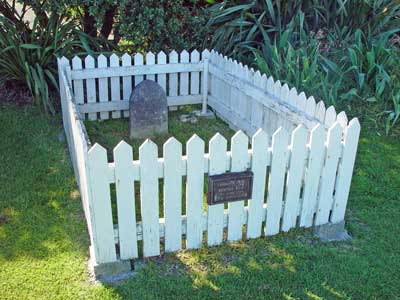
On Waiheke Island, most visitors and residents arrive by ferry at Matiatia, but few notice the picket fence on the foreshore that is the urupa of a former Taranaki Māori slave who was brought to Waiheke by with his former owners, the tangata whenua, released from bondage by Te Tiriti, and was given Matiatia valley as tuku whenua (right to occupy) where he was buried and is still honoured to this day. Matiatia exemplifies the realty of Te Tiriti, and it is worthy of a review for those still reading this page. It is helpful that historian Paul Monin wrote a book, Matiatia Gateway to Waiheke that documents the history.


In about 1700, Ngati Paoa, a hapū of the Tainui iwi began to extend settlement onto Waiheke Island. Their mana was contested by Ngati Maru, Ngati Rongo, Te Kawerau as well as the earlier tribes of Patukirikiri, Nga Tai and Te Urikaraka with conflicts and killings. With colonialism came firearms and Ngapuhi under Hongi Hika was quick to adapt to the new, much more lethal form of warfare. He came down to the Hauraki Gulf and launched massive raids on the Hauraki Tribes, including Ngati Paoa with devastating effect. Ngati Paoa fled south to the Waikato and did not return to Hauraki for another decade. They were joined there in 1831 by freed Hauraki slaves who returned from the Bay of Islands.

Of these was future rangatira Wiremu Hoete who had been released from Ngapuhi captivity in the Bay of Islands. As a boy, the enslaved Hoete had been placed in the Anglican Mission at Paihia and on his return to Hangaura he built a raupo chapel at what became known as Church Bay. His mana and that of his whanau extended over Te Huruhi, the western peninsula from Oneroa Bay to Huruhi Bay, what now is called Matiatia Estates, Matiatia wharf and valley, Church Bay Estates and Park Point.

Hoete married Hira who was part of Ngati Te Ata, a Waikato tribe whose father captured a number of slaves, including a young boy, Rapata Te Rou, who was called The Taranaki from the Taranaki tribe Hira’s father defeated. This Taranaki was exceptionally industrious. As a means of rebuilding his mana lost when he became a slave,  the generous and devout Christian, Wiremu Hoete and his wife Hira, gifted Matiatia to Ropata Te Rou as tuku whenua in which land use is gifted, but mana whenua is retained. If they cease to occupy, land reverts to the mana whenua.

Ropata owned five sailing vessels in succession, transporting firewood, horticulture and livestock to Auckland over a 30-year period until he died in 1894. He had fully adapted to English technology and farming. Over the hill in Church Bay, Hoete ran productive farms with woolsheds as well as horticulture growing potatoes and other crops. However, when that generation passed on, subsequent mana whenua petitioned the Native Land Court to partition the whanau land in 1894. In 1897, the Native Land Court accepted the Māori application and partitioned Te Huruhi, the commonly-held whanau land into 13 blocks that eventually became about 40 titles with numerous absentee owners non-resident on Te Huruhi. By 1911, when Native Land Court restrictions on land sales effectively disappeared, te absentee owners rushed to have their sections surveyed so they could be sold. Gradually, Pākehā farmer Fred Alison and his wife Anna Frances purchased these Māori titles until they amassed ownership of 2,360 acres. By October 2014, the last Ngati Paoa community departed Waiheke, ending over 150 years of occupation. At Matiatia, as mentioned above, All the earlier tupapaku (ancestral bodily remains) were removed  [from Matiatia] to Wharekawa (the Miranda Coast)… as the mana whenua connection to the land became tenuous. The bones found at Matiatia were those of the Taranaki, the former slaves and tuku whenua, not mana whenua, not Ngati Paoa.

While some Māori families remained, with five families living on Waiheke, they lived on freehold land, travelling by ferry to jobs in Auckland. They ceased to be whanau or hapū with tino rangatiratanga over whenua, kāinga and taonga katoa, as they had adopted a western lifestyle.

Then in 2003, Matiatia became of interest when Fay Richwhite partners as Waitemata Infrastructure Limited (WIL) purchased the freehold title at Matiatia, including the Alison homestead and carpark and proposed a Private Plan Change to rezone the land for a boutique hotel and high-end visitor amenities. The Waiheke community was almost universally opposed, and soon united the opposing submitters into the Community and People of Waiheke Island (CAPOW). They raised funds, retained legal and expert representation. They were united except for one notable standout: Ngati Paoa Whanau Trust. When a second consent application was lodged there were 759 submissions in opposition and one in support, from the Ngati Paoa Whanau Trust in the name of Hariata Gordon, not resident on Waiheke. At the time, mana whenua did not have the hereditary status they have today, and it was general knowledge at the time that the Whanau Trust received compensation for their submission in support. In the end, the threat to Waiheke was resolved when newly-elected Mayor Dick Hubbard prompted the Auckland City Council to purchase WIL and Matiatia for $12 million, ending the plans for a hotel and entertainment centre at Waiheke’s gateway.

In 2010, with increasing interest by the Piritahi marae (an unusual marae in that it was created cooperatively by Pākehā and Māori (primarily driven by the vision of Ngapuhi kaumatua Kato Kauwhata, who was not not tangata whenua), on preserving the urupa of Rapata Te Rou, the Auckland City Council commissioned a ground radar study that found indications of other buried tupapaku. The historic record shows these were not the remains of tangata whenua or mana whenua, but of former slaves who had been granted tuku whenua that eventually became a marketable title approved by the Native Land Court and sold as freehold land to Pākehā.

With such a history, where the mana whenua / tangata whenua had vacated the whenua over a century before, what in Te Tiriti o Waitangi grants a residual customary right of mana whenua, as suggested by the Randerson Report?

GOVERNING. NZ..... To rule is easy, to govern difficult