NATIONAL PLANNING STANDARDS DEFINITION 


The new definition of building in the National Planning Standards is flawed. It was specifically altered to target the lowest cost housing solution for the poor, especially tangata whenua on Māori-title land, and Pasifika peoples in South Auckland, as well as young people unable to get on the property ladder except through a DIY tiny home.

WHEN HOLLYWOOD BIAS BECOMES GOVERNMENT POLICY

Under the 6th Labour Government, a high level political authority reported that in an informal discussion by Cabinet, it was resolved that mobile homes/tiny homes would not to be a part of the Labour government’s response to homelessness. The politicians around the table felt “trailer parks” were seen to constitute a hot-potato that the Labour government did not want to be associated with.

Trailer-house trash is a Hollywood cliché: a run-down trailer home park full of low-life losers, petty criminals, drunks and addicts. In a cabinet meeting, it is an abdication of responsibility to address the growing number of hidden homeless – people living in cars, tents, garages and overcrowded conditions by dismissing a viable solution because it might be seen as a political hot potato.

This informal resolution then was quietly passed on to the respective ministries, including MBIE, MFE and MSD, among others, who then began an undeclared war on tiny homes and mobile homes. In addition to adverse determinations by MBIE asserting chattel housing were actually buildings (undermining the fundamental basis of a thousand years of property law), MFE created a new weapon to block the poor from affordable proper housing by conflating real property (realty) and personal property (chattel) in the new National Planning Standard Definition of the word building. Four words slipped into a 56 page document have the power of law without any scrutiny, any review by Parliament’s Legislative Design and Advisory Committee or the Regulatory Review Committee.

Adding four words to a documents called NPS-Definitions is sure to put everyone to sleep except policy wonks… until the local council enforcement officer knocks on the mobile home door of poor person to advise them they either have to spend $20,000 to get a resource consent, or remove the mobile home from the property (and return to hidden homelessness). By then, it’s too late.

Mobile homes cost under $100,000, are warm, dry, durable and comfortable, providing bedrooms, bathrooms, kitchens and lounge in a compact and efficient design, and they are a private-sector initiative responding to a dire need as the price of buildings became unaffordable due to onerous regulation and a limited supply of new residential zoning.

The losers will be the poor, the defenceless, the ones quite invisible to the nameless, faceless MFE bureaucrats who inserted the four words into NPS-Definitions. Why? Because defining mobile homes as buildings catches them in a regulatory swamp that will kill the industry and return the poor to cars, tents and overcrowded conditions.

HOW TO FIX IT

Use the same definition found in the Heritage New Zealand Pouhere Taonga Act 2014:

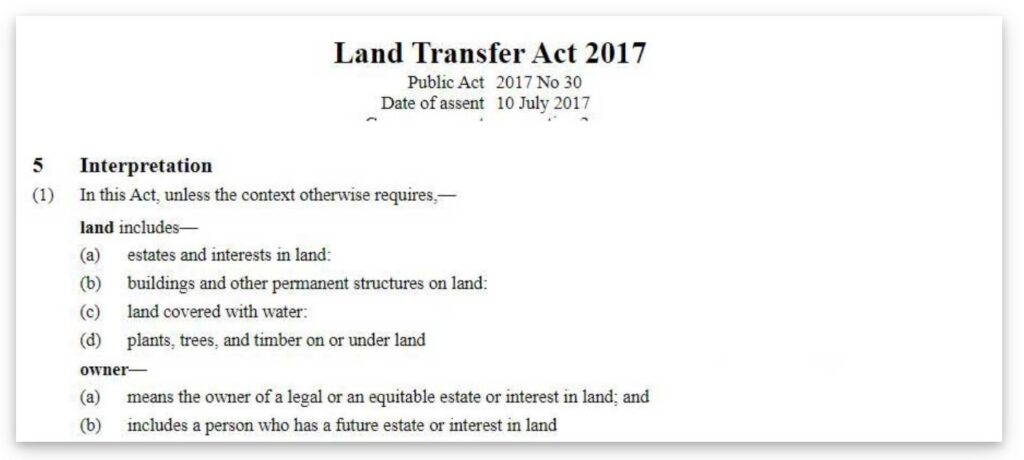
building means a structure that is temporary or permanent, whether movable or not, and which is fixed to land and intended for occupation by any person, animal, machinery, or chattel.

And if deemed necessary add new definitions for

  • mobile home: manufactured chattel housing
  • tiny home on wheels: DIY chattel housing
  • chattel shelter: shelter not fixed to land, including homes, workplaces, storage or other use; temporary and long-term.
  • repurposed shipping container
  • skid shelter: manufactured chattel modules

Begin by clearly restating the fundamental principle of property law to distinguish between chattel (personal property or movables) not fixed to land, retaining its own independent identity,  and realty: land or that which is fixed to land  with the intention of permanent annexation, that has lost its independent identity and become part of the land and title to it.

HOW IT HAPPENED AND HOW TO PREVENT IT  


MFE Minister asleep at the wheel

The Government introduced National Planning Standards (NPS), which are lesser instruments of government called for in RMA section 58B. As secondary legislation, they do not require a vote in the House or to be approved by the Governor General by Order of Council (a vote of the Executive Council). According to Legislation Act 2019 s67(d) such secondary legislation does not automatically trigger drafting by the Parliamentary Council Office (PCO), and it appears the contentious language was not vetted by the PCO but written by the Ministry for the Environment (MFE) staff and presented to the ministers in Cabinet, in this case Hon David Parker (Labour) and Hon Eugenie Sage (Greens) for signature. 

Among the 22,000 words in the NPS standard terms are four words that should never have been handed to the Minister for signature, and on private enquiry, it was learned the Minister had no idea they were embedded in what should have been a standard, non-controversial document. To summarise, the following was embedded and is now law.

building means a temporary or permanent movable or immovable physical construction that is:
(a) partially or fully roofed; and
(b) fixed or located on or in land;
but excludes any motorised vehicle or other mode of transport that could be moved under its own power.  [emphasis added]


BACKGROUND BRIEF

Why did MFE do this?:

The earlier 234 page NPS background report  explains: 

…structures  that are located on land but not fixed to land on the basis that it is becoming more common for relocatable structures to be used that are not fixed to land. Shipping containers have been difficult  to manage under the RMA as it is their own weight that holds them down (they are not fixed to land)  and small mobile/relocatable buildings have become more common over recent times. 

This makes it clear the target is the increased use of both repurposed shipping containers and intentionally manufactured (or DIY) mobile homes and other relocatable chattel. Note the author calls them mobile buildings, which shows the writer lacks an understanding of the fundamentals of property law. There is no such thing as a mobile building.

All buildings are structures. All structures are realty. All realty is either land or that which is fixed to land and annexed to the title to the land.

If something is mobile, it is not fixed to land, and therefore by definition cannot be a building. It’s like calling a tree an animal.

Based on this concern MFE in its first draft proposed to redefine the words building and structure:

3.14.1 Proposed definition
 
Building means any structure, whether temporary or permanent, moveable or fixed, that is enclosed, with 2 or more walls and a roof, or any structure that is similarly enclosed
   
Structure means any building, equipment, device or other facility made by people and which is fixed to or located on land; and includes any raft, but excludes motorised vehicles that can be moved under their own power [underline added]

The problem with this is it is a breach of Legislation Act 2019, which says:

20. Words used in secondary legislation or other instruments have same meaning as in empowering legislation.

Structure is already a part of the RMA:

Structure means any building, equipment, device, or other facility made by people and which is fixed to land; and includes any raft”.

Given this reminder they were proposing to breach the Legislation Act, in their second try, the NPS authors moved the “or located on” language from structure to their new meaning for the word building, which is not defined in the RMA.

Because they could not use their original definition (Building means any structure…), MFE explains that they invented a new legal term, physical construction, explaining that it would embrace not only structures but what property law calls chattel – things made by people that is not fixed to land.

Two problems

  1. The word construction refers to realty (real property) not chattel, so MFE failed to hit the target. 
  2. To redefine such a fundamental word at law as building is not something done by inserting a few prepositions into a massive document and failing to inform the Minister that MFE just upended a thousand years of common law and property law.

In support of the first point, the clearest statement of meaning is found in US law, where US Federal Government Statutes says:

Construction means construction, alteration, or repair (including dredging, excavating, and painting) of buildings, structures, or other real property. For purposes of this definition, the terms “buildings, structures, or other real property” include, but are not limited to, improvements of all types, such as bridges, dams, plants, highways, parkways, streets, subways, tunnels, sewers, mains, power lines, cemeteries, pumping stations, railways, airport facilities, terminals, docks, piers, wharves, ways, lighthouses, buoys, jetties, breakwaters, levees, canals, and channels. Construction does not include the manufacture, production, furnishing, construction, alteration, repair, processing, or assembling of vessels, aircraft, or other kinds of personal property 

It is likely that if the NPS meaning of physical construction was tested in High Court, it would be limited to real property and not include personal property (chattel) that is not fixed to land. Although it is more likely the court would toss the definition out entirely and instruct MFE to try again or to use the standard meaning, as best found in Heritage New Zealand Pouhere Taonga Act 2014:

building means a structure that is temporary or permanent, whether movable or not, and which is fixed to land and intended for occupation by any person, animal, machinery, or chattel.
 
structure— (a) means a thing made by people, whether movable or not, and fixed to the land; and (b) includes equipment or machinery

WHAT WAS MFE THINKING?

MFE clearly set out its thinking in the consultation documents prepared by MFE.

In this publication: April 2019 Ministry for the Environment publication (ME 1404) 2I Definitions Standard – Recommendations on Submissions Report for the first set of National Planning Standards, MFE wrote:

RMA plans seek to manage effects from buildings in the main where those effects are more long term than from, for example, a car parked on a section and used every day. However, where those vehicles no longer move (likely no longer used for transportation but for activities such as business, storage or accommodation) we consider they would have similar effects as buildings and should be captured by the definition. We therefore recommend excluding motorised vehicles or any other mode of transport that could be moved under its own power.

This is clear evidence the authors have no understanding of the fundamental difference between chattel and realty. A motorised vehicle does not become realty because it is used for such activities as business, storage or accommodation rather than transport. While they may have similar effects as buildings (although a building must meet a 50-year performance standard and tends to permanently alter the landscape), they should not be captured by the definition. Excluding modes of transport that can be moved under its own power is the wrong distinction, and has become a labyrinth of bureaucratic torture because the author appears oblivious to the foundation of property law.

MFE then continues…

We considered the alternative to exclude vehicles where they are used for business, storage or residential activity – but given the fact that the definition applies to facilities that are located on land – the definition would then have encompassed any business vehicles or even trucks when located or parked on land. We consider it is more certain to only exclude those vehicles that can be moved under their own power. 

The introduction of the test “are located on land”, as opposed to fixed to land, annexed to title and having lost their independent identity is the point MFE lost the plot.

EVEN SO, IT FAILS

The supporting narrative published by MFE shows the lack of proper legal training as they struggle to force chattel into the realty box. They would have preferred to use the word “structure” except the law clearly sets out that this limits the reach of the definition to that which is fixed to land. They write:

As referred to above, the removal of the word “structure” from the definition of building, decouples a building from the requirement to be fixed to land which is specified in the RMA definition of “structure”. 

So MFE invents a new term: “physical construction”:

We considered other terms which could be applied instead of ‘physical construction’. We tested the word ‘facility’ with our pilot councils and they queried the meaning and certainty of that word. They sought clarity about whether some items such as shipping containers, caravans, motorhomes or house trucks would come within the meaning of the term. We consider that part of the uncertainty about that word relates to the fact that ‘facility’ may bear the meaning of a larger building or complex often used for a public or community purpose (eg, educational facility or community
facility). We consider that the term ‘physical construction’ carries the meaning of a structure that is manmade and tangible, but it does not need to be fixed to land. While this is a new term, we consider that it is broad enough to cover all types of buildings without setting any parameters other than that there must have been some form of manmade construction. It will not be taken to exclude some items because they don’t qualify; as the word ‘facility’ may have been.

The word “construction” refers to the making of improvements (buildings and structures) on realty (real estate or real property). One does not construct a car, one manufactures it. One does not construct a mobile home or caravan, one manufactures it, if in a factory, or one makes it, if DIY. Therefore, it can be argued in High Court that “physical construction” is limited to realty, thus does not extend MFE’s invented new meaning of building to encompass its target.

Middle Level public servants working in a government ministry do not have the authority to decouple such fundamental words in law as building and structure. But they seem to be sufficiently ignorant of this limit on their authority that they made radical changes to property law and secured sign off from the respective ministers who were not alerted to the change.

The Problem with Writing Standards

New legislation has the benefit of vetting by the Legislative Design and Advisory Committee (LDAC) or the Parliamentary Council Office (PCO) that examines drafts to ensure they are consistent and understood by ordinary people.  Referencing Legislation Guidelines the 2021 edition, CHAPTER 14 Delegating law-making powers, Part 1: Is the matter appropriate for secondary legislation?, makes it clear when regulations become ultra vires. In particular:

The following matters should generally (or in some cases always) be addressed in primary legislation:… 
– variations to the common law. 

Redefining the meaning of building to include chattel (personal property) is a fundamental variation to the common law and one most unlikely to pass vetting by LDAC or PCO.

BREACH OF THE HUMAN RIGHTS ACT 1993

The Human Rights Act 1993 part 21(1) requires any legislation or regulation be tested against it to ensure it does not contain prohibited grounds for discrimination. It can be easily shown that mobile homes are primarily an affordable option for classes of people overly represented in s21(1) including

  • Solo mums §s21(1)(b)(v) and §s21(1)(l)(i)
  • Māori and Pasifika, §s21(1)(f)
  • Disabled persons §s21(1)(h)
  • Elderly §s21(1)(i)
  • Unemployed §s21(1)(k)

The vast majority of persons living in chattel housing come from these disadvantaged classes. Redefining chattel housing as buildings means they must come under the compliance regulations of the Building Act 2004 as well as the RMA. The extra costs and delays required to meet the standards for buildings (which in many cases means suboptimal design compromises solely to meet standards inappropriate for mobile homes) prices those homes out of reach of the poor. 

Conclusion

The conflating of chattel and realty fundamentally alters the common law, and is likely to be found to be ultra vires – that a Minister signing off a standard that changes the common law to an opposite meaning exceeds his powers as delegated in Section 58B of the RMA.

A standard definition of building should be used – as best found in Heritage New Zealand Pouhere Taonga Act 2014.

If there needs to be new definitions for chattel used as shelter, as abodes and other purposes, they should have new, but familiar terms. And for clarity, fixed to land should include clear tests that respect case law and common law.

APPENDIX: National Planning Standards Definition

https://environment.govt.nz/publications/2i-definitions-standard-recommendations-on-submissions-report-for-the-first-set-of-national-planning-standards/

See Page 50

3.14.3 Analysis and recommendations

Relationship between the definitions of structure and building

The original definition of structure in the draft planning standards was included to capture structures that are located on land but not fixed to land on the basis that it is becoming more common for relocatable structures to be used that are not fixed to land. Shipping containers have been difficult to manage under the RMA as it is their own weight that holds them down (they are not fixed to land) and small mobile/relocatable buildings have become more common over recent times.

The majority of submitters were opposed the definition of structure and requested that the RMA version from section 2 of the Act should apply. We accept that there could be unintended consequences and difficulties with the draft version of the structure definition. We therefore recommend that the RMA version be included instead. For ease of reference the RMA definition of structure is as follows:

structure means any building, equipment, device, or other facility made by people and which is fixed to land; and includes any raft”.

As a result of the adoption of the RMA definition of structure in the Standards it is considered necessary to remove the link to structure in the definition of building, to enable moveable or relocatable ‘buildings’ that do not need to be fixed to land to be captured by the definition. Instead, we recommend the definition include a requirement to be “fixed to or located on or in land”. This will enable both shipping containers and relocateable homes to be included – but still retains a land based requirement. By land, we confirm this has the meaning in the RMA (and in the Standards) which includes land covered by water. Therefore where the definition of building refers to being fixed to or located on land, this also applies to any buildings fixed to land covered by water.

Contrary to those submissions that requested only one combined definition of structure and building, we consider it is useful to have separate definitions. This gives councils the ability to address either or both as required. In addition, regional councils are more likely to need to address structures separately from buildings and so the separate definitions allow for this. Feedback from a regional council pilot council requested that the definition of structure remain so that structures in the coastal marine area could be addressed.

In addition, as a result of removal of the reference to structure in the building definition many of the exclusions that are often included in council plan definitions of buildings (such as retaining walls less than 1.5m high) do not need to be excluded in the recommended building definition; they are not captured by the term.

Submitters identified that the two terms are circular in that each refers to the other as ‘building’ was part of the structure definition and ‘structure’ was part of the building definition. We agree that this is poor drafting and the removal of the interdependency has resolved this issue.

We recommend replacing the word ‘structure’ in the ‘building’ definition with the words ‘physical construction’. The two definitions work together now so that that any building that is fixed to land would be captured by the term structure but not all buildings may be structures through the recommended use of the term ‘physical construction’ rather than ‘structure’ in the definition of ‘building’. We considered other terms which could be applied instead of ‘physical construction’. We tested the word ‘facility’ with our pilot councils and they queried the meaning and certainty of that word. They sought clarity about whether some items such as shipping containers, caravans, motorhomes or house trucks would come within the meaning of the term. We consider that part of the uncertainty about that word relates to the fact that ‘facility’ may bear the meaning of a larger building or complex often used for a public or community purpose (eg, educational facility or community facility). We consider that the term ‘physical construction’ carries the meaning of a structure that is manmade and tangible, but it does not need to be fixed to land. While this is a new term, we consider that it is broad enough to cover all types of buildings without setting any parameters other than that there must have been some form of manmade construction. It will not be taken to exclude some items because they don’t qualify; as the word ‘facility’ may have been.

As referred to above, the removal of the word “structure” from the definition of building, decouples a building from the requirement to be fixed to land which is specified in the RMA definition of “structure”. This would result in vehicles being captured by the definition if no additional changes were recommended. The submission from Christchurch City Council raised this as an issue. We do not consider that in the common use of the term “building”, vehicles would be considered to be included. We consider that vehicles (or other transport modes like railway carriages or boats) that come and go and are used for transportation should not be covered by this definition. We note that the Building Act 2004 includes in its definition only those vehicles that are “immovable” and “occupied by people on a permanent or long‐term basis”.

RMA plans seek to manage effects from buildings in the main where those effects are more long term than from, for example, a car parked on a section and used every day. However, where those vehicles no longer move (likely no longer used for transportation but for activities such as business, storage or accommodation) we consider they would have similar effects as buildings and should be captured by the definition. We therefore recommend excluding motorised vehicles or any other mode of transport that could be moved under its own power. We considered the alternative to exclude vehicles where they are used for business, storage or residential activity – but given the fact that the definition applies to facilities that are located on land – the definition would then have encompassed any business vehicles or even trucks when located or parked on land. We consider it is more certain to only exclude those vehicles that can be moved under their own power.

We acknowledge that there are other items that are moveable and have a roof and so could meet the recommended definition of a building. In particular, tents, caravans, and marquees would be included. We acknowledge that the definition of building is broadly crafted and councils will need to use subcategories or narrower application definitions and rules to manage or permit these items where required.

Certainty – and what constitutes a wall or a roof or similarly enclosed?

Submitters identified that in some buildings (for example aircraft hangers and Nissen huts) walls are not clearly identifiable and their identification can be debated. Circular buildings may only have one ‘wall’ and with a dome roof this may not even be clear such as in the example below:


Source: http://www.cosyhomes.net.nz/product/dome‐house/

To avoid the problem of having to clearly identify the walls in the type of dome house example above the phase “or similarly enclosed” was included in the draft standard. This phase was opposed by submitters on the basis that it does not provide enough certainty. As a result the recommended definition has included the phase “is partially or fully roofed”. Consideration was given to excluding any permeable roof on the basis that this then would exclude crop protection structures from the definition. However, it was considered that any exclusion for a permeable roof could result in a loophole in the definition. Is a roof that leaks a permeable roof? How impermeable would it need to be to qualify? This could make it difficult for compliance and enforcement purposes. We consider that it would be better for the plan provisions (rather than the building definition) to clearly enable crop protection structures or other similar structures if this is the desired outcome.

Relationship with the Building Act 2004 definition of building

Some submissions suggested using the definition of building from the Building Act 2004. This was considered in the draft standard but discounted on the basis that the definition in the Building Act serves a different purpose to any RMA definition of building. We agree with this. We did consider including the phrase from the Building Act definition of building “intended for occupation by people, animals, machinery, or chattels’. However, we discounted this because from an RMA effects point of view what a building is used for or whether it is empty or occupied is not relevant. Therefore we do not recommend the inclusion of such a reference.

Relationship with definitions in other acts

Environment Southland queried the relationship with the definition of building in the Heritage New Zealand Pouhere Taonga Act 2014. That definition applies to heritage buildings within that Act and the definition in the planning standards applies to RMA plans. Where RMA plans address heritage buildings they may use a subcategory definition where required.

Broadness of the definition and inclusions and exclusions or size exemptions required

A number of submitters sought the exclusions of buildings up to a certain size (and not always the same size). This can be addressed though rules that permit small buildings (eg, any building that does not exceed 10m2 in area or 2m in height can be permitted). We consider that this approach will make plans easier to understand and use. Any related bulk and location rules could also be drafted to exempt small buildings from having to comply with things like setback requirements or building coverage calculations.

Other submissions sought clarification about what is included within the definition and many items were referred to. We consider that these can be addressed in rules where required. We acknowledge that will require many rules but we consider that the broadness of the definition is inherent in the meaning of building and where councils need to address specific types of buildings or even parts of buildings such as decks, it is clearer for users if this is located in rules rather than hidden in a definition. On the issue of decks, if free standing and without a roof, they may be addressed within the definition of “structure”.

Implications for plans of changes

In relation to amendments to rules that may be required, we acknowledge the extent of these and in consideration of that issue we have provided extended timeframes for implementation to allow councils to implement changes within plan reviews, if desired.

Additional points

In relation to the issue of whether a building is above or below ground, we recommend adding the phrase “fixed to or located on or in land” and this ensures that the definition does not differentiate between the two. Some buildings may be below ground and if councils wish to address these they may do so within their rules.

In summary, we recommend the definition of structure is replaced with the definition of structure from section 2 of the RMA. We also recommend the definition of building is replaced with the following definition:

Building means any a temporary or permanent movable or immovable physical construction that is‐

(a) partially or fully roofed, and

(b) is fixed to or located on or in land, but

(c) excludes any motorised vehicle or other mode of transport that could be moved under its own power.

Mobile Homes – Chattel Housing not Real Estate

Ending government’s war on poor people and their mobile homes


Timeless development models for our time


The hidden homeless are all around us


A home is a life-changing event for them


Home for elders with kids & grandkids next door


Mobile homes come in various designs

Made all over New Zealand

Summary: A mobile home is the most efficient and cost-effective housing for people who cannot afford market rents or home prices. They can be parked on land owned by whanau, family or friend, and when the need for them passes, they can be towed away leaving nothing more than bare soil. They are not buildings (fixed to land) but chattel (personal property). For decades, local governments left them alone, because as chattel, they did not fit the rules for real property. For the most part, they were purchased or leased by poor people. However, more recently, trend-setting, tech-savvy young people rebranded mobile homes as tiny homes of wheels, and began parking them in “nice” neighbourhoods where grumpy neighbours complained to their local council. Lacking clarity, some councils began to issue abatement notices and notices to fix, and when these were appealed to MBIE Determinations, there was a radical shift in interpretation. Government effectively declared was on mobile homes and their constituency, poor people. This war needs to be examined and stopped by elected officials.

Problem:  ;The number of hidden homeless – people living in cars, tents, garages and overcrowded conditions has grown over the past decade. The waiting list for state housing has exploded since 2017, increasing by over 400 families every month.

In 2018, Central Government proposed KiwiBuild, 100,000 new homes. As of May 2022, it’s built under 1,400. They cost too much, they take to long to build, and in the meantime the hidden homeless ranks grow.

Solution: Over the past two decades, a domestic mobile home industry has arisen – a one or two bedroom home with kitchen and bath manufactured in factories on a chassis trailer and towed to site. Made in two weeks, installed on site in two hours and cost under $80,000 or lease for $400 a week, with a lease–to-purchase option in 6-years. Especially in North Island, where the subtropical climate is amenable to small-home living, mobile homes should be the sort of home-grown solution the government would support. But the opposite is happening.

Governments war on poor people

Imagine you buy a car, and to get it on the road you had to pay $25,000 in registration fees that would take months to process. And during that process, any government official could demand changes to the design. That’s what happens when one seeks resource and building consents for a new building. Indeed $25,000 is sometimes modest, it could cost $50,000 and in some cases, after spending considerable money, be denied.

Mobile homes are not buildings, but the local government consenting departments apply the “duck test” saying if it looks like a building and is used like a building, it must be a building and therefore must have resource and building consents to be used. There is a certain irony that the duck test saying actually was about a mechanical duck, that looked, quacked and even poo’d like a duck but was not a duck.

Councils issue abatement notices and notices to fix. In most cases, the targets of their notices are poor and overwhelmed by the officers. They pay or cave.  A few, like Alan Dall, crowdsource to fight, appealed it to MBIE who backed the council and then to District Court, where the judge issued a scathing condemnation of MBIE and the council, finding for Dall. One would have expected councils and MBIE to back off after this, but they persist in their insistence that mobile homes are structures.

Government out of touch with reality

The regulatory ethos that has overtaken both central and local government takes the view that everything must be regulated, and under user pays, that their departmental funding for regulatory enforcement must be added to the cost of that which is regulated. Thus a mobile home that costs $80,000 can attract an additional $40,000 in both government fees, and consultant fees to write the application in a form the council will accept.

Planners no longer enable people and communities to provide for their social, economic and cultural wellbeing,  to quote the purpose of the RMA, they disable the people and communities. Councils no longer “play a broad role in promoting the social, economic, environmental, and cultural well-being of their communities, taking a sustainable development approach” as required by the Local Government Act 2002.

The fundamental problem comes from the policy of User Pays. While governments write noble values statements, the message from senior management to line staff is to place the pecuniary interest of the government – raising money through fees, charges, contributions and fines – over the public interest for which government exists.

Action required

Include mobile homes in the portfolio of affordable housing solutions. Do not classify them as buildings, structures or realty as long as they remain mobile. Work with the industry to ensure acceptable standards of health, safety and durability – noting that the industry already adheres to such standards because it is bad business to not… and because existing consumer and liability laws demand responsible design and manufacture.

Need to reform Local Government 

The Funding Mechanism for Local Government creates a conflict of interest

When pecuniary interest eclipses public interest in the culture of local government the institution fails in the purpose for which it was created

A recent headline in Business Desk read Builders say consents system is ‘broken’ . It is. It’s not just the Building Control Authorities (BCA), the council department that provides building consents. What is called council planning, the group that issues resource consents has become a self-funded bureaucracy that operates as an unaccountable monopoly.

And, in large councils, most notably Auckland, fines have become a revenue source: one 160 meter bus lane in Newmarket generates $12,000 fines a day.  Of course council officials replied: “…although AT had been clear bus lanes weren’t aimed at revenue gathering…” but then goes on to say “revenue from fines helped fund public transport, parking, road safety campaigns, walking and cycling initiatives and road maintenance… With Auckland Transport utilising the enforcement revenues collected in this way council is also able to allocate funding Auckland Transport would have otherwise needed, to other council services like libraries, parks, community centres, the Art Gallery, the Zoo, and other recreational facilities.” That sure sounds like revenue gathering, despite the prior disclaimer. And staying with Auckland Transport for a moment, during the COVID crisis, $863,170 of taxpayer and ratepayer money was spent altering lower Queen Street that was ripped out a year later. If that has been a private sector stunt, heads would have rolled.

The problem? Local government is no longer local. It is government by unelected officers, team leaders and senior managers who use standing orders, privacy and commercial sensitivity to erect barriers between their decision-making and the public they ostensibly serve. They are not held accountable for their spending, for their policies, for their revenue collection or their failures. Checks and balances including the role of the elected councillors and that of public consultation have been neutered. The bigger the local government, the worse the problems.

The problems are systemic. It’s not that bad people are running local government, it is the natural outcome of a closed system. Systemic changes are needed:


Remove pecuniary interest


Problem: The funding mechanisms for local government finds senior management passes the message down to operational staff that revenue generation by fees, fines, contributions and hourly billings are a council priority. Indeed some departments such as building control authority and resource consent departments are told they are self-funded – you want your budget funded? Go get the money.  This distorts the purpose of local government and contributes to adverse outcomes, such as the affordable housing crisis.

Solution: All fees, fines, contributions and other charges levied by the territorial authority are paid into a central trust fund. Each territorial authority then applies for a share of that trust fund as revenue sharing. The trustees of the Trust Fund will provide a base rate based on population adjusted by local cost of living, with a remainder paid as an incentive bonus based on success criteria. For example, coming in under budget and under schedule on a road project would earn a bonus. Fixing a road so it lasts longer would earn a bonus. The fastest turnarounds in building and resource consents would earn a bonus.

In some cases, the bonuses should not be awarded to the authority, but to the personnel who delivered success… this means the managers and staff directly responsible for the accomplishment.


Remove joint and several liability


Problem: The joint and several liability principle applied to the leaky building crisis completely changed local government culture from public service to risk control.

Solution:  Local government is established by Central Government. The buck stops at the top. All fiscal liability should be held by the State. But personal liability should remain with the individual not the legal fiction of a limited liability company. In other words, staying with the leaking building crisis, the State should have immediately stepped in – similar to how it does with ACC – and paid to stop the leaks before there is further damage, and with no money wasted on endless court battles. Then it should investigate who is responsible with no protection of limited liability where the culprit simply puts their company into liquation, in a take the money and run scenario.

The power of the State to deprive persons of liberty or property should not be broken by limited liability companies. If a company is liable, the money cannot escape to the investors, owners, directors, family trusts, etc. The natural persons can be held liable if they do not repay their takings with the only out being personal bankruptcy. In other words, instead of holding the tax and ratepayers joint and severally liable, pierce the corporate veil and hold the culpable individuals liable. And if that liability extends to council personnel, they too should be held personally liable, but only if it is clear they failed to do their job.


Require councils to obey the law


Problem: Example: RMA Section 36AAA sets out the basis on which councils can charge applicants fees.  The benefit must fall to the applicant as opposed to benefiting the community as a whole. This is ignored by council. For example, charitable trusts apply for consent to build pensioner housing. The benefit is to the community that otherwise finds its pensioners become hidden homeless. But the council charges are not only assessed, but in some cases become so onerous, both in donations the trust has to raise, and the years it can take its volunteers to prevail, that the trusts abandon the projects and sell the land to developers for comfortable-class housing. 

Solution: Require councils to obey the law. In particular, have a tick-box on the online application that takes the applicant to a Section 36AAA payment section where they can signal the application is a community-benefit application and not subject to fees. These flagged applications are then reviewed by a council official to confirm the claim and then processed without fees charged.


Restore checks and balances


Problem: Elected officials stand for office promising change, but when they are sworn in, they discover their powers are limited. They are provided reams of briefing papers by the Chief Executive’s staff who shape the debate in a form pre-decided by the administrative staff. The elected representatives are dependent on the executive for information and those who buck the system find they are cut off.

Solution: Assign an independent staff to each elected mayor whose job is constituent services. Complaints, concerns and queries by the citizens of each ward are directed to these constituency services advocates (CSA) who have full right of enquiry and direct access to every council staff member and consultant – not filtered through the chief executive or PR staff. Findings are reported to the mayor, but also to the ward councillor, as the CSA reports to both. Where possible, the outcomes are documented on a public web site controlled by the mayor and ward councillors, not the chief executive and their staff.


Dial back Health & Safety


Problem: Health and safety have become excuses for disproportionate regulation that punish the law abiding and safe in an ineffective attempt to change the behaviour of law breakers and the irresponsible. For example, lowering the speed limit to 30 km/h on a road engineered for safe driving at 50 km/h is unlikely to cause a hoon driving at 80 to slow down, but it will frustrate the safe drivers who find the new limit below the intuitive safe speed. It will however, become a new source of council revenue for speeding tickets, and foster increased resentment of local government. 

Solution: Provide a disputes tribunal chaired by ward councillors and the mayor’s CSA staff (see above) that may hear any complaint of a regulation based on health and/or safety that the complainant views as unreasonable or lacking effectiveness. Empower the tribunal to order the respective administrative staff to change or revoke the regulation (following due process of law that may require a further council resolution) to fix it.


Dial back on Commercial Sensitivity


Problem: Commercial sensitivity is used as a cover to avoid accountability, especially involving waste of ratepayers money. It’s public money being spent, any ratepayer or citizen should be able to see where it is going, and if it is value for money. Vendors doing business with council will complain, but they will get used to it, and the public will benefit as open information means more competitive services.

Solution: Place the entire accounting system, including all contracts on line, made available by password to any person on the voting role. This includes job titles, but not person’s names. It includes company names. For the few cases that truly do require redaction due to commercial sensitivity (or personal security), the applicant must demonstrate to a committee of the council (elected officials) why redaction should be provided.

TE TIRITI O WAITANGI: An extraterritorial treaty

This brief promises to be controversial – please approach it with an open mind

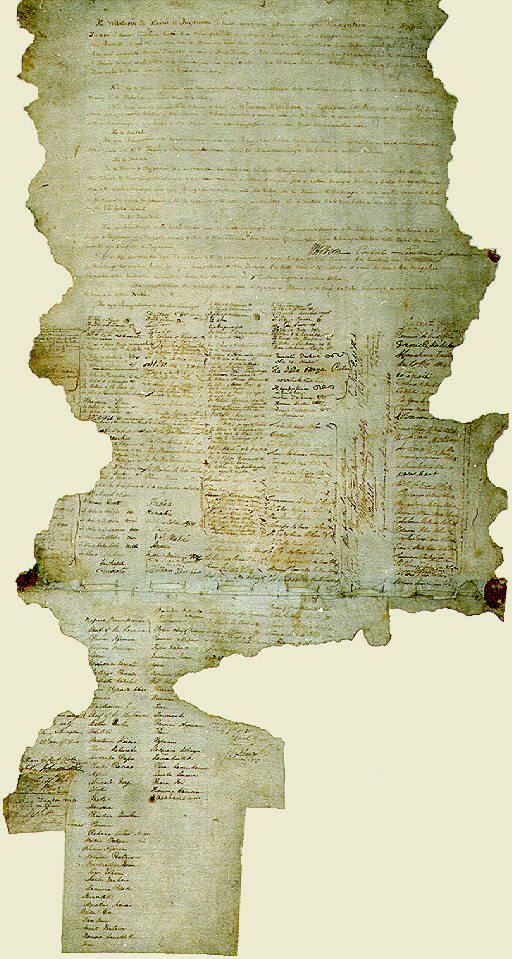
This brief focuses solely on the Te Reo version of the treaty – the one the rangatira understood and signed.

Few have read Te Tiriti o Waitangi with an open mind and no preformed opinions. This is because it is written in Te Reo Māori thus immediately filters its readers to those who either learned Te Reo as a child, or chose to learn it as a student or adult.

Te Tiriti is surrounded by an extensive body of interpretation which is rather remarkable given that it consists of 480 words. 

Extraterritorial Treaty: It is claimed  Te Tiriti is a partnership, but there is no language in the 480 words that says this. But, for anyone trained in Western constitutional history and international law, Te Tiriti is a clear and unequivocal statement of extraterritoriality. In the clearest of language, the principles of extraterritoriality can be read word-for-word in Te Tiriti.

Extraterritoriality, usually as the result of negotiations between equal partners, identifies land within the sovereign’s realm that is exempt from the jurisdiction of national law. Examples of this include the Vatican surrounded by Italy, the United Nations in New York, and with different terms, the Native American tribes who signed treaties with the US government. The principle of extraterritoriality was well established within Law of States under which Europeans divided up the world when Te Tiriti was signed. While Te Tiriti is written in Te Reo, the principles are solidly based in European Law of States.

Te Tiriti clearly says the tribes and their leaders will accept national law (kāwanatanga) provided their local jurisdictions are exempt; that on a local level they govern by rangatiratanga, which as far as the Crown was concerned means the Crown does not extend its jurisdiction to the lands, villages and treasures of hapū and their rangatira. 

This is not recited as a historic curiosity. Instead it suggests a very different way in which Te Tiriti can be exceptionally relevant to the 21st century challenges facing both New Zealand and Aotearoa. In short, this solution proposes the Crown honour the words clearly written in Te Reo and in doing so restore nga kāinga, enable hapū to rebuild both mana and taonga katoa, and enable hapū to create a good life on their terms.

SOVERIGNTY: At the COP28 conference in Dubai, King Charles said The Earth does not belong to us, we belong to the Earth’.  In that statement, he clearly set out the difference between sovereignty and the Māori view of property. What makes this significant is, in law, under sovereignty King Charles, in the person of the Crown, owns 1/6th of the planet. As King of the realm, including the realm of New Zealand, the Crown holds absolute ownership of every square metre of land and then issues “title”, a bundle of rights that people believe grants ownership – including Māori title.


KAWANATANGA: In Te Ao Māori, people do not own land, the land is a living being, the mother of the people. This is akin to what King Charles was saying at COP28 “we belong to the Earth”.

In Te Tiriti, it simply means that while the hapū will manage their own affairs, they agree to national law.

UNDERSTANDING SOVERIGNTY: In 1066 William the Conqueror defeated the Anglo-Saxons, claiming all lands and attachments as his own. He held absolute ownership of all England, granting a bundle of rights called realty that established Crown sovereignty. As the British Empire expanded, sovereignty was claimed by war, purchase, treaty or occupation, but the basic principle of absolute ownership underlying ownership of real property (land) has not changed in Western Law. Thus, to establish sovereignty over “Nu Tirani”, the Crown signed a treaty with the native leaders. But to secure that sovereignty, the Crown had to agree to extraterritoriality on hapū whenua..

Sovereignty is Centralism

UNDERSTANDING EXTRATERRITORIALITY: In the “Law of States” under which Europeans divided up the world, at the time Te Tiriti was signed, the principle of extraterritoriality was well established. It identifies territory within the sovereign’s realm that is exempt from the jurisdiction of national law, usually as the result of negotiations between equal partners. For anyone who can read Te Tiriti o Waitangi in Te Reo, it is the clearest statement of an extraterritorial treaty one could imagine. The Rangatira agree to kāwanatanga on a national basis, but not on their lands. On their whenua, rangatira and hapū reserved tino rangatiratanga.

Extraterritoriality is Localism.


WHAT THIS MEANS:

As NZ seeks to make reparations for the abuses of previous generations, an understanding of Te Tiriti as extraterritorial offers an opportunity to enable Māori to restore the mana, the taonga and the tūrangawaewae lost in the 19th, 20th and 21st centuries.

  • In the 19th century, the Crown used war and confiscation to destroy the kāinga
  • In the 20th century, the Crown used Urbanisation to entice the young to leave the kāinga
  • In the 21st century, the Crown bribes a Māori elite as a new twist on neo-colonialism

Imagine instead that the Crown came clean, and declared it would honour the extraterritorial status of hapū whenua, kainga and taonga katoa. This would require major rebuilding in the provinces where most of the neglected or abandoned whenua lies fallow. In this web site, see the post REBUILD KAINGA for how it can be done.

 THE HISTORIC CONTEXT SUPPORTING THIS UNDERSTANDING

Tangata Māori were organised into tribal authorities and as such did not have a single nation in the 19th century meaning. Each tribe was akin to an Anglo-Saxon kingdom, with clearly defined boundaries to their land, within which they had a system of government that worked. Most notably, their system of land ownership was not the same as the Crown’s sovereignty, the legal basis of land law which continues in NZ to this day… that of absolute ownership. 

Sovereign ownership of all land: The fact that only the Crown can be the absolute owner of land is the basis of sovereignty. It is the foundational concept of English and New Zealand law. Known as the doctrine of tenure, the Crown is the ultimate owner of all land. All land is held by the citizen as tenant under a grant from the Crown. What is popularly thought of as owning land is legally being seized of a freehold estate in fee simple in the land, which must be derived from a grant by the Crown.

This concept would have been a drop-dead if presented to the rangatira present at Waitangi. Thus Te Tiriti included an extraterritorial clause in the Te Reo version. It is clearly written in simple and unambiguous words. The chiefs will accept kāwanatanga to introduce national law, provided their own local jurisdictions are exempt. They agreed to this because their need for land changed with the arrival of the colonists.

Colonialism brought benefits, enabling them to shift from a hunting & gathering economy which needed large tracts of land, to a farm-based economy needing less land, but needing money to buy the advances the English offered.  Colonialism brought technology that changed the needs of the tribes. Tools, seed and livestock meant they needed less land to feed themselves, and they were prepared to sell surplus land for barter or money to buy such technology. But the rangatira wanted a formal system of exchange to prevent opportunistic Māori from selling land over which they did not hold mana. Te Tiriti contained a protocol for formal sale of surplus land.

In addition, colonialism brought firearms, making utu more lethal. The tribes needed intertribal keepers of the peace – the British Army and civil police – and were prepared to accept kāwanatanga to enforce peace among the tribes as well outlaw conflict with the migrants. 


WHAT THIS DOES NOT MEAN: 

Mana whenua as extending property rights over fee simple (freehold) title is a fiction insofar as it is said to arise from Te Tiriti. In other words, the idea that in selling land under the protocol established by Te Tiriti, somehow certain rights over it remained, is an artificial construct that in a Machiavellian way continues what might be called neo-colonialism.

In neo-colonialism, the Crown elevates iwi over hapū, whereas in 1840, iwi was an identity (which waka your ancestors sailed on), not a collective governance body. But when one seeks to co-opt, the fewer cats on seeks to herd the better. Thus, by elevating iwi, and defining the Māori as partners (meaning their legitimacy is confirmed by the Crown, rather than in their own right), and by offering the baubles of office, the Crown is able to avoid its duty to extraterritorial exemption of hapū over their lands, villages and treasures. As has become part of the 21st century debate, the Crown has created a Māori elite in classic divide and conquer.

Having said that, under sovereignty the Crown can do whatever it wants. Because it holds absolute ownership of all land in NZ, if it choses to give rights to any class of persons, it has the power to do so. But to claim it derives that authority from Te Tiriti is a fiction, and it also results in continued poverty and deprivation among the rural Māori who still live on their ancestral lands. 


How Did This Come About? Regulatory Creep…


Regulatory creep is where government officials within a bubble that includes academics and persons with a vested interest enter into a conversation that begins with a kernel of fact, but then is embellished. New embellishments grow on top of the first, and over time a narrative evolves that has no foundation in reality or fact.

The term mana whenua is a tool of regulatory creep. In 2010, Victoria University Senior Lecturer in Law, Catherine Iorns Magallanes wrote The use of tangata whenua and mana whenua in New Zealand legislation  in which she set out how the term mana whenua emerged out of colonisation. It is worth reading to appreciate how regulatory creep happens.

Clive Barlow, in Tikanga Whakaaro, 1991 wrote: Mana Whenua: This is the power associated with the possession of lands. Possession is a clear concept, no different in Tikanga Māori than in English law. If a hapū no longer wishes to retain mana over whenua, it has protocols to withdraw. For example, in 1897, Neho Keepa, a rangatira of Ngati Paoa testified before the Native Land Court “All the earlier tupapaku (dead bodies) were removed to Wharekawa [the Miranda Coast]… on account of the uncertainty as to whether this land [Matiatia] would be sold or not. Tarakawa removed them, all the people know that there are no bones left in the old urupa.” 

During the gestation stage, the fiction of mana whenua is contained within its bubble. It is only when that bubble starts implementing change based on its fabricated story that pushback begins. This happened when the legislation for the Auckland Supercity was amended in 2010. It included regulatory creep in regard to mana whenua, granting involvement of mana whenua, and “mataawaka” (Māori living in the Auckland region who are not in a Mana Whenua group) in decisions over land outside of the extraterritorial jurisdictions of hapū.

The Act did not directly define the term, but established the concept of mana whenua groups:

Local Government (Auckland Council) Act 2009 

Part 7 (81) This Part establishes a board whose purpose is to assist the Auckland Council to make decisions, perform functions, and exercise powers by—
(a) promoting cultural, economic, environmental, and social issues of significance
for— (i) mana whenua groups; and (ii) mataawaka of Tamaki Makaurau; and
(b) ensuring that the Council acts in accordance with statutory provisions referring to the Treaty of Waitangi. 

Part 4 Interpretation (1) mana whenua group means an iwi or hapu that— (a) exercises historical and continuing mana whenua in an area wholly or partly located in Auckland; is 1 or more of the following in Auckland:
(i) a mandated iwi organisation under the Maori Fisheries Act 2004:
(ii) a body that has been the subject of a settlement of Treaty of Waitangi claims:
(iii) a body that has been confirmed by the Crown as holding a mandate for the purposes of negotiating Treaty of Waitangi claims and that is currently negotiating with the Crown over the claims

This is regulatory creep and neo-colonialism. Where mana whenua meant clear physical boundaries over which rangatira held tino rangatiratanga, the Local Government (Auckland Council) Act extends this to cover freehold title land sold by their respective hapū under the terms of Te Tiriti (or lost due to breaches of Te Tiriti, which is another subject and is the purpose of the Waitangi Tribunal.

The Crown holds sovereign authority to make any law, and in the absence of a written Constitution limiting its powers, it can do what it wants, including granting mana whenua as some sort of right over freehold title. But to say this comes from the words in Te Tiriti o Waitangi is a fiction.

Kāinga: While academics, activists and those with a vested interest argue for co-governance and a partnership between Crown and Māori leaders (a fight this proposal has no interest in joining), the unarguable fact is that Māori, especially rural Māori on ancestral land, represent the worst in almost every negative statistic, in health, education, deprivation and lack of opportunity. Living conditions for some are third world. Gangs and criminality rival honest work and careers, especially as rural industries closed down and their jobs exported overseas.

However, unlike many fractured societies around the world, rural Māori have not lost the supportive framework so clearly identified in Te Tiriti. It fell into ruin but it’s still there. Most hapū not only know where their 19th century kāinga lay, they still own the land. The elders can point to where the whare were. The young, especially those with successful careers in urban NZ, say they would like to return to their ancestral land, but they would need a home for their family and a way to earn an income from the day they arrive.

Since there is finally an appetite on behalf of the public, and the elected leaders in Parliament to do right, to fix the wrongs of the 19th and 20th centuries, in this proposal, a very different solution is put forth. Stop making up words attributed to Te Tiriti that do not exist in it, and take seriously what it actually says. Because the words clearly written in Te Tiriti offer the best roadmap to a better future both for Māori and for all the people of New Zealand.

Rebuild Kāinga: Begin by inviting hapū to petition the Crown to identify the boundaries of their whenua that they, the hapū and their rangatira wish to obtain extraterritorial status. Make it a free-trade zone to enable such jurisdictions to become regional economic engines in which taonga katoa includes common wealth that raises everyone out of poverty.

Note that Te Tiriti does not restrict such protections to people with Māori ancestry. In addition to rangatira and hapū, Te Tiriti promises tino rangatiratanga over whenua, kāinga and taonga katoa to nga tangata katoa o Nu Tirani (all the people of New Zealand), meaning a free-trade zone factory would extend its benefits to anyone within the hapū jurisdiction.

Then identify where on the whenua to build the kāinga, the place where the people will live and work. In many cases it will be on the old site which may either be vacant or still have what today is called the marae. In compensation for Crown predations in the past, the government would provide a package of grants, loans and contracts intended to enable the hapū to rebuild and stand on their own feet.

WHY? Poverty is a state of mind. While the social-welfare system is compassionate as a safety net, when it becomes a way of life tūrangawaewae becomes its first victim. To end poverty, people need a supportive community and a self-supporting local economy that has a positive balance of trade. They need to earn more than they need to spend, and in doing so they need to stand tall, not be dependent on the social-welfare department. Rebuilding kāinga is about rebuilding strong and healthy communities that become part of the solution, not part of the problem.


If this is of interest, read on:

Te Tiriti o Waitangi is an extraterritorial treaty.


Extraterritoriality: the state of being exempted from the jurisdiction of national law, usually as the result of negotiations between equal parties.

Partnership: A formal agreement where two or more parties agree to share decision-making, collectively own property and carry unlimited collective liability for the acts of the partners.

As a treaty, the rangatira and hapū agreed to a colonial form of national governance called kāwanatanga, provided on a local level the Crown protected rangatira and hapū local governance and did not interfere with the hapū’s lands, villages and treasure.

In other words, in the face of a global centralist enterprise – the British Empire – the rangatira negotiated protection of localism – the right to be left alone by the Crown when it came to managing their own hapū affairs.

This was best stated by a Māori academic, Angeline Greensill, Lecturer in Geography, University of Waikato, who posted this online:

Whanau, hapu and iwi relationships therefore continue to be undermined as a result of government manipulation and imposed statutory frameworks which redefine and subjugate traditional Maori tikanga. Presently processes promoted by “Iwi Authorities” actively encourages whanau members to redefine their identities and tikanga to qualify as beneficiaries of settlements which are promoted as delivering benefit some time in the future.  By so doing those whanau and hapu members, perhaps unknowingly contribute to cultural engineering which speeds up the severing of their knowledge of ancestral links – whakapapa.

Because of “Iwi Authorities” manipulation (in collusion with the Crown), hapu interests have not only become “unbalanced”, but have become invisible, subordinate and subjugated and consigned to cargo cult status.  Iwi Authorities owe their existence to the legislation which empowers them to make decisions normally made by hapu. 

Such a practice contravenes Article II of the Treaty of Waitangi which confirms and guarantees absolute power to hapu. The Crown and its imposed western structures fails to recognize tino rangatiratanga and by doing so undermines the political autonomy of hapu to such an extent that under the present treaty settlement processes, the Minister of Treaty Settlements arbitrarily decided that he would negotiate directly with statutary iwi-based organizations, who in turn claim benefits on behalf of hapu with or without their consent .

(note: this quote was found using Google. Copyright is presumed to be held by Lecturer Greensill.)

The Proposed Bill

The Kāinga Restoration Bill proposes to enable rangatira and hapū to rebuild both physical kāinga on their ancestral land, and a robust, self-supporting local economy. It proposes a package of financing, grants, exclusions from centralist regulations and special economic status in the form of free-trade zones consistent with the extraterritorial treaty known as Te Tiriti o Waitangi. Its intent is to reverse Urbanisation by enabling hapū members to move back to their ancestral lands and thrive without undue interference by the centralists.

The Bill:

  • Hapū are invited to lodge their interest to restore their kāinga; to identify its location
  • Hapū shall be provided a package of loans and grants to rebuild and to grow its local industry
  • Kāinga shall be Free Trade Zones, not subject to duties, taxes, rates or fees
  • Kāinga shall be akin to local statehood, appointing envoys in treating with kāwanatanga.
  • Common Law’s publici juris : water, air and light is free for all who can access it and includes such post-1840 assets such as radio frequencies.

Nga Kāinga Restoration Bill

Proposed Bill

Explanatory Note

Colonialism changed the pre-colonial Māori economy through the introduction of farming to intensify food growing – thus hapū no longer needed the same amount of land that a hunting/gathering society required.

Colonialism changed the Māori economy with the introduction of money as a medium of exchange, thus hapū could sell now-surplus land for money with which they could buy imported livestock and seed, farm implements, metal tools and firearms, English building materials, clothing and luxury goods, all of which greatly increased the hapū’s capacity to create wealth.

These colonial benefits changed the economic basis of the kāinga and were embraced by hapū. This was especially the case with sale of surplus whenua, which enabled hapū and whanau to make money to buy colonial goods. However, some Māori were selling to Pākehā land the sellers did not exclusively own.

Further, while the dominant colonial presence was British, in the absence of a formal claim of sovereignty, other colonial powers, notably France, could make competing claims.

These effects of colonialism produced tensions, especially as firearms made hapū versus hapū warfare more lethal. Accordingly, to address all these effects of colonialism, the Crown representatives proposed Te Tiriti o Waitangi to establish English Common Law, colonial sovereignty and a formal means to convert whenua to real estate when sold to Pākehā.

However, the rangatira and hapū system of governance was based on mana, of which mana whenua was in direct conflict with sovereignty. Under sovereignty, since 1066AD, ultimate absolute ownership of land lies with the Crown who then issues a bundle of rights called real estate. This would not be acceptable to the rangatira at Waitangi in 1840. Accordingly, sovereignty was limited by the lesser concept of kāwanatanga – central governance in which local governance over whenua, kāinga and taonga katoa was excluded from centralist control.

Accordingly, Te Tiriti o Waitangi is an extraterritorial treaty in which the Crown agreed to exempt hapū whenua, kāinga and taonga katoa from interference by central governance.

However, by design or by values, the central government soon sought to expurgate local control.  

In the 19th century, the central government used the military to confiscate whenua and destroy kāinga as settlers pressed for more land.

In the 20th century after the Second World War, the central government developed a policy of Urbanisation to strip the kāinga of their young, to the point where kāinga became at best an ancestral marae to which the hapū returned for rites of passage. Many kāinga were abandoned, left to rot, where all that now exists is bare whenua and kāinga memory.

In the 21st century, the Sixth Labour Government proposes to recast Te Tiriti as co-governance, in which the role of Iwi is elevated to benefit a small elite while failing to address the clear terms contained in Te Tiriti o Waitangi. This became a controversial topic and may have contributed to Labour’s loss in the 2023 election. 

This Bill proposes to correct Tiriti misinterpretation and to enable rangatira and hapū to restore kāinga and taonga katoa on their ancestral whenua.

  1. Purpose: The purpose of this Act is to enable restoration of kāinga and taonga katoa on hapū whenua, so rangatira and hapū may exercise tino rangatiratanga as pledged by the Crown in Te Tiriti o Waitangi.
  2. Context: In Part Two of Te Tiriti o Waitangi, the Crown guarantees to nga rangatira, nga hapū and nga tangata  katoa o Nu Tirani protection of tino rangatiratanga over whenua, kāinga and taonga katoa. For clarity, nga tangata katoa o Nu Tirani is interpreted to mean any person resident in New Zealand, regardless of ancestry or race, who is resident on such hapū whenua has equal protection under Te Tiriti.
  3. Definitions
    1. Kāinga (village): Urban land upon which whare (buildings) are constructed within a clearly delineated boundary between the kāinga’s urban and its surrounding rural land; including:
  • Cultural: such as the wharenui (also called wharetapu – the main meeting house), wharekai (dining) and wharekura (school), and
  • Commercialwhare-whaihanga (workshops and revenue-generating businesses) and
  • Residential: wharepuni (small family homes), which may include chattel housing

    1. Taonga Katoa (wealth and property): This Act does not presume to set out the full meaning of Taonga Katoa. Instead it is limited to tangible and intangible property within the hapū’s domain and the wealth-creating capacity of a self-supporting local economy.
    2. Wharepuni: Small family homes on the kāinga. Unlike Pākehā housing, which tends to have a higher level of self-containment with the nuclear family, the wharepuni is part of a broader balance of shared space with the whare puni as private family space surrounded by public space shared by the extended whanau or hapū. In some cases, this design includes a separate wharepaku for bathing and toilet, not physically in the wharepuni.
    3. Whare-whaihanga: Work places. The traditional whare whaihanga were places to support the weaving and carving activities of the hapū or whanau. In the 21st century, the whare whaihanga are buildings used to create hapū wealth including offices and workshops.
  • Clarification: For clarity, while this Act describes the more communal nature of the kāinga, it does so solely to set out the different improvements that may attract different forms of funding. The Crown does not presume to dictate to the hapū how it may choose to design its kāinga or the nature or purpose of the buildings and improvements therein. The basic principle is that cultural whare will be funded with grants, whereas commercial and residential whare will be funded by loans. 
    1. Hapū: Hapū was the highest form of governance at the time Te Tiriti o Waitangi was signed, consisting of its own collective identity made up of subsidiary whanau. For the purposes of this Act a subsidiary whanau may apply and qualify for kāinga restoration in its own right, under the identity of the hapū. In this Act, the rights accorded to the hapū are also accorded to their subsidiary whanau and where applicable, the use of hapū also refers to whanau. The intent of this distinction is to avoid an internal conflict where the whanau wishes to establish tino rangatiratanga over their lands where the hapū may have a conflicting intent. If a whanau owns land in its own right and seeks to restore a kāinga on that land, it may make application without approval of its hapū organisation.
    2. Iwi: For clarity, traditionally “Iwi” is an identity consisting of hapū descendant from one of the seven waka in the Great Migration or the eighth identity that is unknown such as Moriori. In Te Tiriti, the only reference to iwi is in the last sentence of the first paragraph (ke nga tangata o tona Iwi) that refers to Queen Victoria’s British subjects, not Māori. For the purposes of this Bill, Iwi is not a superior governance unit, although subsidiary hapū may collectively unite (self-funded by nga hapū members, not the Crown) to create a collective hapū voice, should they so choose. For the purposes of this Act the hapū remains paramount.
  1. Restoration: The restoration of the Crown obligations under Te Tiriti include: 
    1. Application: A registered hapū that owns land upon which a kāinga is or was may apply to restore and rebuild their kāinga and to qualify for the support and status of a Tiriti-protected kāinga. Simple applications shall be for hapū (or whanau) that currently own the whenua in Māori title and where the location of the kāinga is known and available for restoration.  Complex applications shall be where land ownership has been lost or the kāinga site is deemed inappropriate due to risk of flood, inundation, or other natural hazard. A preliminary application identifies the proposed restoration. A subsequent detailed application addresses the level of support requested.
    2. Residential and Commercial Construction Loans and Mortgages: For the first seven years (72 months) after an approved project begins, the Crown shall provide zero-interest fixed-rate 25-year mortgages (zero interest for 25 years) to build homes (including chattel homes) and commercial buildings and infrastructure to enable the hapū or their subsidiary whanau to rebuild their taonga katoa to enable it to become financially independent, not dependent on the state welfare system. At the end of seven years, the hapū shall be responsible for funding and managing its own mortgage bank, and shall take over the portfolio of Crown-funded mortgages within the hapū’s jurisdiction, repaying the Crown for the debt over time.
    3. Land acquisition: On a case-by-case basis, the Crown may use its powers of eminent domain to acquire on behalf of the hapū, either land surrounding an established marae to be zoned for whare-whaihanga or wharepuni. In the event there is no marae, the Crown may consider applications to acquire greenfield land within the traditional hapū dominion to site the kāinga. Such land will revert to Māori title, be owned by the hapū and be governed under the extraterritorial terms of Te Tiriti.
    4. Business Loans: To fund through financing the establishment of hapū businesses, including zero-interest business loans for the first seven years to enable the hapū the option to establish its own cooperative bank that it may operate individually or collectively with other hapū. After the seventh year of re-establishment of the kāinga financing will be provided by the Crown at commercial rates available to all banks, or the hapū may elect to manage its own portfolio through a hapū bank.
    5. 7-Generation Planning: To provide grants for a period of seven years for hapū to retain expert, qualified business advisors to ensure the hapū businesses are established on a sound economic basis to provide for the foreseeable needs of seven generations.
    6. Culture Grants: For the first seven years after kāinga establishment to provide one-off grants for the rebuilding of wharenui, wharekai and wharekura on the marae, with an extra bonus grant for whare nui that are carved in the traditional fashion.
    7. Free Trade Zone: A kāinga may apply to the Crown to become a free trade zone, meaning within no taxes, licenses, fees, nor fines for internal hapū matters, shall be assessed or collected by the Crown, nor rates, fees or fines by the territorial authority.  Further, goods imported into the kāinga from overseas shall not be subject to border duties, but shall be subject to border controls in regard to controlled or prohibited goods or substances. However, goods made and services provided beyond the borders of the hapū but within the domain of New Zealand shall be subject to the normal taxes paid by the purchaser, and income earned by outside investors where profits pass over the hapū border and are paid to non-hapū entities shall be subject to the laws and taxes of New Zealand.
    8. Resource Management Regulations: Hapū-owned whenua and kāinga are excluded from regulations of the regional and/or local government district/unitary plan, provided an adequate buffer zone is established by hapū to mitigate adverse impact on adjacent neighbours, and further provided the hapū activities do not add significant new adverse impact on the environment, including climate change, or noxious noise, lights, odours, or pollution beyond the hapū’s whenua boundaries. The hapū will be required to develop, and the Crown to accept, the hapū’s own sustainable management plan and that the hapū follow it to ensure the Crown meets its international obligations in regard to climate change and other environmental protections. The Crown shall retain the right of intervention to protect the physical and natural environment and the wellbeing, health and safety of people adjacent to and beyond the hapū land boundaries. Dams, power plants that supply energy, and mines that sell minerals, that are on hapū whenua but are exported beyond the boundaries of the hapū whenua shall be regulated by the Crown.
    9. Building Code Regulations: The Building Act shall not apply to construction within the kāinga, however, the hapū is required to develop and enforce its own standards that ensure buildings are warm, dry, safe, durable and have a low carbon footprint.
    10. Food Regulations: Hapū shall regulate their own food/farming for internal consumption, but comply with Crown law in regard to food sold to persons outside the hapū jurisdiction, and comply with associated external food-growing emissions, runoff and other pollution regulation.
    11. Liability Insurance: The hapū shall maintain liability insurance for any and all members living in the kāinga sufficient to compensate in the event of an incident between a hapū member and an outsider. This includes sufficient 3rd party-liability insurance on motor vehicles driven outside the hapū boundaries which must comply with all Crown regulations.
    12. Medical Services: Kāinga residents shall be eligible for New Zealand medical services the same as all the people of New Zealand unless the kāinga formally chooses to provide its own medical services funded and operated by its hapū.
    13. Transitional Provisions: All persons drawing a NZ pension at the time they move to their kāinga may elect to retain their NZ Superannuation, subject to the laws of the Crown. Likewise welfare beneficiaries including those on disability may elect to retain their dependency on the Crown, but if they do so, they remain subject to all Crown regulations. However, no new applications for Superannuation or welfare benefits may come from kāinga residents. The choice to move to tino rangatiratanga means the hapū takes care of its own.
    14. Criminal and Civil Law: Within the kāinga, hapū maintains tino rangatiratanga over its legal system. However, for breaches of Crown law, which in most occasions would occur outside the hapū domain, Crown law enforcement remains in place. This includes the right of the Crown to enter the hapū’s kāinga and/or whenua to present a warrant to the rangatira or other hapū representative to enforce Crown Law including the powers to arrest, where the rangatira agrees to fully cooperate, subject to an efficient and rapid appeal process in the event the rangatira disagree with the facts in the case. The role of the Māori Land Court shall be expanded to hear such appeals, to ensure sensitivities to Māori tikanga are inherently respected.
    15. Existing Māori Enterprises: Any Māori enterprise that was established under the auspices of Te Tiriti shall become collectively owned by the hapū that have restored their kāinga under this Act. For simplicity, initially, the division of ownership shall be equally by kāinga-based hapū (one share per kāinga) but after seven years, shared ownership shall be based on the census of adults living within the kāinga with each kāinga issued one share for each adult member living in their territory. All Māori trusts and enterprises established under Te Tiriti would lose their special status and government funding derived from Te Tiriti, to be replaced by whenua- and kāinga-based hapū ownership that would be subject to Crown Law unless the Māori trust operated solely within nga hapū territory.
    16. Māori seats in Parliament: Māori seats in Parliament shall be abolished and respective enabling laws repealed. Māori representation in territorial authorities shall be replaced with ex-officio hapū seats that acknowledge the clear separation of tino rangatiratanga in Te Tiriti. All Māori Voting Rolls shall be abolished. In their place, respective hapū shall establish its own internal voting rolls according to their tikanga in accordance with their respective kawa.
    17. Envoy: Insofar as Te Tiriti is a formal agreement between governing bodies (hapū and the Crown), each respective hapū shall appoint envoys to represent its interests both in central government and in the territorial authority(s) within which the kāinga and the hapū’s surrounding whenua is situated.
    18. Central Government Envoy: Because pre-colonially there was no central Māori government, and there are too many hapū to provide a manageable representation to central government, eight envoys shall be appointed by waka, in which each hapū that identifies with one of the seven wakas in the Great Migration, and the eighth (unknown) for hapū, such as Moriori. Election protocol shall be determined by the respective hapū, but if they are unable to agree, election shall be by vote, one person/one vote of all members of the collective hapū.
    19. Envoy Role: Envoy shall have ex-officio seats in Parliament, with the right to speak and to question, but not to vote. The envoy shall have the right of enquiry into all government matters provided they can show how the matter impacts their hapū constituency and excluding matters of national security unless it can be demonstrated to the Governor General that access to such information merits confidential disclosure. Envoy may bring legal action in the Māori court to challenge Crown law that they allege adversely impinges on tino rangatiratanga with respect to their whenua, kāinga and taonga katoa.
    20. Local Government Envoy: At the local level, each hapū within the respective local government territory shall appoint and present credentials for its envoy to represent its interests with the territorial authority(s), subject to a limit of seven hapū enjoy representatives in territorial authorities who have more than seven hapū in their jurisdiction – in such cases the collective hapū shall elect seven envoy representatives and appoint one leader to speak for the representatives.
  • Meetings and Committees: The collective hapū shall have one ex-officio seat at council meetings and committees where the envoy is granted questioning and speaking rights, but not voting rights.
  • Judicial Review: The envoy may bring legal action in the Māori court to challenge local government acts or omissions that the envoy alleges adversely impinges on their hapū’s tino rangatiratanga with respect to their whenua, kāinga and taonga katoa. 
  • Non-Disclosure: The envoy shall be required to sign a non-disclosure agreement with the territorial authority, and the territorial authority shall not be permitted to withhold information on privacy or commercial sensitivity grounds; but if the envoy breaches the confidentiality or is deemed disruptive by the territorial authority, the territorial authority may revoke the credentials, and require the hapū appoint a new envoy deemed acceptable to the authority. For clarity, the envoy does not have to be a member of the hapū, the envoy may be a lawyer or other relevant professional.
    1. Publici Juris: The Common Law principle of Publici Juris is affirmed in full. Fresh water, air and light is free for all who can access it, and this extends to radio frequencies, airspace above 500 feet and the foreshore, which is regulated by the Crown. Access to fresh water wholly surrounded by a hapū’s whenua shall be controlled by that hapū.
    2. Urban Māori – Te Tiriti accords protections of whenua, kāinga and taonga katoa to nga rangatira, nga hapū and nga tangata katoa o Nu Tirani (all the people of New Zealand). It does not accord special privileges by virtue of race, ancestry, or ethnic identity. Accordingly all privileges or protections that discriminate, including positive discrimination by race, ancestry or ethnic identity, shall no longer be deemed to have a basis in Te Tiriti o Waitangi.


Land Law 101: English Land – Māori Whenua


In order to effectively govern as an MP, and to be part of the solution not part of the problem, understanding the purpose of law, and then understanding the purpose and basis of land law is essential. Land law is the law of immovables. That which can be touched but is not intended to move from one place to another. Territories are claimed. Boundaries are marked. Ownership is established and defended.

  • The English, starting in 1066 AD developed a concept of land ownership called sovereignty that continues to this day in New Zealand
  • Māori have a very different relationship to land called mana whenua, where the collective people who live on the land are called tangata whenua.

Unfortunately for New Zealand, too many students of government and even law students seem to have slept through Property 101. This is further complicated by Te Tiriti o Waitangi where two very different concepts of land and property law were married.

As a result, one finds regulatory creep where (if you pardon the pun) the boundary of law has been moved by advocates and bureaucrats over time.

The point of law is that it does not move except by due process, meaning changed by majority vote in a democratic system of governance. Over the past 20 years this regulatory creep has happened with land and property law, to the point where a restatement is deemed necessary.  For example, the idea of Māori sovereignty sounds appealing to advocates, but if properly using the word sovereignty, it makes no sense whatsoever. It’s not how Māori worked when it came to whenua.

What is Law? 

Law is a social contract in which humans who live in proximity develop agreements to get along with each other. There are two fundamental origins of law: 

  1. Agreement: The adults agree to get along. Typically this emerges out of a family where parents lay down the law and the young agree or suffer consequences.
  2. Conquest: A warring party fights and dominates another people, and then lays down the law to which the losers agree in order to survive after conquest.

In either case, law begins informally and over generations – especially if the culture uses written language – become more codified. Eventually, law becomes so complicated a class of experts called lawyers and judges emerge to interpret the written law as agreed to by a formal governance body. In NZ it’s called The Crown.

What is Property Law?

Tangible: Property consists of tangible property (things that can be touched) and intangible things (things that cannot be touched).

Realty vs Chattel: In this page, focus is on tangible property, and more specifically immovable property (called realty: land and anything fixed to land, such as a stone wall or a castle) and property that can be moved (called chattel  such as a dumped pile of stones that may become a wall or castle, but at present is not). The grey area comes when it is unclear if the property is fixed to land or not, and in such cases the courts make decisions, often based on intent, that can be precedent setting, meaning once decided for that case, it is not overturned except by new and explicit law.

Sovereignty: The above distinction is based on English Law, also called Common Law. In short, since 1066 AD, all land within the realm (all of NZ) is owned by the Sovereign, also referred to as The Crown presently in the titular name of King Charles III. What we call realty or real property/real estate is a bundle of rights granted by the Crown, not ownership. A Kiwi can own cattle (a word related to chattel), but only owns fee simple rights to the paddock upon which the cattle graze. Those rights seem so strong that ordinary folk regard them as absolute, but in law this is an illusion. It’s not real.

Colonial Law: This sovereign concept of land ownership became more complicated when the British Empire started colonising the planet. In colonisation, the Western Powers agreed to the International Law of Colonialism where one nation claims ownership of foreign land, after which another nation can only take ownership by conquest (Norman), treaty (Waitangi), purchase (Alaska) or revolution (American).

Eurocentric: The native peoples who were colonised had no say in the establishment of International Law of Colonialism and in many cases the land the colonial power “discovered” were already occupied by native peoples who held absolute ownership of land in accordance with their own social contracts. International law had procedures for dealing with colonising lands already occupied, but they were agreements made among Western powers, not the natives already there.

Since New Zealand (Nu Tirani in Te Tiriti o Waitangi) was colonised under the International Law of Colonialism, it’s important MP’s understand its basis in law:

Sovereignty

THE KING HOLDS ABSOLUTE OWNERSHIP OVER ALL THE LAND

To understand Western governance, one must begin with Christianity, most notably Genesis 1:29

And God blesses them, and God says to them, “Be fruitful, and multiply, and fill the earth, and subdue it, and rule over fish of the sea, and over  bird of the heavens, and over every living thing that is creeping on the earth.

Sovereignty means absolute ownership of land and supreme authority over people to establish a state of lawfulness. New Zealand sovereignty was born by conquest in 1066, in which supreme authority was vested in the Crown by divine right. But over time sovereignty increasingly became subject to a system of checks and balances requiring consent of the people by their elected representatives. In other words, it has moved from conquest to agreement, but NZ still has vestiges of conquest at its fundamental basis. When it comes to checks and balances, the collective government still holds absolute sovereign power because there is no written Constitution to which the people can appeal and to which the officials swear allegiance.

1066 AD: In 1065, England was controlled by several Earls, not one supreme king. The Earl of Wessex was Harold Godwinson. In 1066, Duke William of Normandy became William the Conqueror by defeating Harold at the Battle of Hastings. As King William I, he claimed absolute ownership over all land and everything fixed to land such as castles, as his own. He then issued a bundle of rights called realty (real estate / real property) where a landlord was issued a title. To cement this, in 1085 William recorded his ownership in the Domesday Book.

This is not a historic curiosity. It remains the basis of land law in New Zealand today. The Crown holds underlying absolute ownership of all land, be it in Māori title or Freehold. Over the centuries, the limits on Crown authority were both increased and codified, but there is no question that at law, all land and all fixtures attached to land are owned by the Sovereign. Any careful reading of the laws related to land makes this clear…

Estates & interest: When one buys fee-simple freehold land, one buys rights (estates and interest), not absolute ownership. These rights may appear to be absolute until the Crown takes land by eminent domain, or passes laws such as the Resource Management Act that gives the state (as delegated to the councils) authority to determine what improvements may be done on fee simple land. To make a change, one must apply for a consent.

While it is said Māori did not understand the legal concept of sovereignty in 1840, it would be reasonable to say in 2023 very few, including MPs understand the legal concept of sovereignty, especially in regard to land ownership, because it is rooted in archaic history of conquest that is alien to most in the 21st century.

No one (other than fringe groups like the Sovereign Person movement) question the supreme authority of the sovereign. As stated by Department of the Prime Minister and Cabinet: The King reigns, but the government rules so long as it has the support of the House of Representatives.

Because NZ forms political parties, and elected Members are compelled by their party to vote as a block, power is centralised to a small group of like-minded people, especially if under MMP, a single party wins over 50% of the vote. The cabinet holds extensive power where, with the exception of the power to demonstrate, protest or occupy land, the people have little say except at election time.

Mana

EARTH DOES NOT BELONG TO HUMANS, HUMANS BELONG TO EARTH

To understand Māori view of whenua, it is explained in whakatauki that set out a different relationship between humans and the Earth:

Whatungarongaro te tangata, toitū te whenua 
(People disappear, the land remains) and
Ko au te whenua, ko te whenua, ko au
(I am the land and the land is me)

Mana whenua: In order to understand the precolonial Māori social contract, it is essential to understand the concept of mana, of which mana whenua (land) was a central principle. Mana whenua comes from land held by a hapū, a tribe that descended from a common ancestor. Multiple hapū would recite their ancestry to a common iwi (which waka their ancestors sailed on), but iwi did not control land or serve as a collective level of governing.

Mana tangata: Hapū ruled supreme over their whenua, kāinga and taonga katoa, and the rangatira was their chief who ruled by a form of collective decision-making in the hui. If a rangatira lost the confidence of the hui, the chief’s mana tangata was lost. No impeachment or recall vote, loss of mana would be immediate, obvious and devastating. This served as a brake on the people who may not like the decision made by their rangatira, but accept it in respect to the chief’s mana.

Mana whenua was claimed and defended, but was not rigidly fixed.

Prior to arrival of European technology, agricultural, weaponry, money and law, Māori were predominantly a hunting/gathering culture where one tribal territory abutted the next because all of it was needed for food. When Europeans arrived, they altered the Māori economy by bringing livestock, seed, farm implements and farming knowledge which Māori adopted.

This meant a need for less land, but fed a need for money to buy these European advances. One way to raise money was for hapū to sell surplus land. In doing so fully understood they were abjuring mana. For example, in 1897 at the Native Land Court, rangatira Neho Keepa testified “All the earlier tupapaku (ancestral bodily remains) were removed  [from Matiatia] to Wharekawa (the Miranda Coast)… on account of the uncertainty as to whether this land would be sold or not...” By removing the tupapaku, the tribe was relinquishing its mana over that land.

It is alleged Māori lacked the legal capacity to understand the concept of sovereignty, thus did not do so in Te Tiriti o Waitangi. However, while the rangatira at Waitangi did not have legal training in principles of Common Law or the International Law of Colonialism, it is clear they understood they were giving up absolute ownership over whenua they regarded as surplus to their requirements. In Māori terms, they were giving up claims to the whenua in question. Otherwise, they would have demanded utu.

To be clear, this does not apply to land that was confiscated by subsequent wars or other reasons for which the Waitangi Tribunal is making reparations.

Subdue or Kaitiakitanga – which is more aligned with the present?

Sovereignty is a historic vestige from a time when kings ruled and claimed their right as divine, meaning it came from God and they were accountable to God, not to the people over whom they reigned. Christianity was ever-present in the people’s lives, and indeed to this day, crowning of the King/Queen is a Christian ritual. Unfortunately for the planet, the injunction in Genesis 1:28 has actually come to pass. Humans have subdued the earth. They have filled almost every arable corner of it, and believe they rule the birds of the air, the fishes of the sea and all that moves across the land, although by rule, it seems to mean bringing fauna (and flora) to extinction.

As humanity becomes more aware of its environmental footprint, the Māori worldview of kaitiakitanga becomes more relevant. As the NGO Conservation International reminds us: “Nature doesn’t need people. People need nature.”

Baggage: This opens up a very interesting possibility for New Zealand – the new sea land – to move beyond sovereignty to a legal system in which land is not owned, it is cared for. Title to land continues, but the concept of sovereignty with its negative historic baggage is left behind.

Law of Empires: Curiously, the arguments Māori make in regard to whether the British Empire did or did not secure sovereignty by Te Tiriti are based on western international law of colonialism. They argue while sovereignty was claimed in the English version, in Te Tiriti, the rangatira representing hapū only granted kāwanatanga, not mana whenua, meaning sovereignty – absolute ownership of all land by the Crown in the person of the Queen or King of the day – was never secured. This is a curious state of affairs where Māori are demanding their rights under English and Colonial Law while asserting English and Colonial Law was never properly ratified and therefore lacks legitimacy. To argue illegitimacy from a platform declared as illegitimate by those advancing the argument creates an oxymoron and only stands because until recently, with the apparently-serious proposal for co-governance, there was no pushback. 

A New Hereditary Aristocracy: This argument came to the fore under the 6th Labour Government when the concept of co-governance moved from an academic discussion to a political platform that would in law create a new hereditary aristocracy in which authority was vested based on ancestry (think House of Lords in the UK) not election by the people (think House of Commons in the UK). While the Crown has the supreme authority to whatever it wants, it is historically dishonest to say it is compelled to do so based on Te Tiriti, or to use the current political jargon, it is based on misinformation or disinformation.

Regulatory Creep

On 29 July 2020, the government received an independent review of the Resource Management Act (RMA). The nearly 600 page document, prepared by retired Court of Appeal Judge Tony Randerson QC, gives advice on how to move forward by practically repealing the RMA and starting again. In that report, the term ‘mana whenua’ is proposed to be defined as “‘an iwi, hapū or whānau that exercises customary authority in an identified area.”

Customary: This is not historically accurate. The word “customary” greatly expands the territory, to include land that was sold by competent hapū and whānau under the protocol set out in Te Tiriti. The records of the Native Land Court clearly show the hapū who petitioned to sell land fully understood they were relinquishing mana over the land they were selling. Such land was surplus due to their shift from hunter-gatherers with minor kūmara agriculture to farmers in which almost all food was grown using imported seed, livestock and farming methods.

iwi never exercised customary authority because the highest form of authority was hapū. This would be like the United States granting customary authority to families who trace their ancestry back to the Mayflower.

Why this matters

People need certainty in their lives. Tūrangawaewae – having a place to stand tall on the planet – is fundamental to human wellbeing, and it is attained by a careful balance between the needs of society and needs of the individual. New Zealand was colonised predominately by the losers in the Norman Conquest of 1066. The Anglo-Saxons, Celts and Norse who were conquered by William became tenants in their own land. They became subservient to an overlord class who claimed ownership rights over land the conquered people’s ancestors had owned until William confiscated them by right of conquest. The descendants of those tenants took the arduous journey to the other end of the earth to start a new life in which there were no overlords. They did not conquer the native peoples, they intermarried, to the point that today there are hardly any natives left. All are what in Latin America is called mestizo, persons with mixed ancestry.

Land owning may be a bundle of rights granted by the Crown, rather than absolute, but it is important to Kiwis, regardless of ancestry or DNA.

Increasingly, the right to change ones land, such as constructing a new home or structurally changing an existing one comes with an overlay of consent charges and delays that are becoming burdensome. In almost all cases, the consent is eventually granted, but not until one has paid a new class of experts to write the application in a form the council accepts after charging substantial additional fees and sometimes contributions that mean less money for bricks and mortar, less for the beauty in the finishing materials because the available money ran out.

To add a mana whenua cultural overlay, be it a mana whenua review of a consent application paid by the applicant, or use of rates to pay for the services of a new hereditary class that is paid by council for consultation, seems a step backwards. Councils need kaitiakitanga, but it should be based on knowledge, understanding and field experience, not ancestry.

The recent 2023 election saw a repudiation of co-governance in the switch from a Labour government to a National government, but there does need to be a more nuanced way forward. The idea of a hereditary class granted powers due to ancestry seems a backward step for the nation, but at the same time, sovereignty appears as a historic vestige that perhaps should be retired in favour of kaitiakitanga. 


CASE STUDY

“Mana whenua is an iwi, hapū or whānau that exercises customary authority in an identified area.”

On Waiheke Island, most visitors and residents arrive by ferry at Matiatia, but few notice the picket fence on the foreshore that is the urupa of a former Taranaki Māori slave who was brought to Waiheke by with his former owners, the tangata whenua, released from bondage by Te Tiriti, and was given Matiatia valley as tuku whenua (right to occupy) where he was buried and is still honoured to this day. Matiatia exemplifies the realty of Te Tiriti, and it is worthy of a review for those still reading this page. It is helpful that historian Paul Monin wrote a book, Matiatia Gateway to Waiheke that documents the history.


In about 1700, Ngati Paoa, a hapū of the Tainui iwi began to extend settlement onto Waiheke Island. Their mana was contested by Ngati Maru, Ngati Rongo, Te Kawerau as well as the earlier tribes of Patukirikiri, Nga Tai and Te Urikaraka with conflicts and killings. With colonialism came firearms and Ngapuhi under Hongi Hika was quick to adapt to the new, much more lethal form of warfare. He came down to the Hauraki Gulf and launched massive raids on the Hauraki Tribes, including Ngati Paoa with devastating effect. Ngati Paoa fled south to the Waikato and did not return to Hauraki for another decade. They were joined there in 1831 by freed Hauraki slaves who returned from the Bay of Islands.

Of these was future rangatira Wiremu Hoete who had been released from Ngapuhi captivity in the Bay of Islands. As a boy, the enslaved Hoete had been placed in the Anglican Mission at Paihia and on his return to Hangaura he built a raupo chapel at what became known as Church Bay. His mana and that of his whanau extended over Te Huruhi, the western peninsula from Oneroa Bay to Huruhi Bay, what now is called Matiatia Estates, Matiatia wharf and valley, Church Bay Estates and Park Point.

Hoete married Hira who was part of Ngati Te Ata, a Waikato tribe whose father captured a number of slaves, including a young boy, Rapata Te Rou, who was called The Taranaki from the Taranaki tribe Hira’s father defeated. This Taranaki was exceptionally industrious. As a means of rebuilding his mana lost when he became a slave,  the generous and devout Christian, Wiremu Hoete and his wife Hira, gifted Matiatia to Ropata Te Rou as tuku whenua in which land use is gifted, but mana whenua is retained. If they cease to occupy, land reverts to the mana whenua.

Ropata owned five sailing vessels in succession, transporting firewood, horticulture and livestock to Auckland over a 30-year period until he died in 1894. He had fully adapted to English technology and farming. Over the hill in Church Bay, Hoete ran productive farms with woolsheds as well as horticulture growing potatoes and other crops. However, when that generation passed on, subsequent mana whenua petitioned the Native Land Court to partition the whanau land in 1894. In 1897, the Native Land Court accepted the Māori application and partitioned Te Huruhi, the commonly-held whanau land into 13 blocks that eventually became about 40 titles with numerous absentee owners non-resident on Te Huruhi. By 1911, when Native Land Court restrictions on land sales effectively disappeared, te absentee owners rushed to have their sections surveyed so they could be sold. Gradually, Pākehā farmer Fred Alison and his wife Anna Frances purchased these Māori titles until they amassed ownership of 2,360 acres. By October 2014, the last Ngati Paoa community departed Waiheke, ending over 150 years of occupation. At Matiatia, as mentioned above, All the earlier tupapaku (ancestral bodily remains) were removed  [from Matiatia] to Wharekawa (the Miranda Coast)… as the mana whenua connection to the land became tenuous. The bones found at Matiatia were those of the Taranaki, the former slaves and tuku whenua, not mana whenua, not Ngati Paoa.

While some Māori families remained, with five families living on Waiheke, they lived on freehold land, travelling by ferry to jobs in Auckland. They ceased to be whanau or hapū with tino rangatiratanga over whenua, kāinga and taonga katoa, as they had adopted a western lifestyle.

Then in 2003, Matiatia became of interest when Fay Richwhite partners as Waitemata Infrastructure Limited (WIL) purchased the freehold title at Matiatia, including the Alison homestead and carpark and proposed a Private Plan Change to rezone the land for a boutique hotel and high-end visitor amenities. The Waiheke community was almost universally opposed, and soon united the opposing submitters into the Community and People of Waiheke Island (CAPOW). They raised funds, retained legal and expert representation. They were united except for one notable standout: Ngati Paoa Whanau Trust. When a second consent application was lodged there were 759 submissions in opposition and one in support, from the Ngati Paoa Whanau Trust in the name of Hariata Gordon, not resident on Waiheke. At the time, mana whenua did not have the hereditary status they have today, and it was general knowledge at the time that the Whanau Trust received compensation for their submission in support. In the end, the threat to Waiheke was resolved when newly-elected Mayor Dick Hubbard prompted the Auckland City Council to purchase WIL and Matiatia for $12 million, ending the plans for a hotel and entertainment centre at Waiheke’s gateway.

In 2010, with increasing interest by the Piritahi marae (an unusual marae in that it was created cooperatively by Pākehā and Māori (primarily driven by the vision of Ngapuhi kaumatua Kato Kauwhata, who was not not tangata whenua), on preserving the urupa of Rapata Te Rou, the Auckland City Council commissioned a ground radar study that found indications of other buried tupapaku. The historic record shows these were not the remains of tangata whenua or mana whenua, but of former slaves who had been granted tuku whenua that eventually became a marketable title approved by the Native Land Court and sold as freehold land to Pākehā.

With such a history, where the mana whenua / tangata whenua had vacated the whenua over a century before, what in Te Tiriti o Waitangi grants a residual customary right of mana whenua, as suggested by the Randerson Report?


Crime Prevention starts with Building Character

Crime is not monolithic and this solution does not purport to change the world. It focuses on youth crime that is spawned by deprivation, a lack of role models, lack of opportunity and peer pressure, especially through social media. It focused on the failure of the 1960’s initiatives called Urbanisation that targeted rural Māori to entice them to leave ancestral lands and move to jobs in the city. With globalisation those jobs left NZ, and with them went both opportunity and a pathway to mature adulthood. In this proposal, the focus is on building character.

This is a simple plan borrowed from the United States during the Great Depression when far too many young people were unemployed. The government started the Civilian Conservation Corps and sent those young people into the countryside to build trails, bridges, cabins and other outdoor-experience amenities. It worked. It taught the young how to use their bodies, how to work, how to make things. It also taught them pride in their work, how to work as a team, and to leave lasting monuments they would show to their grandchildren decades later.

In Aotearoa, there is a framework waiting for a 21st century CCC…


Reopen the ancient Māori trails

Combat youth crime by legislation and funding that assigns delinquent teens to work projects reopening the ancient Māori trails that will foster the kāinga visitor industry.

Reopen the ancient trails: Perhaps the most famous walking trail today is the Camino de Santiago in Spain. The  800 kilometre trail is an ancient pilgrimage walk that has been rediscovered by affluent tourists looking for a more meaningful travel experience. NZ does tramping trails, but not as part of a larger context. The positive proposal to reopen the Māori trails would go much further.

They are Still There: Crisscrossing North and South Island are a series of ancient trails that connected kāinga. When asked 20 years ago, the elders not only knew where they had been, but said most were still there.

CCC – The Civilian Conservation Corps (CCC) model to fight NZ youth crime: In the depths of the Great Depression, the US Government developed the CCC to provide work for young people. In doing so, it built character in the same way the army does, but using shovels and diggers, not guns and tanks. Rebuilding the ancient trails not only creates a new visitor experience, enhancing the tourist economy, but it rebuilds character in young people who currently are destined to a life of crime, and provides them with a lifelong alterative.


Understanding Why


Youth crime is local. Crime is a symptom of a broken culture where mature adults have lost control, and delinquents fail to mature into responsible adults. Its core problem is economic where the adults are not stakeholders in their culture.

Stakeholding:

  • Being a tenant beholden to a landlord means less stakeholding than owning one’s home.
  • Being a beneficiary beholden to a social worker means less stakeholding that having a career.
  • Being a grunt worker beholden to a boss means less stakeholding than as one’s own boss or part of a team.
  • Living in terraced housing in a bedroom subdivision means less stakeholding than living in a village

In 1929, in the Economics of the New Zealand Maori, Raymond Firth wrote: the great importance of association in common locality is that it represents not merely a physical fact, but also leads to the formation of a whole body of psychological bonds, due to the common interests of the members and their contact in everyday life.

Formation of healthy psychological bonds is essential to creating a way of life that does not involve crime. It works best when it is multi-generational, and mature, stakeholding adults and elders are in charge.


Crime is not homogenous

The crime bothering voters in 2023 are ram raids, car theft and home invasions. These are crimes by mostly young people, mostly disaffected urban Māori and Pasifika raised by solo mothers living in relative poverty. The core of the problem is lack of social structure, plus new social enticement on smart phones. RNZ reports ram raids are inspired by Tiktok.

Children as young as 10 group together to steal cars and ram them into stores so they can steal goods sold in those stores. They do it for the thrills, and the bragging rights among their peers. They have no sense of the catastrophic impact it has on the store owners.


Solutions are not getting tough on crime:

Yes, coddling under 18’s as children when they commit crimes means children laugh at an impotent law enforcement system. But locking them up in youth-detention centres with other criminal youth just creates a high school for crime… most of whom will graduate to the university of crime, the NZ prison system where they meet the criminal network.

To break the cycle, the State must replace a broken family structure with a healthy tribal structure (tribal in the same context that a gang or an army unit is a tribal structure) that rewards positive social standing.

Reopening the trails to reconnect kāinga creates an economic opportunity for the kāinga, but also for the disaffected youth currently stealing cars and ram-raiding shops. It provides a far more organised and effective form of community service that has a career path to positive citizenship.


What this policy will do:


The monument will be reopening the ancient trails, and establishing a visitor industry that provides long-term employment for the young people who built them. But more importantly, opening and then operating the trails builds character for young people and gives them a career path in which they become stakeholders.

After they build the trails, which includes both land and waterways, they will be trained as guides, logistics suppliers and maintenance crews. As well as walking some may lead horse trekking, others on waka.

This kind of work forms a tight community, with similar psychological bonds to those found in army units or gangs,  and it provides them a healthy outdoor life and a stable income.


Learn from history: 

When the Great Depression threw hundreds of thousands of young people into joblessness, the US government developed programs like the Civilian Conservation Corps that assigned those young to work camps where they were paid to work on environmental conservation projects. They worked outdoors with picks and shovels, building trails, camps and back-country cabins. While the outcome was beneficial – those trails and buildings are still enjoyed by millions today – it was the social relationships that mattered the most. It built life-long character.


CARBON CREDITS: Mark Belton on Smarter Forests

Mark Belton is Director Permanent Forests NZ Ltd (PFNZ) & Emerging Forests Ltd and an expert on forestry and carbon credits. In this article he advocates the use of redwood rather than Radiata Pine, arguing there is an urgent need to reduce risk and make the farming sector more resilient to major cyclones. Belton suggests that Government should partner with landowners and finance growing trees to reduce erosion and sequester carbon on high erosion risk land.

2016: “New Zealand was the world’s biggest buyer of Russian and Ukrainian credits which did not represent any reduction in greenhouse gas emissions.”

2023: Treasury reports NZ may have to spend between $3.3 billion and $23.7 billion buying overseas carbon offsets to hit 2030 climate goals.

When will we ever learn?


In a 2016 NZ Herald Article, Isaac Davison wrote

New Zealand is being accused of cheating to fulfil its international climate change obligations. A new report by the Morgan Foundation, released today, says foreign carbon credits which New Zealand bought to reach its climate targets were fraudulent. It says that New Zealand was the world’s biggest buyer of Russian and Ukrainian credits which did not represent any reduction in greenhouse gas emissions. That meant New Zealand, despite achieving its target on paper, had done little in reality to reduce global emissions.

In 2023, the Treasury reports

NZ may have to spend ‘multiple billions’ buying overseas carbon offsets to hit 2030 climate goals. Between $3.3 billion and $23.7 billion it projects.

Forestry experts say that money could be better spent in NZ, making it economically viable for the private sector to plant trees, especially where land-stripping has created flood and slip hazards that prove catastrophic as storms of the century become more frequent. Forest scientist Mark Belton writes a proposal, reproduced with permission, below.

While other forest scientists argue only natives should be planted, but Belton argues the cost is 10-times higher, and it takes centuries not decades.

Exotics or natives, the core message is for NZ to neutralise its emissions, not weaken its economy by purchasing billions of dollars of overseas credits.

Almost all the roots of native trees rot when the tree is cut, as does Radiata Pine. The cut forest must be replanted and the roots do not hold the hill to protect from slips.
In contrast, some exotic species regrow from the stump after cutting. The most successful demonstration of this in NZ is the Redwood forest in Rotorua. The root system remains alive and actively holds the land.


MARK BELTON

TREES ON FARMS FOR LAND PROTECTION 

AND PROFIT –

A RESPONSE TO BOLA

AND GABRIELLE

There is an urgent need to reduce risk and make the farming sector more resilient to major cyclones. In this article, Mark Belton suggests that the Government should partner with landowners and finance growing trees to reduce erosion and sequester carbon on high erosion risk land.


Cyclone Gabrielle and at-risk landtypes

The calamitous deluges being delivered across our country have one positive dimension – our most powerful political and economic constituencies, urban and rural, are forced to acknowledge the need for urgent climate action. The concept of ‘trees on farms for land protection and profit’ is not a new theme, but its time has come.

Our land-use sector is the most important for NZ Incorporated’s collective economic well-being and requires urgent climate action to help safeguard its future. In my view, there should be no climate change deniers left. Just a 1.1°C increase in average global temperature is delivering storms of unprecedented intensity and frequency. With much worse to come, greenhouse gas (GHG) loadings are already sufficient to lock in global temperature increases to 1.5°C, and if current levels of emissions continue we are fast-tracking towards a 2.5°C–3.0°C increase.

The land-use sector underpins our country, and we need to work out what it can do to better survive, and better profit, going forward into this future. For a start we need to build greater resilience into our farming sector. In particular, we must build greater resilience across 800,000 ha of steep hill country pasture identified as being at high risk from landslip erosion. Across these ‘at-risk’ landtypes, rates of slip erosion under pastoral farming are amongst the highest in the world. The downstream consequences are catastrophic:

  • Soil, rock and tree debris dumped across valuable flatlands, destroying fences, tracks, roads, railways, homes, factories and telecommunications, and sewage and stormwater infrastructure
  • Scoured water channels
  • In-stream ecosystems destroyed.

Effects of Cyclone Bola

The financial losses and distress caused to those directly impacted are indeed catastrophic. With each destructive storm event there is massive loss of valuable topsoils and the productive capacity of our land collapses further.

In 1988, Cyclone Bola delivered 900 mm of rainfall in 72 hours across the Gisborne-East Cape region. Bola provided irrefutable evidence of levels of landslip erosion on pasture compared to the same landtypes under protective forest cover. Across the region, the frequency of landslips per hectare was 16 times greater under pasture than under radiata forest older than eight years age, or under mature indigenous forest.

Across the Uawa catchment, the storm epicentre, the incidence of landslips was 28 times higher under pasture than under radiata forest older than eight years of age. This was analysed in work done by Mike Marden and colleagues in 1991 on declining soil loss with increasing age of forest post-Bola. The 101 lesson: forest root systems have remarkable erosion prevention capabilities. However, when radiata is clearfelled its roots rapidly die and rot, creating (according to Rebecca Macfie in a 2018 on the pine problem), a ‘window of vulnerability, a six to eight-year period of heightened landslip erosion risk.’ The combination of storms, landslips and harvest slash all too frequently causes devastating debris tsunamis.

The 101 lesson: forest root systems have remarkable erosion prevention capabilities.

Re-afforestation of high-risk areas

It is time to banish radiata clearfell forestry from riparian areas and high erosion risk hill country, which may affect up to 200,000 ha of forest. These areas need to be managed as permanent carbon-conservation forests, not clearfell timber plantations.

In addition to addressing high erosion risk areas, there are extensive areas of rural land that are economically marginal for other reasons, such as low stock-carrying capacity, scrub weed infestation, poor soils, drought and animal pests. Farmers can readily identify these problem areas that contribute little to their net farm income and effectively have very low land value. Problematic low-value land areas could total about 1.5 million ha, or 15% of rural land.

Logic and economics would suggest a change in land use of these marginal high-risk areas to permanent protective tree cover. It makes absolute sense to attack the source of the problem and re-afforest high erosion risk landtypes. Such an approach would reduce debris discharges to 1/16th of what would discharge from pastoral hill country in a Cyclone Gabrielle magnitude storm.

Using the NZETS to advantage

The good news is that afforestation of these problem areas within farms can be extremely profitable to landowners if their carbon sequestration potential is able to be captured, as indeed it can be, in the regulatory framework of the New Zealand Emissions Trading Scheme (NZETS).

High rates of return of around >15% internal rate of return (IRR) for low input cost radiata regimes have resulted in a surge in whole-farm conversions for timber carbon averaging regimes, which under the new regulations include a removal of contingent liabilities for carbon loss at time of harvest.

However, permanent carbon-conservation forests can sequester four times as much carbon by age 50 as short- lived timber forests, and last year the Government decided to exclude exotic forests as permanent forests. Following strenuous objections from industry, the Government has agreed to continue to include exotic forests within the permanent forest category.

A big dilemma for the Government is that hiking NZETS carbon prices to pressure emitters to transition to low carbon options inevitably causes land price escalation and whole-farm conversions to pine monocultures. It also unleashes fury and political backlash.

A practical solution is to decouple the NZETS price for forest carbon credits from the NZETS price faced by emitters. Sound like an almighty mess? Yes, in my view the NZETS is a mess – a playing field for speculators while failing to deliver the economic behaviour change required to achieve a net zero economy.

Despite the current NZETS problems, forest carbon sequestration has a critical part to play in the transition to a net zero economy by offsetting intractable emissions and, more importantly, for the primary function of CO2 removals.


Satellite image of Cyclone Bola near peak intensity

New Zealand’s responsibility

New Zealand may well step up to our share of responsibility in the global efforts to achieve net zero by 2050. However, I believe that NZ Incorporated’s efforts to date have been to duck and dive and shirk responsibility. For example, we met our Kyoto Protocol emission targets in large part thanks to dubious foreign carbon credits, primarily from Russia and the Ukraine. The Government is now planning to increase our Nationally Determined Contribution (NDC) under the United Nations Framework Convention on Climate Change (UNFCCC) from a 30% to 50% reduction in net emissions by 2030 by purchasing dubious overseas forest offsets, costing billions, which do precisely nothing for reducing global CO2.

How do we determine our level of responsibility? According to UNFCCC GHG metrics, our annual per capita GHG emissions at 17 tonnes CO2 equivalent is the fifth highest in the developed world, and half of it comes from our livestock emissions.

Our historic emissions are immense as well. The first peoples to colonise New Zealand burnt about a third of the forest cover, mostly located in the drier eastern areas. More recently, and more relevant now, post-1850 colonisation saw the clearance of half of the remaining native forest for farming (this time mainly across wetter hill country areas), and extensive wetland areas were also drained. Together these land-use change emissions may have released 10 billion tonnes of CO2. Our agriculture sector’s development has therefore left a legacy of perhaps several billion tonnes of CO2 in our atmosphere, a consequence of it being the longest-lived GHG.

The 101 lesson: forest root systems have remarkable erosion prevention capabilities.

Reductions, removals and adaptation

Effective climate action comes in three forms – reductions, removals and adaptation.

Reductions

Reductions of emissions is fundamental, and all credit to our Climate Change Commission for bringing this to the fore. We cannot offset our way out of this. Significant progress on reducing livestock emissions is proving elusive, but there are many positive possibilities which once delivered will help significantly.

There will always be intractable residual emissions to address, so offsetting will have a key role in transitioning to a low emissions future. Another consideration is access to premium primary sector export markets that increasingly require the delivery of net zero produce.

Removals

For the good of our global climate the bigger challenge remains removals. The world must not only achieve net zero, but the overshoot of GHG levels (especially long-lived CO2) must be dealt to as well. Carbon Capture and Storage (CCS) technologies remain the great hope, but despite decades of effort no CCS capabilities of consequence have been delivered, and the projected costs of CCS systems are extremely high.

By contrast, the removals opportunity through re- establishing forests is huge and cost-effective. New Zealand has an exceptional opportunity to establish carbon- conservation forests that can also deliver wealth and environmental resilience for the benefit of our farming sector. Landowners are in the box seat to capture this opportunity. To achieve its full potential, landowners and the Government will need to work together. The support of land-use sector leaders, consultants and advisors will also be essential. The situation requires a NZ Incorporated private-public partnership programme (discussed later).

Adaptation

Adaptation is about flood control and managed retreat. It is also about reducing debris discharges at their source and shifting to more resilient land uses such as protection forest.

Adaptation is about flood control and managed retreat. It is also about reducing debris discharges at their source.

Economics of forest carbon markets

The economics of forest carbon markets are speculative and spectacular and there is nothing comparable in the agriculture sector. Buying a livestock farm, one may hope for returns on invested capital to be in the order of a few percent. High returns from core farming businesses are rare. For many livestock farmers, servicing debt is the biggest challenge.

Carbon income from trees can radically change this situation. If we take a real-life example, one of our farmer clients purchased a 1,300 ha hill country farm a decade ago, 500 ha of which had been planted in radiata pine and Douglas fir around 2003. Cashflow from the sale of New Zealand units (NZUs) became the farm’s major source of income, enabling debt retirement, investment in the farming operation and the purchase of a nearby farm.

The forest area was recently sold to a carbon farming investor for about $40,000/ha, enabling them to purchase another farm, thus providing for the next generation.
The unimproved hill country where the forest is located previously supported about 3-4 stock units/ha and had net earnings of around $200/ha/p.a. Under carbon forest, it now generates above $2,000/ha/p.a.

Note that Table 1 is illustrative only, and intentionally conservative, with an average radiata sequestration model, a $60/NZU flat carbon price, an 8% discount rate, and very high costs for forest establishment (Yr 1 & 2 $,6000/ha).

The Table 1 ‘sweet spot’ for farmers might be the scenario with marginal land valued at $4,000/ha, which together with establishment costs at $6,000/ha allows for high fencing costs and the establishment of forest on difficult land with a range of species with superior soil conservation erosion prevention capabilities. These high establishment costs provide for an environmental best practice approach, which might well include a proportion of indigenous and amenity species plantings.

Table 1 also illustrates that high returns and a low cost per NZU carbon unit only occur with low-value marginal land. At high land costs, IRRs are low, net present value (NPV) of the project becomes negative, and sequestration has an exorbitant cost ($/NZU-NPV).

Growing permanent forests for carbon sequesters about four times as much carbon per hectare by 50 years as occurs under an averaging timber forest regime. Projected investment returns may be >15% IRR, or even higher. However, a word of caution – current permanent forest contingent liability for carbon loss still applies at a project level.

In my view, another caution is that carbon pricing under the NZETS is entirely an artifice of government regulatory settings, with all the hallmarks of political risk. Despite these risks, with confidence in rising carbon prices speculation on land acquisition for carbon forests is hot, and land prices and sales of farmland for carbon forestry will escalate accordingly. The threatened demise of farming, burgeoning sales to foreign buyers and expansion of radiata monocultures also present a big political risk.

The question becomes how does the Government change forestry regulatory settings in order to afforest marginal lands and maximise carbon capture for the benefit of NZ Incorporated? The challenges include:

  • Enabling carbon prices to increase without escalating land prices
  • Slowing conversions of farms to radiata monocultures
  • Protecting high-quality landtypes for farming purposes
  • Building more resilience into our rural lands
  • Conserving soil and water
  • Reducing flood risk
  • Increasing forest species diversity
  • Recovering more native forest.

We need to achieve these outcomes as cost- effectively as possible, and with broad electoral support, which is a big wish list.

The opportunity – a box of solutions

What is proposed is a public-private partnership programme between farmers and government focused on the afforestation of 1.5 million ha of marginal landtypes located within existing farms. The forests would primarily be permanent carbon-conservation forests, comprising a range of tree species (not just pine) – species that have rapid sequestration and maximum carbon storage capabilities.

The conservation dimension of the carbon-conservation forests would be stabilising erosion-prone land, reducing flooding, conserving topsoils, and protecting riparian habitat and water quality.

The optimal forest types for this purpose would comprise tree species that can rapidly develop permanent interlocking root systems and have strong root-grafting and coppicing capabilities. High-sequestration species include eucalypts, redwood, Douglas fir, radiata, hybrid pine and poplar. Radiata pine, and other Pinus species, do not have root-grafting and coppicing capabilities. Nor do most native tree species.

The carbon sequestration dimension also requires fast-growing and high-sequestration capable tree species. Re-afforestation of 1.5 million ha of environmentally problematic land could remove and store 2 billion tonnes of CO2 emissions in 50 years. The New Zealand land-use sector is in the box seat to capture the extremely high monetary/ economic value from the environmentally essential task of CO2 removal and capture. The monetary value opportunity for the land-use sector requires that it captains and steers the ship, not ‘sell up and run’, and hand over to speculators and non-farming investor players.

The positives are more than just monetary as there are multiple co-benefit opportunities to be realised, the most important being to recover resilience and reduce risk across the weft and weave of New Zealand’s productive lands. In a word it is about sustainability.

The 1.5 million ha can be accommodated without the use of any highly productive farmland whatsoever, with afforestation being restricted to environmentally problematic low land-use capability LUC classes. Establishment of the 1.5 million ha of forest could require around $15 billion invested, to cover a landowner land expectation value (LEV) up to $4,000/ha and forest development costs up to $,6000/ha.

Ideally the Government would be the key investor partner with landowners, de-risking by purchasing all sequestered carbon at a set price. This would provide surety and a very high return for participating landowners, and full capture of NZUs into our government carbon account at a very low cost of carbon.

The solution proposed in this article is actually a ‘box of solutions’ designed to resolve multiple challenges in the sphere of effective carbon action and environmental resilience. Delivery could be through the NZ Forest Service – Te Uru Rakau, but other government agencies would have critical roles in order to integrate and maximise co-benefit opportunities.

Key benefits

Climate adaptation/mitigation benefits

  • Build environmental resilience across high erosion risk land, to achieve up to a 16 x reduction in landslip risk
  • Reduced incidence and cost of catastrophic flooding/ debris discharge, destructive of downstream land, roading, buildings and infrastructure

Environmental co-benefits

  • Government and landowner control enables property- level planning for best practice carbon-conservation forestry outcomes
  • Programme enables funding of best practice environmental farm plans, including Clean Rivers farm programme riparian protection

Political benefits

  • 2.25 billion forest sequestration units into the Government’s accounts, at very low cost (around $30/ NZU) in 50 years, and 1.5 billion units into these accounts by 2050
  • Huge cashflow and NPV value to farmers/landowners
  • 1.5 million ha is marginal landtypes (LUC 6e15, 7e, 8e etc) so the proposed programme creates value for these problem land areas within farms
  • Decouples forest carbon unit pricing from NZETS emitters carbon pricing, allowing emitters to face higher prices
  • Stops whole-farm conversions to radiata monocultures
  • A political positive – government partnership with landowners for the benefit of NZ Incorporated delivering effective climate action
  • Enables New Zealand to achieve net zero by 2050, and its UNFCCC NDC targets through domestic actions, and avoids buying dubious overseas forestry units.

Conclusion

NZ Incorporated must make its land-based primary industries more resilient in the face of climate change and more extreme storm events by establishing permanent protection forests across at-risk landtypes. These forests have the potential to sequester vast amounts of carbon and create considerable wealth for the land-use sector. It also enables New Zealand to achieve net zero emissions, and to punch above our weight in the fight to combat global heating.

Acknowledgements

The author wishes to acknowledge the assistance of Mike Marden, Ollie Belton and Mathilde Batelier.

Mark Belton is Director Permanent Forests NZ Ltd (PFNZ) & Emerging Forests Ltd: Email: mbelton@emergingforests.com


Amend the NZ Bill of Rights to align with the UN Universal Declaration of Human Rights

A constitution sets out the powers of government. New Zealand does not have a written constitution.

A bill of rights sets out clear boundaries to protect the individual from the government. The NZ Bill of Rights is a law that can be repealed like any other law.

Governments are not tested in normal times. The test comes in times of crisis, emergency, when the social contract is under pressure. When that happens, if the powers accorded to government lack certain checks and balances, damage can result. The time to examine the limits of government are not during the crisis, but before or after. 

With its unicameral Parliament and the political party system, power is centralised within a small circle consisting of senior party members, either of one party or an MMP coalition. During a crisis or emergency, there is a much greater risk the decisions by this small cohort can get it wrong, especially if there is a public level of fear.

In this governance brief, it is proposed the NZ Bill of Rights needs to be strengthened, and it needs to have more binding power than a simple Act of the Crown.


In 1948, the United Nations proclaimed the Universal Declaration of Human Rights. At that time New Zealand played a key role in the drafting of the declaration, supporting the inclusion of economic, social and cultural rights. However, the declaration is not a legally binding instrument. New Zealand has ratified, with some reservations, the International Covenant on Civil and Political Rights (1966) and its companion the International Covenant on Economic Social and Cultural Rights (1966). New Zealand has incorporated some of the rights they recognise into domestic law.

In New Zealand, as in many other countries that adopt the common law legal system, an international human rights instrument becomes part of the domestic law only if this is provided for by Parliament. In New Zealand, none of the international human rights instruments has been completely adopted into domestic law. Only parts of each international human rights instrument have been included in New Zealand law.

New Zealand gives effect to international human rights instruments through two general human rights laws – the Human Rights Act 1993 and the New Zealand Bill of Rights Act 1990.  Despite its name, the Human Rights Act only focuses on one human right, the right to be free from discrimination. It prohibits discrimination on many grounds. The prohibited grounds of discrimination include sex, race, colour, religion, sexual orientation, disability and marital status.

The New Zealand Bill of Rights Act is broader. Its focus is on the protection of civil and political rights.

It protects:

  • the right to life and security of the person;
  • the right to political participation;
  • the rights of free expression, association, religion and thought;
  • the right to be free from discrimination;
  • the right to enjoy a minority culture; and
  • many rights related to the criminal justice system.

Notably absent from the New Zealand Bill of Rights Act are economic, social and cultural rights. There is no protection for

  • the right to a job
  • the right to education
  • the right to adequate housing
  • the right to social welfare
  • the right to privacy
  • the right to property
  • third-generation rights such as the right to a clean environment.

In many countries bills of rights are part of the supreme law of the country, which means that all other law must respect the bill of rights or be set aside. That is not the position in New Zealand. Under New Zealand’s constitutional arrangements, Parliament is supreme and is free to enact legislation that is inconsistent with the New Zealand Bill of Rights Act. The courts cannot strike such legislation down. But the courts can declare that a particular law, or part of a law, is inconsistent with the New Zealand Bill of Rights Act.42 A similar mechanism is available under the Human Rights Act in respect of discrimination.

When such a declaration is made by a court (or the Human Rights Review Tribunal) Parliament can decide whether and how it responds.

NZ needs a Bill of Rights that requires a much more rigorous process to repeal or overturn than a simple vote of the Parliament of the day.

In this brief, two rights are discussed…


Article 23: The Right to Work


The Universal Declaration of Human Rights, Article 23 states

  1. Everyone has the right to work, to free choice of employment, to just and favourable conditions of work and to protection against unemployment.
  2. Everyone, without any discrimination, has the right to equal pay for equal work.
  3. Everyone who works has the right to just and favourable remuneration ensuring for himself and his family an existence worthy of human dignity, and supplemented, if necessary, by other means of social protection.
  4. Everyone has the right to form and to join trade unions for the protection of his interests.

This right is not found in NZ law, and increasingly, the threat of losing ones job and career is used to secure conformity and obedience.  Some make the sacrifice, ruining their career out of principle or a deep and sometimes well-founded disagreement with the official party line. Most capitulate, but in doing so, the nation erodes confidence, trust and the social contract necessary for a free and open democracy – as well as losing some of its best workers – those who not only do, but who think about what they are doing.


Article 19: Freedom of opinion and expression


Everyone has the right to freedom of opinion and expression; this right includes freedom to hold opinions without interference and to seek, receive and impart information and ideas through any media and regardless of frontiers.

Under the banner of combatting misinformation, disinformation, fake news and organised strategies to manipulate public opinion, governments are developing laws and regulations ostensibly to suppress that which runs counter to the official narrative. While situationally the officials and the majority may believe they are right, history is littered with the collateral damage of the best of intentions enacted without sufficient checks and balances, including pushback by a minority. This becomes especially important as the fourth estate, the mainstream media is in retraction due to loss of supporting revenue where journalists are fearful of rocking the boat because it may mean not only loss of ones job, but ones career.

Democracy works when everyone has the right to express their opinions and views without censorship or repression, including the threat of losing ones job or career. It is well established that what is called the wisdom of crowds comes when many different people, thinking independently of each other are asked to address the same topic, while no individual may get it right, generally the crowd as a whole will. This is because different people see different aspects of the same subject. To learn more about why this works, read the Wisdom of Crowds essay.

If this freedom is supressed, society and civilisation are the losers. Politicians especially seek to control the narrative, but in doing so, they fail to achieve the public interest that is central to their job.


SLEEPWALKING INTO A DYSTOPIAN FUTURE


Google computerism and this definition pops up.

Computerism: A political ideology which maintains that all government power should be delegated to a computer or artificial intelligence.”

But the definition is not quite accurate. It’s not an ideology. It’s an accident. 

  • Tech wizards invent new technology because they think it is cool
  • Investors fund that technology because it will earn them a lot of money
  • A corporate management structure emerges that controls vast amounts of money, and the power money brings
  • They employ sales people who market to government agencies
  • Government agencies advertise jobs that attract employees who don’t rock the boat, don’t question the moral, political or ethical implications of the tools
  • Government agencies implement the new technology inventions – now nicely packaged, and build digital walls to insulate themselves from the public
  • Like the concentration camp workers – if called out, they claim they are just following orders, just doing their job. Unlike Nuremburg, they are not prosecuted
  • At the top, the elected officials have no training or intellectual capacity to understand what is happening. They approve the administration’s proposed laws
  • And the public, having become accustomed to technology in their lives, do not notice their loss of freedom until it is too late
  • Instead of a justice system, one has a violation notice system where an email issues a fine or a prohibition. To appeal is a penalty in itself.
  • Computerism takes hold. It runs every aspect of almost everyone’s lives.

Computer technology – that bundle of data capture, analysis, linking and gateway tools – gives bureaucracy powers unimaginable in earlier times.

The laws that govern use of such technology are inadequate. Because no top-down democratic decision was made to end democracy and shift to computerism, the response is sleepwalking into the tyranny of computerism.


When algorithms control the locks and wallets of society

photo: Trevor Paglen, CC0, via Wikimedia Commons

Christmas dinners bring together family and friends who, after the meal, song and laughter settle into reflective conversation recapping the year as it comes to an end. One cousin bemoans creeping socialism.

Another, more thoughtful relative replies: are socialism, communism and capitalism outdated analogue ideologies, and unless society and its leaders wake up, society will sleepwalk into computerism? From that conversation came this web page.

Socialism and capitalism are ideologies. They begin with thinkers, like Karl Marx, who look at what is, judge it as bad, and then set out a system of government management of the economy that is intended to cure society’s ills and bring about a utopia on earth. Such intellectual concepts tend to appeal to idealists who overlook the complexity of human nature. The systems they actually create to bring about harmony and comfort tend to become tools of tyranny. They very much appeal to academics during the theory stage and to power-seekers when they move into governance.

Computerism is a very different beast. It is not emerging from social theory, but from inventors and improvers. Techies, geeks, nerds, those people who are attracted to a creative toolset that begins with a keyboard, display screen and increasingly more powerful software applications that allow today’s inventors to build on yesterday’s accomplishments. 45 billion digital cameras, including a billion surveillance cameras capture the visual world, but their data needs increasingly intelligent AI computers to use algorithms that find the needles in the haystack. In 2022, there were 8.5 trillion digital money transactions, and 29 billion active credit cards, each trackable. As computerism grows, algorithms will be able to analyse every transaction. This will be made legal in the name of anti-money laundering and tax evasion, but once present, it will be used by law enforcement to target criminal activities.

The problem lies in the algorithm. Policy-makers decide a behaviour is bad and the algorithm is written to segregate people by grading their behaviour in a sort of pass-fail number based upon which rights and privileges are granted or denied. People who participate in society – holding jobs, running businesses, using banks and public transport find access determined by their digital passport.

What to do about it

New amendments to the Bill of Rights is the starting point. Algorithms that impact people’s lives must be subject to a system of checks and balances where any individual can challenge the effect, and where the State subsidises the person’s lawyers and the challenge process.

  • The right to be left alone
  • The right to a job and a career
  • The right to have a bank account, credit card and other financial instruments
  • The right to due process of law, where the above cannot be cancelled without a trial and conviction

Your Money

Your money can be frozen by a private bank. Your can lose your job because you refuse to comply with a government edict


Your Face

As cameras appear everywhere, linked to central databases, your privacy vanishes. If law enforcement was by trusted guardians, this would not matter. But if enforced by enforcers who do not question, you lose your privacy.


Your Travel

As travel is scanned. As barriers run by computers require your ID is approved, your freedom of movement is curtailed. The many databases become linked, and if your profile is flagged as a risk – as determined by an algorithm, not a court of law, the barriers will not open.


Your Freedom

Freedom is messy. Conformity is tidy. Governments exist to balance the rights of the individual while ensuring society gets along. Government officials tend toward enforcement – curtailing the freedoms enjoyed by people, while their elected officials are supposed to protect those freedoms.


GOVERNING. NZ..... To rule is easy, to govern difficult